












Tar-containing asphalt granulate may once again be used on a limited basis
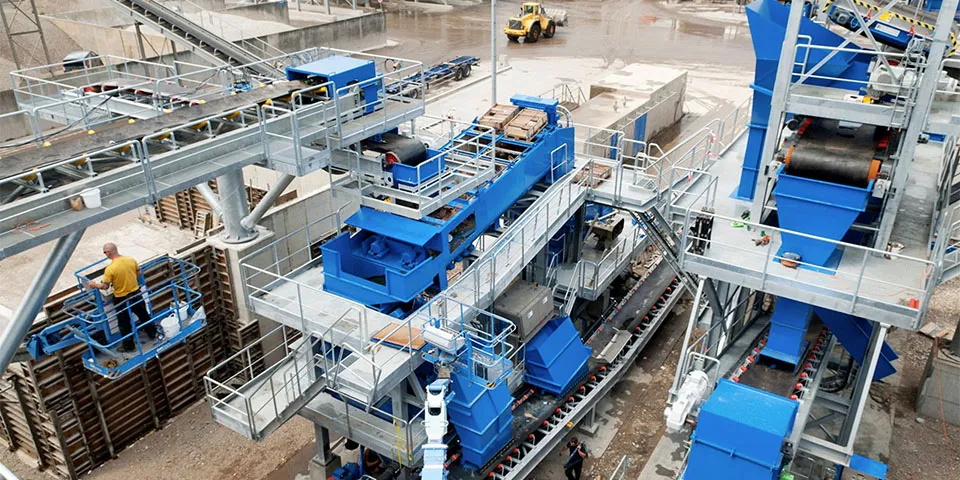
The use of thermally cleaned tar-containing asphalt granulate (TAG) will once again be permitted under strict conditions. This was announced recently by Stientje Van Veldhoven, State Secretary for Infrastructure and Water Management, in a letter to the House of Representatives. It marks the end of a ban introduced in 2017. Since then, millions of tonnes of thermally cleaned soil have been lying in the Eemshaven (Theo Pouw) and in Moerdijk (ATM), awaiting a destination.
Tar-containing asphalt granulate is generated when roads are replaced or widened. Because it is contaminated, it cannot be reused or exported. Theo Pouw Groep and ATM invested in machinery to clean TAG years ago. The resulting product is thermally cleaned soil (TGG), which was used, among other things, in dike reinforcements.
In 2017, a ban was imposed on the use of TGG after it emerged in 2016 that its quality at three locations (Westdijk in Bunschoten, the lake at Heenvliet and Perkpolder) did not meet the standards set out in the Soil Quality Decree. Other risks, such as civil engineering deformation, also came to light.
The Human Environment and Transport Inspectorate (ILT) therefore launched an investigation into Theo Pouw and ATM. The ILT then demanded changes to the production process.
Both companies successfully made those changes, and in December 2019 the ILT once again authorised the limited use of thermally cleaned soil. According to the ILT, TGG is not environmentally suitable for use in or close to (sensitive) agricultural and nature areas or groundwater protection areas, nor is it suitable for use in groundwater or surface water. TGG is also unsuitable as fill soil for cover-layer constructions. However, in terms of regulated substances, TGG meets the maximum values for industrial class and use in a large-scale soil application (GBT). Permission from the competent authority is always required to use TGG.
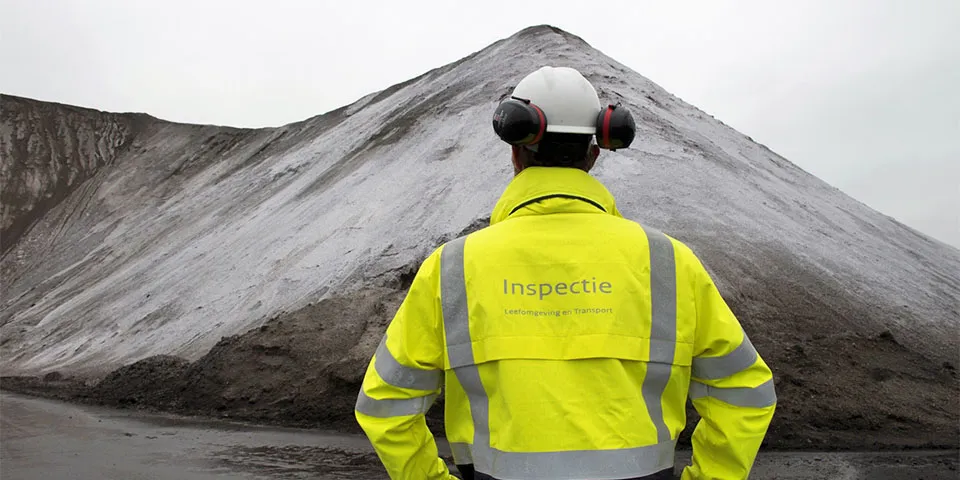
The ILT concludes that TGG may once again be used on a limited basis.
Risks
State Secretary Van Veldhoven now agrees with the ILT’s conclusions. At the request of the House of Representatives, she also commissioned engineering consultancy Tauw to investigate the risks further. Based on that assessment, she now concludes that TGG may be cleaner than previously thought. “The aim is to resume the use of TGG under certain conditions, provided, of course, that it meets the quality requirements set out in the Soil Quality Decree,” she writes in her letter to the House of Representatives. “However, because of TGG’s leaching behaviour, existing stockpiles can only be used under special conditions, namely in brackish and saline environments.”
ATM and Pouw, however, say that thermally cleaned soil has a much wider range of uses. The State Secretary has promised to speak with the companies. Rijkswaterstaat is meanwhile continuing its investigation into a number of projects where TGG was used in the past.
Question about this story? Ask your question
Keep following this
Get an email when a new story is published. No account needed.
- ThemeCircular construction and demolition
- SubjectNews







