












Steinert X-ray technology and CO2 reduction: how do they go together? A conversation with Stena Recycling.
In Roskilde, 30 km west of Copenhagen, the Danish pioneer in metal recycling has made a deliberate choice to use ‘X-ray’, or, more precisely, Steinert’s X-ray transmission technology. It uses the technology to produce pure aluminium. As aluminium increasingly replaces materials such as steel and is fully recyclable, the metal has a promising future. Using secondary aluminium, also known as ‘green aluminium’, requires up to 90% less energy during production than using primary aluminium, and therefore releases tonnes less CO2 . However, when recycled aluminium is used to make new products, aluminium manufacturers require the secondary raw material to have consistently high purity. “That is one of the challenges that sorting technology helps to address,” says Jesper Fournaise, who is responsible for aluminium production and sales. In X-ray sorting, density is the key distinguishing criterion. The classification is carried out with great precision, enabling the production of high-quality metals. The sorting system is used, for example, to separate free heavy metals, aluminium composites, free magnesium, and wrought and cast aluminium.
Technological development drives sustainability
“We are the green gods,” says Jesper Fournaise, describing his team. By this he means that they turn scrap into material that is returned to the production cycle. It soon becomes clear that he takes this seriously. “At home, we sort like no one else. And we teach our children to do the same.” Asked what has changed most in recent years, he replies: “In the past, scrap went to the Far East. It was sorted by hand there, and no one knew what happened to the material. Technological advances in sorting are one of the biggest changes. Now, using X-ray technology, we can supply top-quality metal here in our own country and return it to the economy.”
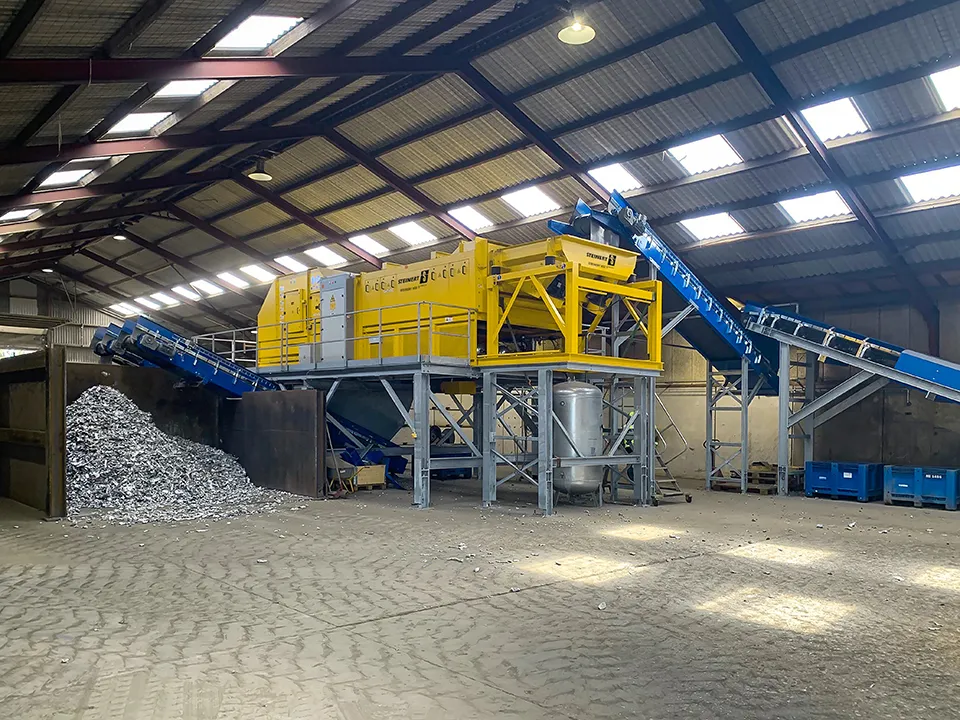
And, as Fournaise points out, it is no longer just the selling price of a metal that matters. Documenting the processing of material streams and the transport routes they take is also important. “Our customers, the smelters, reduce their CO2 emissions by using secondary raw materials, and sorting is one of the most important steps in that process.” Ultimately, the environmental impact of primary materials is compared with that of secondary raw materials. In producing the latter, Jesper Fournaise’s team focuses entirely on quality, which is defined not by them but by their customers. “Since the quality they require is close to that of primary aluminium, we chose Steinert for the sorting technology. For copper, zinc, manganese and magnesium, Steinert simply achieves exactly the required values. We have carried out tests continuously and can now supply the right quality.” Asked what motivates his team and how they decide on new technology, Jesper Fournaise says the answer is their customers’ requirements. When ideas become more concrete, colleague and Van der Spek Viane dealer Viggo Bendz, Steinert’s Danish dealer, is the first point of contact in the innovation process. Trials at the Steinert Test Center in Cologne then help fine-tune the sorting programmes and train staff.
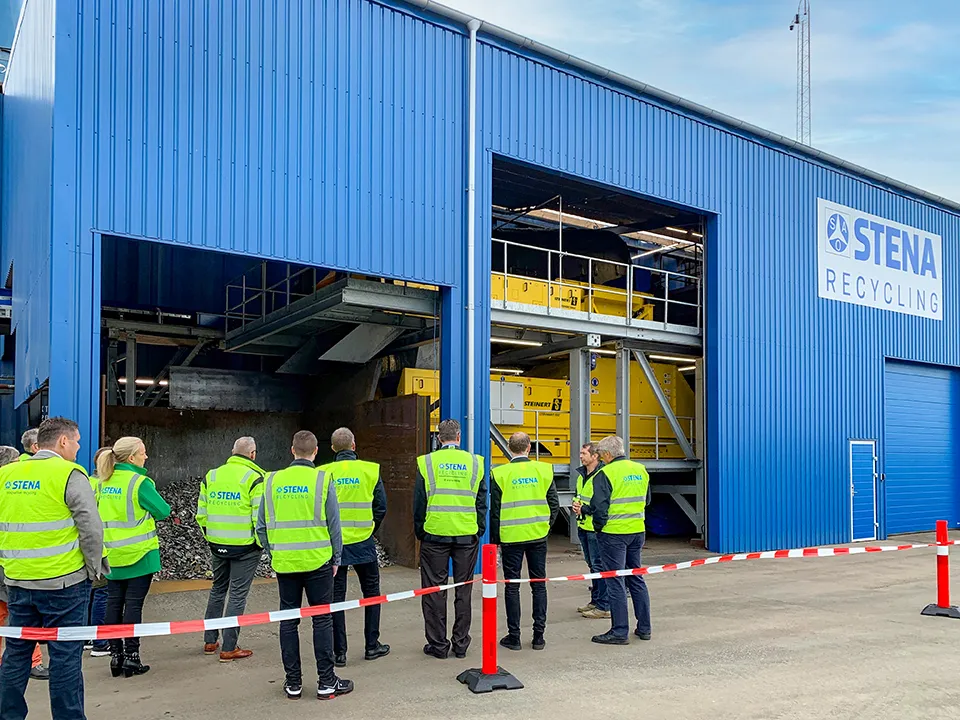
Lea Wermelin, Denmark’s Minister for the Environment, and Henrik Grand Petersen, CEO of Stena Recycling, officially opened the new Steinert ‘X-ray Sorting Center’ in Roskilde.
Question about this story? Ask your question
Companies in this story
Keep following this
Get an email when a new story is published. No account needed.
- ThemeRecovering metals and creating value
- SubjectNews
- CompanyVan der Spek NV







