RecyclePro is part of Louwers Mediagroep: 45+ trade platforms in the Netherlands, Flanders and Wallonia. Trade magazines, websites, newsletters, video and podcasts, since 1987.
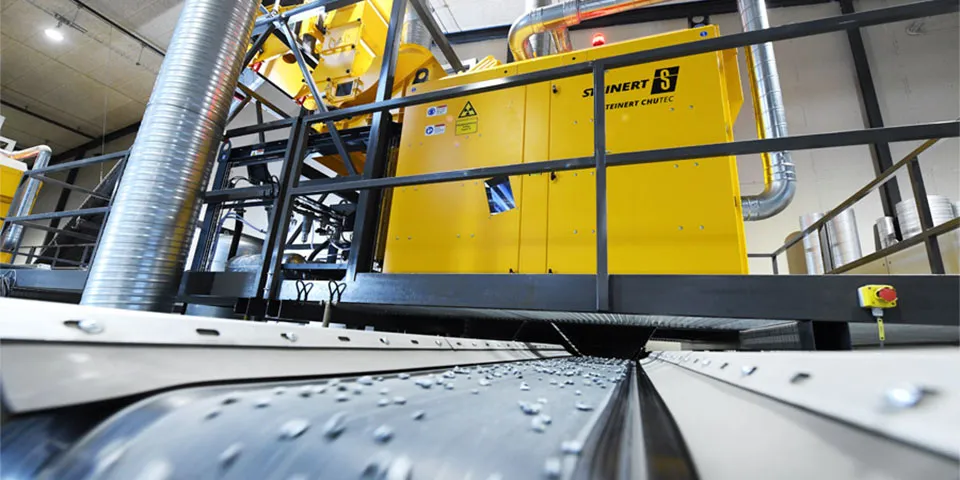
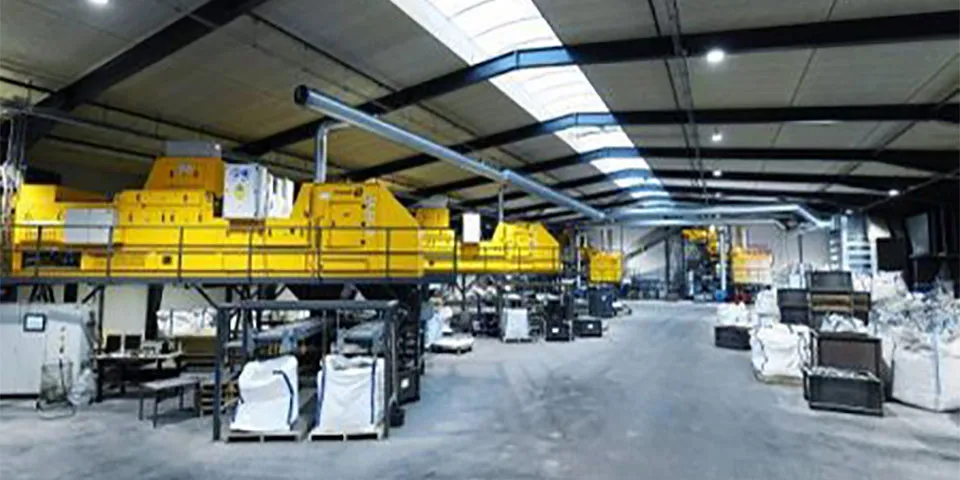
The new STEINERT CHUTEC sliding chute sorter completes Steinert’s already extensive range of sensor-based sorting machines for non-ferrous metals and enables heavy metals to be sorted from a particle size of 5 mm. This makes STEINERT the only supplier to offer both non-ferrous separators and high-resolution X-ray sorters, providing the best possible separation and cleaning results from a single source.
Fine non-ferrous metal separation
Recovering non-ferrous metals with the STEINERT EddyC non-ferrous separator and sorting light and heavy metals into small particle sizes with the STEINERT XSS-T is nothing new. However, it is now possible to use X-ray fluorescence to separate extremely pure products cost-effectively. Zinc, brass and copper can now be separated and recovered from a particle size of 5 mm.
Wax en waxverwijderaars bevatten substanties zoals teflon, alifatische verbindingen, polykoolstoffen en perfluorkoolstoffen.
Developed for ASR (Auto Shredder Residue) and slag processing
Processors of ASR and slag, among other materials, can now sort heavy non-ferrous metals
further. In addition to coarser fractions, finer fractions from 5 mm can now also be sorted without difficulty by the STEINERT CHUTEC, separating aluminium, copper, zinc, brass or stainless steel from the product streams.
Purity through X-ray fluorescence
In metal analysis, X-ray fluorescence analysis (XRF) is a standard method for determining elemental composition.
The STEINERT CHUTEC uses an advanced form of X-ray fluorescence (XRF) for sorting metals.
The sliding chute system combines XRF signals with 3D information to classify and separate materials with precision. For larger and heterogeneous materials, sorting is possible with the STEINERT KSS XF, a belt sorter that has proven itself at many sites in practice.
Sorting can produce concentrates of different metal types to a very high quality, making them suitable for direct use in smelters. This upgrading therefore makes an important contribution to returning metals to the raw materials cycle.
We use cookies to keep the site working properly. With your consent, we also use cookies for statistics and third-party banners. Read more in our privacy and cookie statement.