












Software-based management system keeps energy costs under control
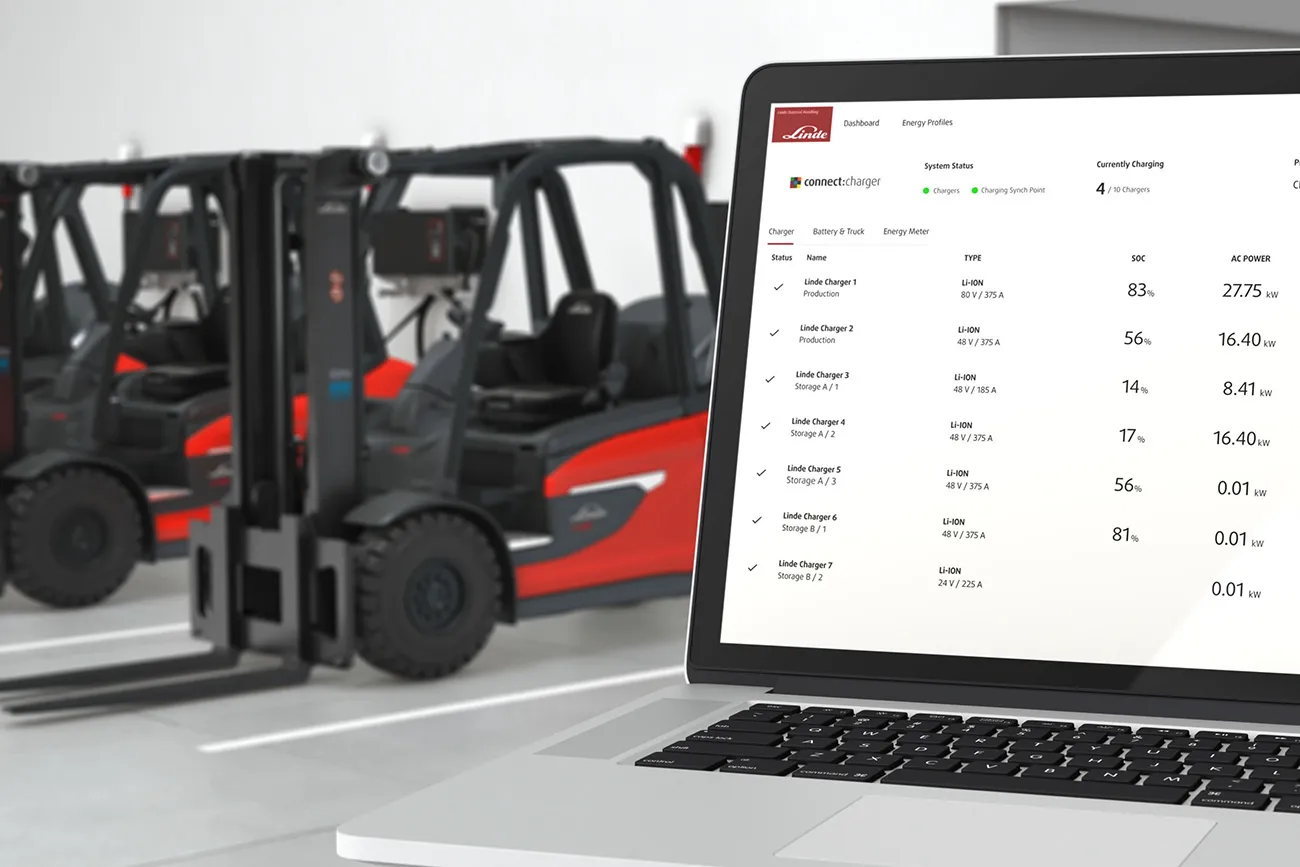
Linde Material Handling’s ‘connect:charger’ battery management system prevents peaks in energy consumption and optimises truck fleet availability.
The new ‘connect:charger’ module, part of Linde Material Handling’s (MH) fleet management system, provides insight into the charging processes of electric materials handling equipment. It also reduces electricity costs while ensuring truck availability through prioritisation, defined charging times and power limits. The software and hardware solution is easy to install and suitable for all industries, and proves its value for both large and small truck fleets.
“Peak energy demand is one of the main causes of extremely high costs when operating electric materials handling equipment,” says Stefan Roth, Product Manager Energy Systems at Linde Material Handling. This is particularly relevant to operators of forklift trucks and warehouse trucks equipped with Li-ion batteries. One of the advantages of these batteries is that they can be charged regularly throughout the day to extend operating time. However, if too many operators connect their electric trucks to chargers at the same time, for example during a break or at the end of a shift, demand for electricity rises rapidly. With lithium-ion batteries, this is compounded by the fact that fast charging requires significantly more power than the lead-acid alternative. “As the number of users increases, so does the risk of peaks in power consumption,” Stefan Roth points out. “These short-lived peaks can drive up costs if the electricity tariff is linked to certain thresholds,” he adds. But even when no thresholds apply, it can be difficult to decide which trucks should be charged and when, particularly in larger fleets, to ensure their availability or shift charging to times when electricity is cheaper. “All these issues can be addressed quickly and easily with our digital charging management system, connect:charger,” explains Stefan Roth.
Intelligent charging
The new Linde system provides a solution by connecting up to 50 chargers in a network via a central hardware unit, which automatically regulates power demand according to predefined guidelines. Forklift operators and fleet managers can also access all relevant information via a dashboard. For example, they can see when a particular truck will be ready for use again or how much energy each charger has consumed during the day. The dashboard also lets users adjust charging behaviour to meet operational needs in just a few clicks. “Fixed charging times or maximum power levels can be defined. Fleet managers can also give individual chargers priority over others, for example when a truck’s state of charge drops below 50 per cent,” explains product expert Roth. The intelligent charging management algorithm coordinates the various specifications and allocates the appropriate capacity to each charger.
There are two options for transferring data from the chargers to the control unit. The wired solution will be available at launch, supporting up to 50 chargers. A wireless version will also be offered soon. Further software features are planned, ranging from dynamic charging management and a cloud-based application to integrating the charging management system into a comprehensive energy management solution. Like Linde connect:desk and Linde connect:cloud, the Linde connect:charger module is available through Motrac and can also be retrofitted, provided the Linde chargers have an integrated interface (from 2018 onwards).
Question about this story? Ask your question
Keep following this
Get an email when a new story is published. No account needed.
- SubjectNews







