












Smarter waste management
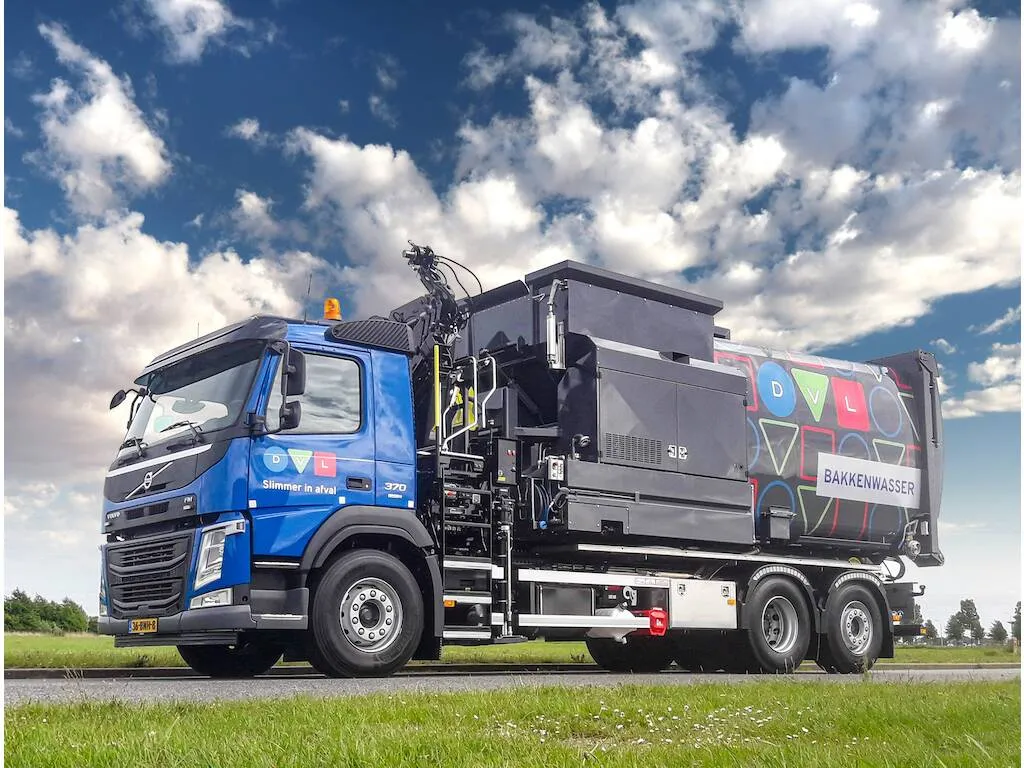
Behind waste collection using different types of collection equipment, with containers for different types of waste, lies a world of logistics, services and data that few people know about. DVL Milieuservice knows this world inside out. The company has deployed and collected millions of waste containers in the Netherlands and abroad. As a result, it has highly specialised expertise, which is needed to implement and maintain a container fleet efficiently and quickly. The data that DVL records and manages can be used to map and control the collection of waste streams.
Behind a local authority’s decision to collect waste and recyclables in a particular way lies an extremely complex logistical operation. “You have to deal with the collection itself, but residents also need to be informed,” says Geartsje van Lingen, director of DVL Milieuservice. “Often, residents in an area need to be informed at short notice, and all the containers have to be delivered or exchanged very quickly. Waste collectors and local authorities are often not equipped to handle this. We are.” DVL Milieuservice is an all-round service provider specialising in the management and maintenance of waste collection equipment. The company focuses on implementing and maintaining container fleets. DVL also manages the data flows relating to waste collection. “In other words, data,” explains project manager Camiel Brouns. “Data that enable us to measure very accurately and advise whether our clients’ policy decisions actually lead to changes in behaviour around waste collection. They also allow the waste presented for collection to ultimately be charged for via a levy, with the charges paid by those presenting it: residents or businesses.” Under the nationally agreed VANG target, local authorities have agreed to achieve maximum waste separation by 2025 and collect no more than 30 kilos of residual waste per resident. It is up to each local authority to decide how to meet that target. “By making collection measurable, including through chips in containers and vehicle registration systems, we help local authorities and waste collectors achieve that target,” adds colleague Cathrinus Rouwé. “We manage the data flow and can check whether the information is accurate and complete. In this way, we put local authorities’ policy choices into practice and ensure that the waste collection system is maintained from start to finish across the chain.” Because DVL has both data and experience, it can also give clients highly accurate advice before they introduce a measure. “Of course, results and presentation behaviour depend on various factors,” says Brouns. “The collection equipment and logistics available, any supporting measures, financial incentives, the region, and whether it is urban or rural. All of these affect how best to meet the target. Using our software and hardware, we measure the short- and long-term effects of policy decisions for each neighbourhood, collection route or area.” DVL’s approach is used in the Netherlands and abroad. “Our work is about changing collection systems and presentation behaviour within local authorities or regions,” says Van Lingen. “We have sometimes worked with the same local authorities several times, either to add different registration systems to the container fleet, supply extra containers, or replace containers with other underground or above-ground collection equipment.” Rouwé: “Collection used to be a service. These days, there is a business model behind it. Rather than waste, we often talk about resource streams that generate revenue. That means accurate registration of what is collected is essential. We facilitate that. It is no coincidence that our motto is: ‘smarter waste management’.”
Question about this story? Ask your question
Keep following this
Get an email when a new story is published. No account needed.
- ThemeImproving waste collection and transport
- SubjectNews







