












Self-heating and batteries are the main culprits in waste fires
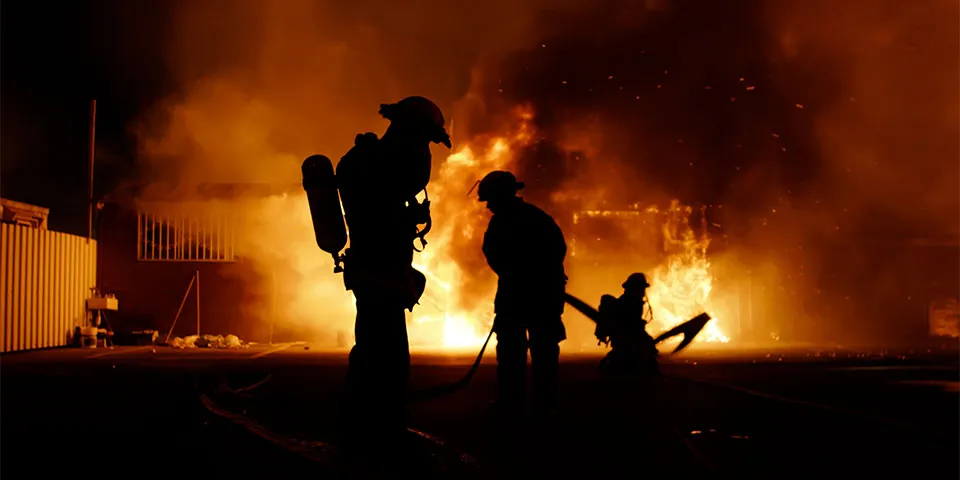
You can read about it in the newspapers almost every month: a fire at a waste treatment company. Given the nature of the activities involved, the fire risk in our sector is simply higher. Most fires can be traced back to one of two causes: self-heating and contaminants such as lithium-ion batteries.
Statistics for Belgium are hard to come by, but there is no doubt that waste is a fire-prone sector. Insurers in the Netherlands raised the alarm in 2017 after 70 fires in two years. The situation in Belgium is likely to be similar. Some fires can be extinguished quickly, while others can spread and cause millions of euros in damage. As a result, a number of insurers have already withdrawn from the Belgian market. In recent years, this has made it very difficult for waste companies to obtain affordable fire insurance. But if the sector is to tackle this fire risk, it is important to understand its causes.
Fires caused by self-heating
Self-heating is by far the most common cause. When waste is brought together in a confined space, temperatures can start to rise dramatically. This is all down to the micro-organisms present in waste. They generate heat, reaching temperatures of up to 70 °C. Usually, that is as far as it goes, but if the heat cannot escape, a further effect can occur: chemical self-heating. This happens mainly when material is wrapped or compressed. The process shifts from warmth to intense heat as carbon is converted into carbon dioxide. This can lead to smouldering or spontaneous ignition. It is a slow process, taking several hours before a fire actually starts. But then it can spread very quickly. The materials most prone to spontaneous ignition are vegetable and animal oils, paints and varnishes, cleaning cloths and paint filters. Moisture content may also play a role. According to experimental research by KEMA, a moisture content of between 20 and 50% presents a risk of self-heating for many materials, depending, of course, on the material. An additional challenge is that self-heating is not always immediately detectable. It may already be under way before the container is collected or processed.
Fires caused by batteries
In recent years, fires have also often been traced to batteries in waste. Batteries are increasingly common in waste, particularly lithium-ion batteries. When used batteries and rechargeable batteries come into contact with each other or with other materials, they can short-circuit. As a result, they can become red-hot and cause a fire. Another problem is that batteries can react chemically with other waste materials, causing them to catch fire spontaneously. Batteries can pose a hazard not only during the collection and storage of residual waste, but also during processing. Batteries and shredders, for example, are a bad combination. If batteries are damaged by machinery, they can catch fire or, in some cases, even explode. This highlights once again the importance of effective separation at source (removing batteries from devices) and sensible product design (making batteries removable).
Question about this story? Ask your question
Keep following this
Get an email when a new story is published. No account needed.
- ThemeCircular processing of electronics and batteries
- SubjectNews







