












Roadmap to lower CO2 emissions
Text Valérie CouplezImage iStock
Last year, a study by Deloitte commissioned by Denuo revealed that Belgium’s waste and recycling sector saves twice as much CO2 across value chains as it emits itself. But the sector must also make efforts to become more sustainable. With the launch of a roadmap earlier this year, the Belgian federation for the waste and recycling sector aims to help its members deliver on that mission.
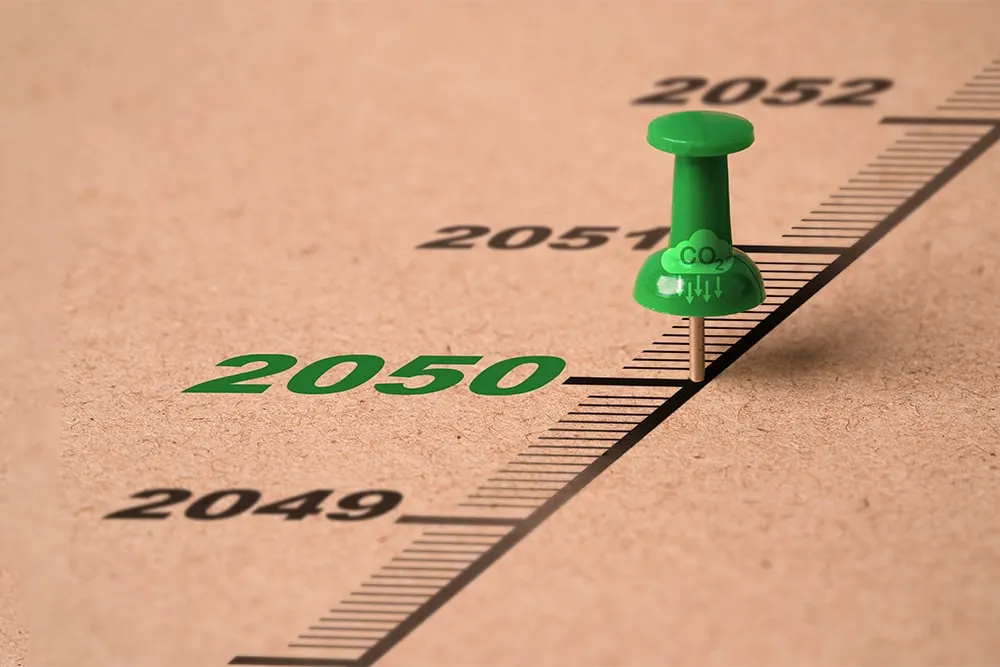
The waste and recycling sector has not been assigned a specific target on the way to a carbon-neutral industry by 2050. However, Belgium’s non-ETS sectors must cut their CO2 emissions by 47% by 2030 compared with 2005. We will all have to step up our efforts to achieve this. Denuo is setting a good example with a roadmap for the sector. “The fact that our work as a sector already contributes so much to a better environment does not mean we should not aspire to do better ourselves. With the introduction of CSRD reporting, large companies are already required to report on their efforts in this area from next year. But this legislative framework will also bring indirect changes for the smallest SMEs, because their customers will come asking for concrete figures,” explains Marine Ronquetti of Denuo.
CO2 tool for calculating emissions
Since these companies often lack the time, resources and staff, Denuo is offering members a helping hand with its roadmap. “Since the beginning of this year, they have been able to make a symbolic commitment to reducing their emissions by endorsing our roadmap. In return, we expect them to take the necessary steps, first to map their CO2 emissions and then to take action to reduce them.” The first step, calculation, is the one that most companies find challenging. Denuo will therefore make a tool available from September to do the job. It was developed in collaboration with D-carbonize. “The aim is to identify the greatest potential for reductions. In their annual report, they can then explain what they have done to achieve their targets and what the next steps are,” adds Ronquetti.
A dynamic instrument as a lever for change
The roadmap is intended above all to become a dynamic instrument that can act as a lever for the entire sector. “The roadmap will evolve as we gather more sector-wide data and indicators from our companies. It will not remain a dead letter, but will be used, for example, to lobby and remove barriers to sustainability that companies face. As a federation, we also want to promote knowledge-sharing and the exchange of information. Solutions that work for one company may also work for another.” There is no silver bullet for reducing CO2 emissions in waste and recycling. For some, logistics will weigh most heavily in the CO2 balance; for others, it will be energy-intensive processing, while others still have to contend with ageing buildings that require a lot of energy.
A long-term strategy
Those who commit to the roadmap will also have to make efforts to improve. “That takes time and money. That is why it is so important to start today and draw up a long-term strategy before it becomes an obligation. But I believe that together we can succeed in our mission. And this is only the beginning. Sustainability goes beyond CO2 emissions alone. In the future, we also want to help our members make progress on ESG criteria such as water use, inclusion and diversity,” Ronquetti concludes.
Question about this story? Ask your question
Keep following this
Get an email when a new story is published. No account needed.
- SubjectNews







