












Reward for helping to recycle roofing offcuts
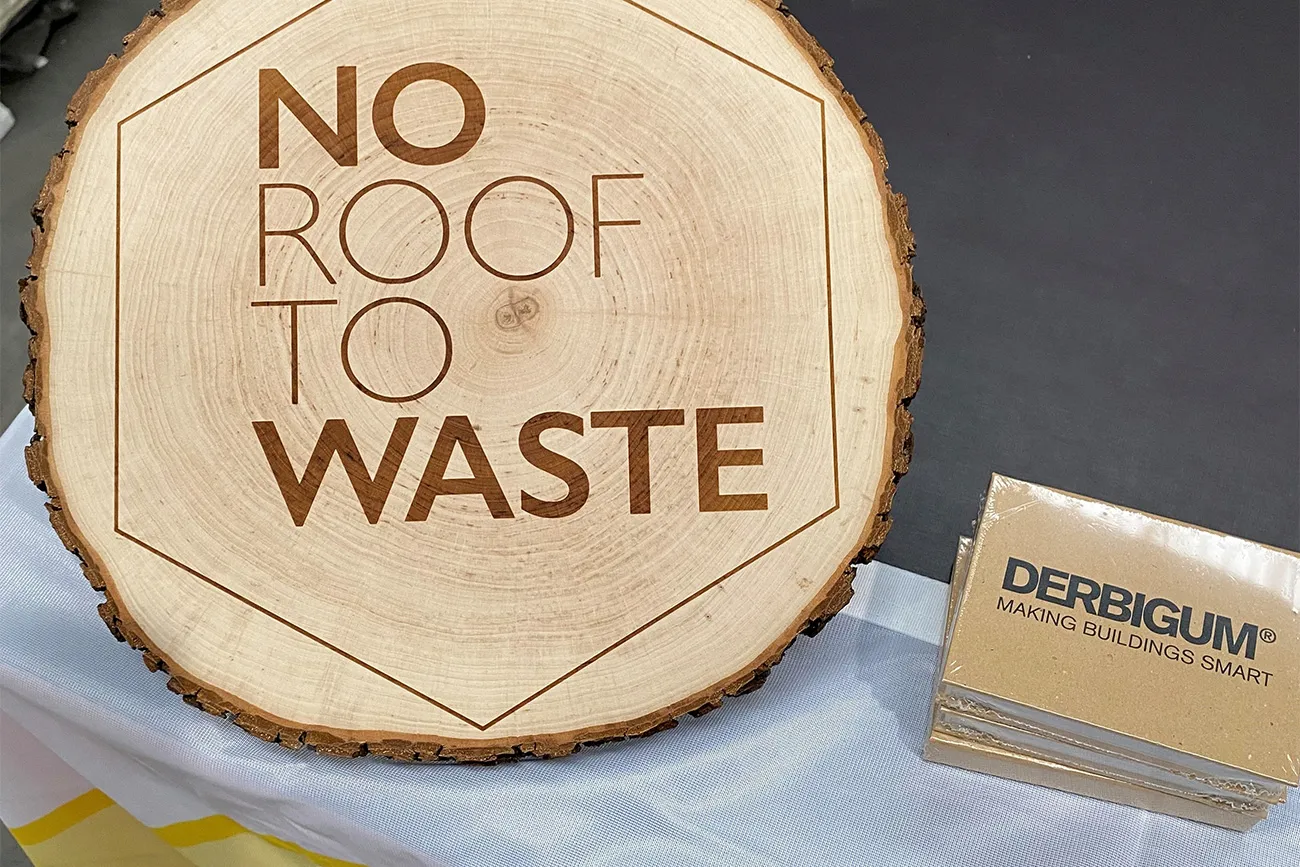
Circularity means turning waste back into raw materials. It may be a fashionable concept today, but Derbigum began doing this 30 years ago. Since then, it has recycled its production and cutting waste under the motto ‘No Roof To Waste’. Each quarter, it now rewards two distributors who are working with roofers to collect more offcuts and recycle them endlessly into new raw materials.
“The circular economy is part of our DNA. We realise that our raw materials are finite, as they are derived from petroleum. That means we have to do something with the waste we produce, because landfill ultimately costs a great deal too,” says commercial director Michael Vloeberghs. “We still don’t make money from it, but rising raw material prices mean we are now breaking even. That is the advantage of being a family business. Innovation and a long-term vision have always come first here.”
Recycled content already up to 30%
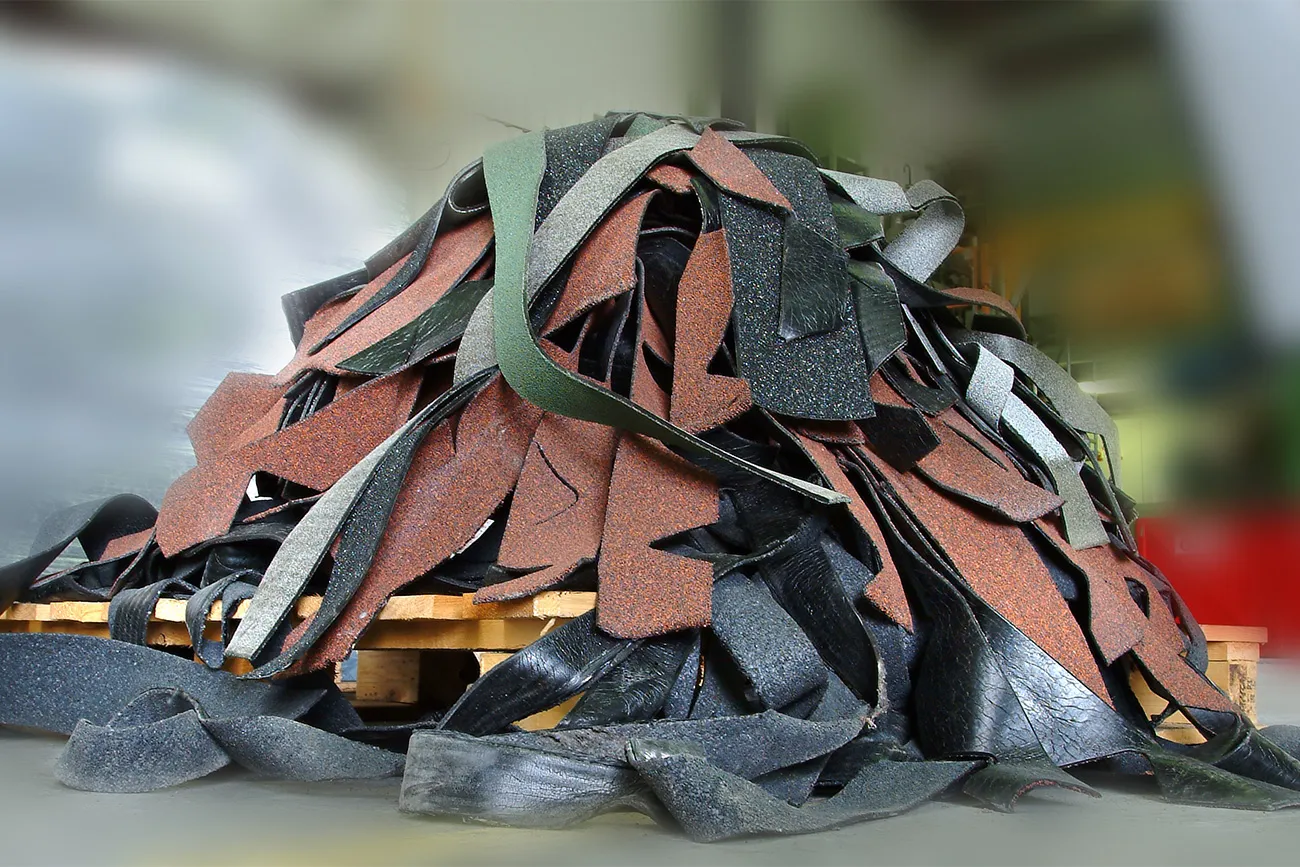
That experience is proving an advantage now that circularity is gaining momentum. “We are the only company with Cradle to Cradle certification for a number of roofing membranes. Using our patented technology, we turn 1 kg of offcuts back into 1 kg of raw material, allowing us to close the loop indefinitely, with no loss of quality. We recycle around 5,000 tonnes a year,” says Vloeberghs. Depending on the product type, recycled content is now as high as 30%. The aim is to become 100% circular in the long term. “Two important conditions need to be met to achieve that. First, there needs to be a sufficient supply of raw materials. Second, we need to further refine the technology to guarantee consistent quality. Our R&D team works hard on this every day to achieve higher percentages.”
Different quality grades
Today, the supply streams come from a range of sources. The company’s own production waste contains no contaminants. The quality of offcuts can vary, however. “We also process materials from our competitors. When it comes to roofs being demolished, things get a little more complex. That is why we only take back complete roofs with an area of at least 1,500 m², and first take samples to assess their quality and identify possible contaminants such as asbestos. Remarkably few of these are our own roofs. They have a proven service life of more than 50 years, so we don’t see them coming back any time soon,” Vloeberghs adds with a wink.
Collecting offcuts through distributors
To recover as much material as possible, Derbigum encourages its partners to join its circular initiative. “In Belgium, we mainly work with distributors. We also rely on them to help us collect more offcuts. There is a great deal of enthusiasm for this initiative, because we all know things need to change in the coming years.” Distribution partners give roofers mini big bags to collect offcuts, which they can then deposit in larger big bags at their usual distribution point. To encourage and reward these efforts, Derbigum presented its first NRTW awards earlier this year to the distribution points that had seen the strongest growth over the previous four years.
Award goes down well
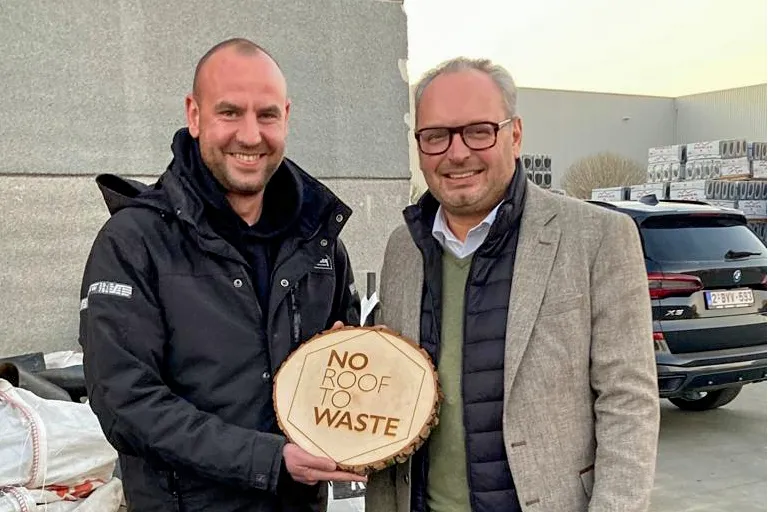
In Flanders, Defrancq Evergem and Apok Herentals won awards. As well as the award, staff were treated to a winter barbecue or chips. “We want to show that we are genuinely grateful for their efforts. Working together towards a common goal is also part of circularity,” says Vloeberghs. And the gesture went down very well, in every sense. RecyclePro spoke to Jérome Bridelance, operational director at the family business Defrancq. “We specialise in roofing and cladding materials. We also make bespoke zinc and copper products for our customers. We operate from 25 sites in Belgium and four in the Netherlands. We have big bags at every location where we have room for them. It was a particularly wonderful recognition for our team in Evergem. Everyone of note at Derbigum was there. That is always a pleasure.”
Turning waste back into raw materials
Defrancq stands out by offering a range of additional services alongside its products. “We have our own technical service team to support customers, for example with site set-up for new products. We also try to be as flexible as possible with deliveries, right up to the roof if necessary. We have been working with Derbigum for many years. We believe in its approach of turning waste back into raw materials, a concept our customers also support. They are just as aware of this issue and want to play their part. What’s more, the approach requires little extra effort. They take the mini big bag up onto the roof and benefit financially from lower disposal costs,” Bridelance concludes.
Question about this story? Ask your question
Keep following this
Get an email when a new story is published. No account needed.
- SubjectNews







