












Recycled plastic containers for hazardous medical waste

Hospitals in Brussels and Flanders can now use containers made from recycled plastic for their hazardous medical waste. This first is the result of a partnership between Mauser Benelux and SUEZ, and cuts environmental impact by 57% and CO2 emissions by 51%.
Hazardous medical waste (RMA) includes substances such as laboratory
waste, blood, blood derivatives, anatomical waste and other materials. The containers used to collect this waste must meet extremely high standards for quality and strength. Once filled, they are sealed and immediately incinerated to eliminate any safety risks. Until now, only containers made from virgin plastic have been used for this purpose. To minimise the environmental impact of this necessary practice, SUEZ, which supplies the containers to hospitals, collects them and then sends them to a specialist waste-to-energy plant, joined forces with its partner Mauser Benelux
(the container manufacturer) to find a more sustainable solution. Together, they have developed a hazardous medical waste (RMA) collection container made from recycled plastic, with a much smaller environmental footprint than the traditional version: 57% less environmental impact and 51% lower CO2 emissions. This innovative project demonstrates the importance of co-creation across the value chain in taking major steps towards a circular economy.
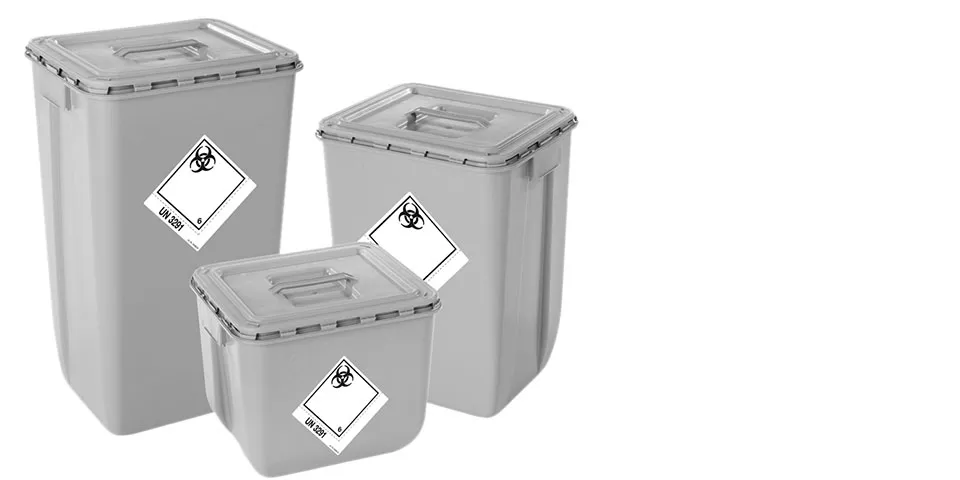
SUEZ and Mauser Benelux have developed a hazardous medical waste (RMA) collection container made from recycled plastic, with a much smaller environmental footprint than the traditional version: 57% less environmental impact and 51% lower CO2 emissions.
450,000 recycled plastic containers a year
Now that SUEZ has obtained regulatory approval for Brussels and Flanders, it is offering hospitals the option of using recycled plastic containers under its contracts with them. Hospitals will soon be able to switch entirely to the new container, representing around 450,000 containers and a reduction in CO2 emissions of more than 955 tonnes a year. Several hospitals, including Ziekenhuisnetwerk Antwerpen (ZNA) and UZ Gent, are already keen to take part in the project. According to Tom Havermans, Environmental Coordinator at ZNA, the new containers will have a considerable impact on the healthcare sector. “Ziekenhuis Netwerk Antwerpen is committed to sustainability as part of its social responsibility, including during this difficult period. The healthcare sector, too, has an important role to play in the transition to a circular economy. Now that containers made from recycled material have been approved for use, the choice is an easy one. They are just as convenient to use as traditional containers, but far more environmentally friendly.”
Impact of the coronavirus crisis
The cost of producing high-quality recycled plastic from used packaging is often higher than that of producing virgin plastic. This is due to the very low density of the waste to be recycled and the complexity of the different plastic packaging on the market. The coronavirus crisis has widened the price gap between a traditional container and one made from recycled plastic. A virgin plastic container is now considerably cheaper because of the low international oil prices resulting from the pandemic. Last year, however, the same container cost approximately the same as one made from recycled plastic. SUEZ is therefore calling for a regulatory framework requiring producers to use a minimum amount of recycled plastic. This would prevent virgin and recycled plastic from competing with each other and mark an important step towards a more circular economy. Philippe Tychon, General Manager of SUEZ Recycling & Recovery Belgium & Luxembourg, also sees the redevelopment of the RMA containers as part of the relaunch of the circular economy. “On the path to a truly circular economy, we must keep pushing the boundaries of what is possible. RMA containers made from recycled plastic ensure that waste is processed just as safely, but with a significantly lower environmental impact. It is particularly encouraging that a highly regulated sector such as healthcare is further reducing its environmental footprint. SUEZ is proud to guide its customers in this.”
Question about this story? Ask your question
Keep following this
Get an email when a new story is published. No account needed.
- ThemeMaking plastics and packaging circular
- SubjectNews







