












Recycled panels improve acoustics
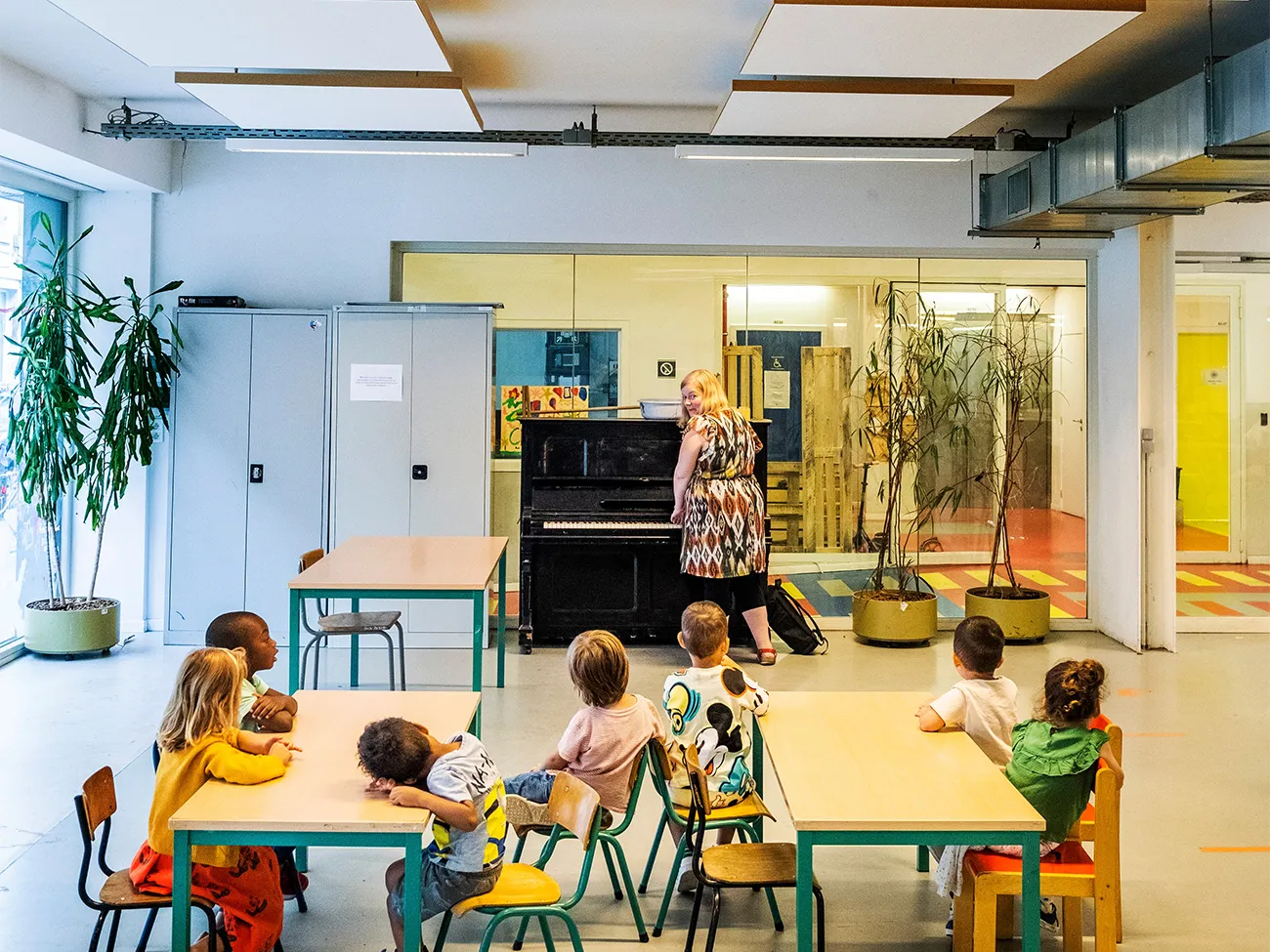
In Brussels, Akoestiekfabriek and De Meuter have joined forces to give insulation material from local construction sites a second life as sound-insulating panels. An inspiring story of circularity, local action and social impact.
Akoestiekfabriek began within FIX but has since become a fully independent company. But what exactly is FIX? A work-experience programme in the construction sector. “That is the best way to describe us. We give the long-term unemployed two years to learn a trade and gain everything they need to access the labour market more easily,” says managing director Eva De Smedt. FIX provides services for the renovation of public spaces and can call on around 100 employees. “It is really about giving people opportunities and supporting them towards independence. People are often underestimated. Here, we give them every opportunity to discover what they can excel at.”
Improving acoustics
A new project has been taking shape within FIX over the past two years. De Smedt explains: “There are two reasons for this. We want to be a pioneer in social enterprise and show that it can be viable without subsidies. We also wanted to invest in sustainable employment. At Akoestiekfabriek, we can offer employees permanent contracts.” The name Akoestiekfabriek immediately gives a clue to what the new company does. Project leader Fien Sanen says: “Our frequent presence in schools in the Brussels area made it clear that there was a need for affordable solutions to improve acoustics. Akoestiekfabriek is filling that gap in the market with a range of circular acoustic panels. Sustainability was central to our choices. We give used insulation panels a second life.”
Recycled materials
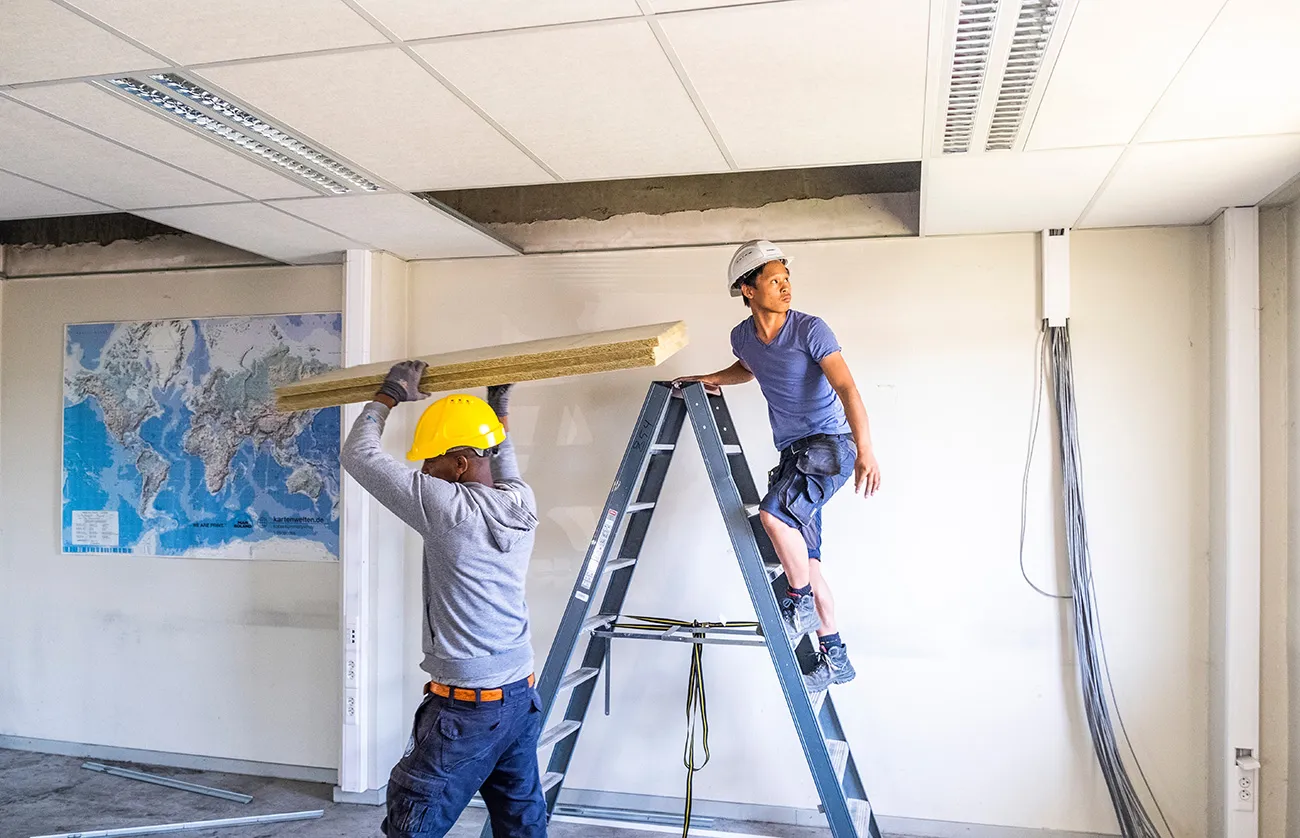
To this end, Akoestiekfabriek partnered with De Meuter, an expert in earthworks and demolition. Sanen explains: “They let us know which of their sites have material available for our purposes. It is mainly rock wool boards, often hidden away in suspended ceilings. Our team then goes to the site to remove the material. This form of urban mining means fewer new panels need to be produced and saves De Meuter a significant amount in demolition and landfill costs. We then use the recycled material in our workshop, refurbishing it into beautifully finished sound-insulating panels.” An acoustic survey at the customer’s premises determines how many square metres they need and how best to install the panels. “By measuring before and after the work, we can show customers in black and white how much their acoustics have improved. Our panels have also been tested by an independent organisation and ranked among the best. We want to set the bar high on quality too,” Sanen adds.
Circular employment
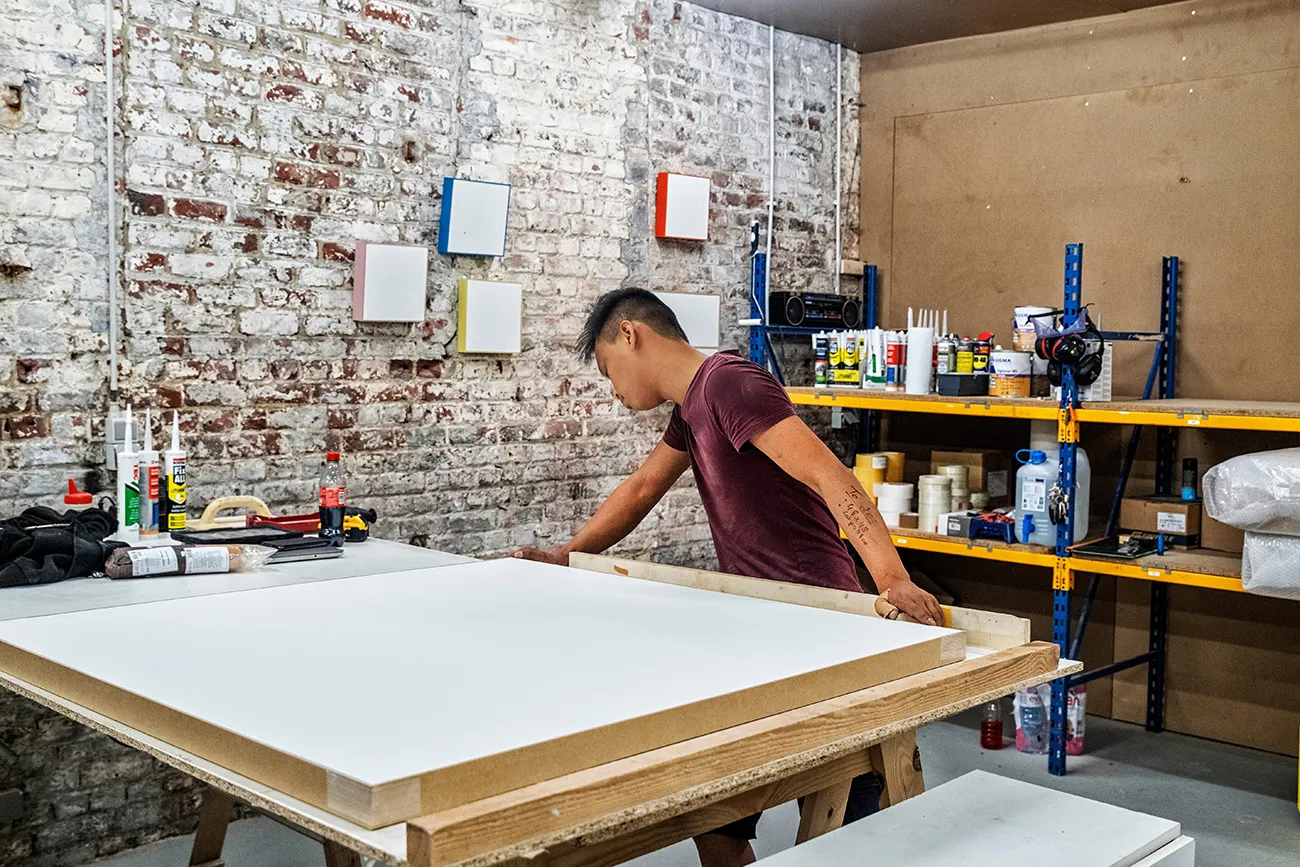
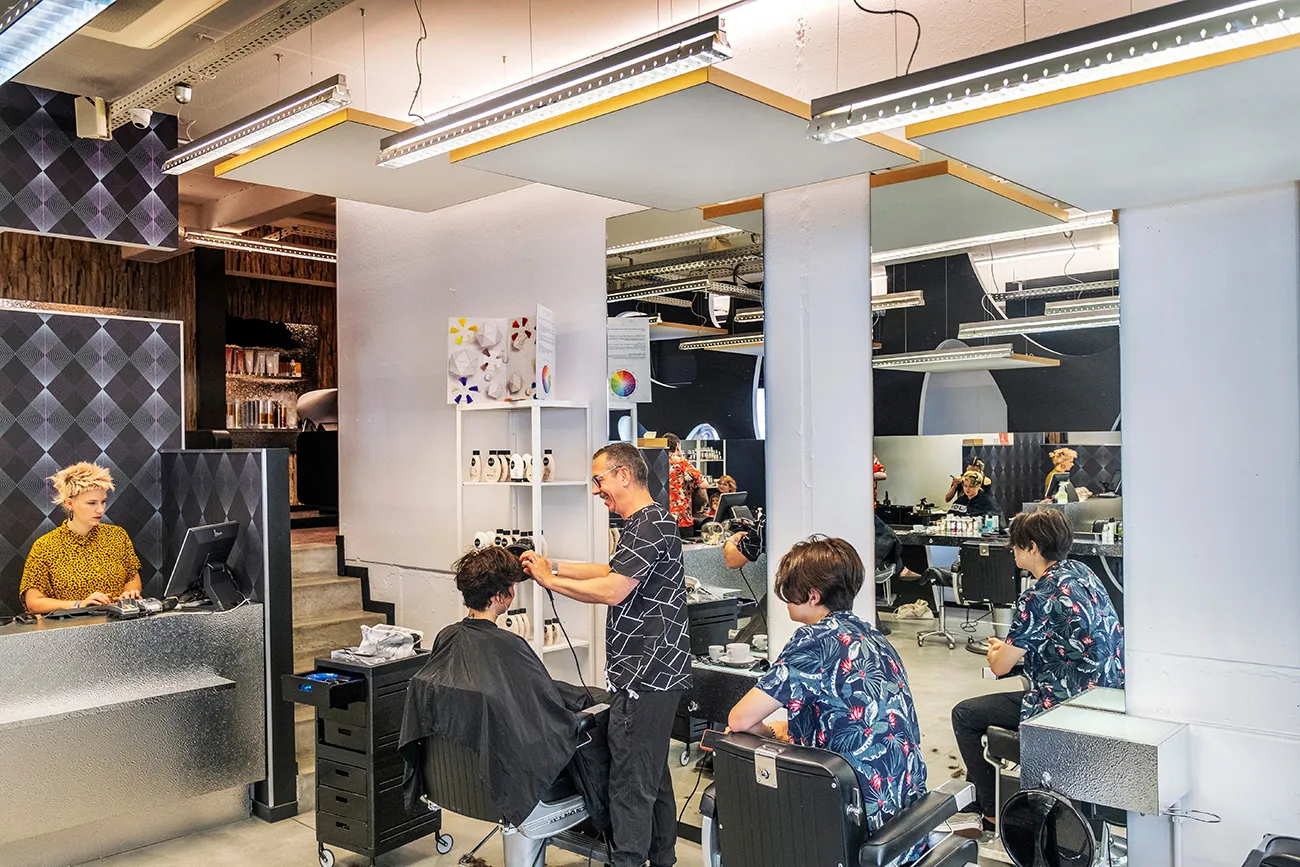
Akoestiekfabriek has now completed around fifteen projects. De Smedt says: “Our focus extends beyond the public sector. Anyone can get in touch. We have already improved the acoustics at Wakko Kapper, a hair salon in the heart of Brussels, and at an art gallery in Ostend. In the longer term, we hope to set up local workshops. That is part of sustainability too: working locally with materials from local construction sites.” The company currently has two employees on its payroll. “We have partnered with a freelancer to teach them the ins and outs of acoustics. This includes not only workshop tasks, such as cutting everything to size, building frames and painting, but also going on site to align the panels perfectly. They can now work completely independently,” says Sanen.
Next steps
Work is also continuing behind the scenes to fine-tune the concept. “Our first showroom will be ready soon, so potential customers can hear the difference and see the range of bespoke finishes available,” says Sanen. “We also want to calculate the circular impact of our activities. That will allow our customers to highlight the reduction in their environmental footprint achieved through their partnership with Akoestiekfabriek. It is really important to us that this impact can be measured objectively. At the same time, we are helping to spread the idea of recycling more widely. Our employees have adopted new habits. They no longer simply throw things away, but think about how they can reuse them,” De Smedt concludes.
Question about this story? Ask your question
Keep following this
Get an email when a new story is published. No account needed.
- SubjectNews







