












Ready for the future with new gas recovery system
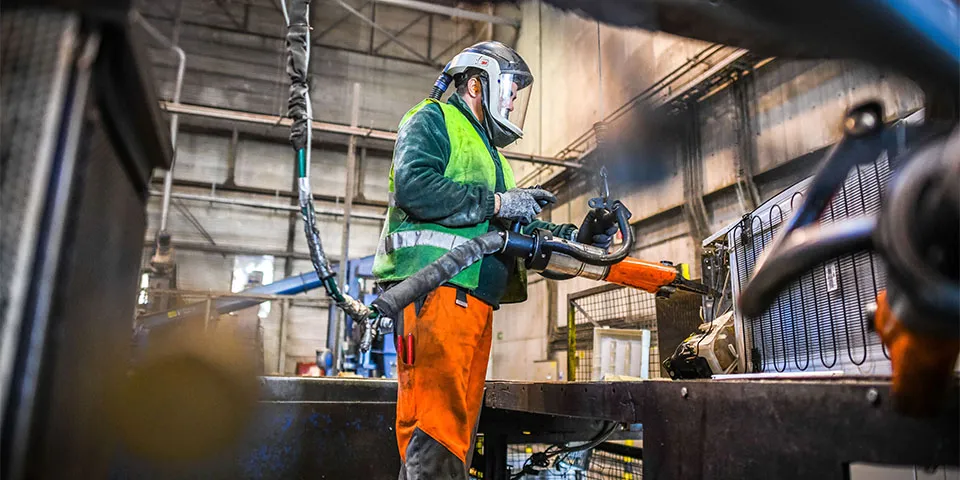
Last year, Recupel issued a missing-fridges alert: more than 200,000 refrigerators had gone missing. To ensure they are treated in an environmentally sound way, end-of-life refrigerators must be sent to an authorised treatment facility. One such facility is in Liège. Recydel is already preparing to handle more refrigerators and refrigerant gases in the future by investing in a new gas recovery system.
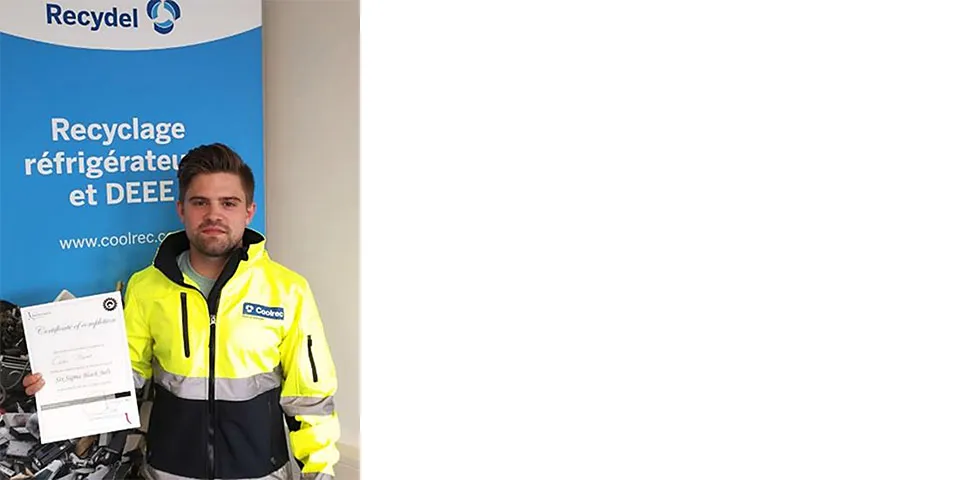
Cedric Dupont: “In every project, we look for ways to increase quality and productivity, while also improving safety and sustainability.”
Electronic waste is processed at Recydel in Liège. The facility focuses on two input streams: a mix of household appliances (such as vacuum cleaners, microwave ovens and computers) and refrigerators. They are processed on two separate lines. Both use a similar mechanical process involving shredders, magnets and eddy current technology, but the key difference is the gas recovery required to process refrigerators safely. Process technologist Cedric Dupont explains how recycling works at Recydel. “De-pollution is the first step. Cables and hazardous substances are removed. The material is also sorted into different categories according to its value. It goes without saying that a laptop contains a higher proportion of precious metals than a coffee machine. These steps are carried out entirely by hand.” Once a batch in each category is large enough, mechanical processing can begin. “The appliances are fed into a shredder, which reduces the material in several stages to a size of 25 mm. It can then be sorted into different fractions: plastics, aluminium, copper, precious metals and so on.” These materials are then put to good circular use, for example as filament in a 3D printer.
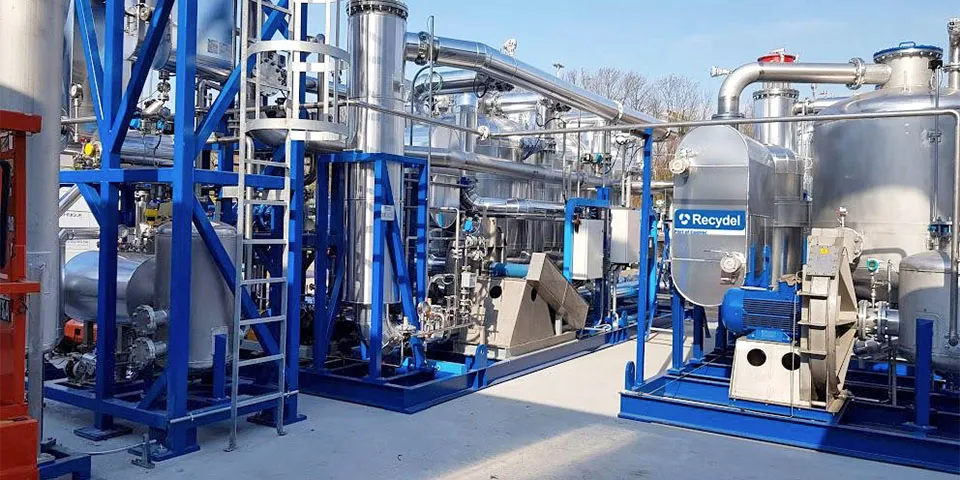
Dupont and his team found a space for the new, larger gas recovery system right beside the existing line.
Refrigerant gas recovery
Refrigerators require one further crucial step. “The compressor and cooling circuit of a refrigerator still contain gas and oil. We first remove these safely, then recover the gas and oil. The main substances are R12 and pentane. The second step is shredding. This takes place in a controlled atmosphere of nitrogen, with a high flow of inert air generated to prevent explosions. Hazardous gases can still be released while shredding both the refrigerator and the PU foam inside it. That is why we use a gas recovery system in this second step.” The gas must be cooled so that it liquefies and can be stored in a gas tank.
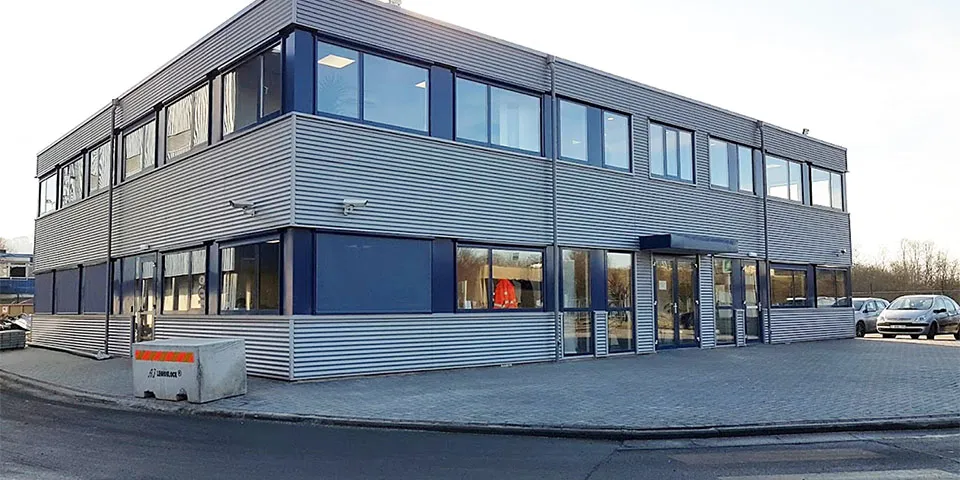
Electronic waste is processed at Recydel in Liège.
New low-pressure system
As the existing gas recovery system was already ten years old, its capacity was insufficient for the volume Recydel wants to process. “We couldn’t process more than 60 to 65 refrigerators an hour and still meet the legal standards. Replacing it was therefore essential if we wanted to increase throughput and meet all the requirements. Its age was also causing more maintenance problems and breakdowns, which cost time and money.” Dupont wanted the new system to operate at lower flow rates. “The downside is that the machine has a larger footprint, up to three or four times as large. But the benefits are just as significant. Operating at just 1 bar gives us more control over safety, uses less energy and nitrogen, and makes spare parts considerably cheaper.” Dupont and his team found a space for it right beside the existing line.
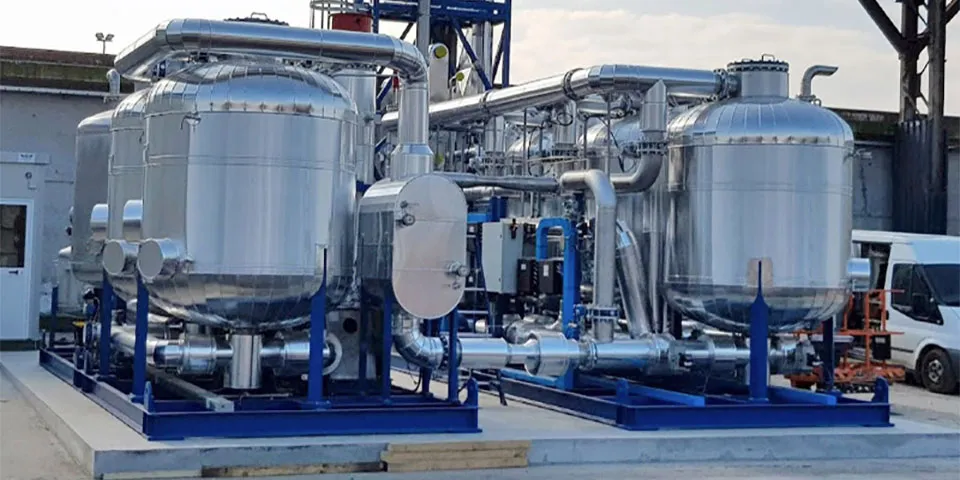
“Operating at just 1 bar gives us more control over safety, uses less energy and nitrogen, and makes spare parts considerably cheaper.”
Precise identification and tracking of various gases
This investment clearly prepares Recydel for the future. The company plans to significantly expand its production lines to handle the flow of WEEE. “A decisive factor in our choice was that the system could reliably recover a wider range of gases. At present, these gases fall broadly into two categories: R11 (used in older refrigerators, it can now only be incinerated with energy recovery) and cyclopentane (used in newer refrigerators, it can be reused in the chemical industry). However, manufacturers are experimenting extensively with gases that could deliver better performance while meeting current and future environmental standards. This means we will be dealing with a wider variety. The old system would have needed modified filters to process these gases. The new one can handle them without difficulty and also has a monitoring system that uses chromatography to measure exactly what comes in. This allows us to identify and track gases throughout the production process. That is the challenge in every project: finding ways to increase quality and productivity, while also improving safety and sustainability.”
Question about this story? Ask your question
Companies in this story
Keep following this
Get an email when a new story is published. No account needed.
- ThemeCircular processing of electronics and batteries
- SubjectNews
- CompanyRecupel







