












Ready for CSRD
Text Valérie CouplezImage iStock
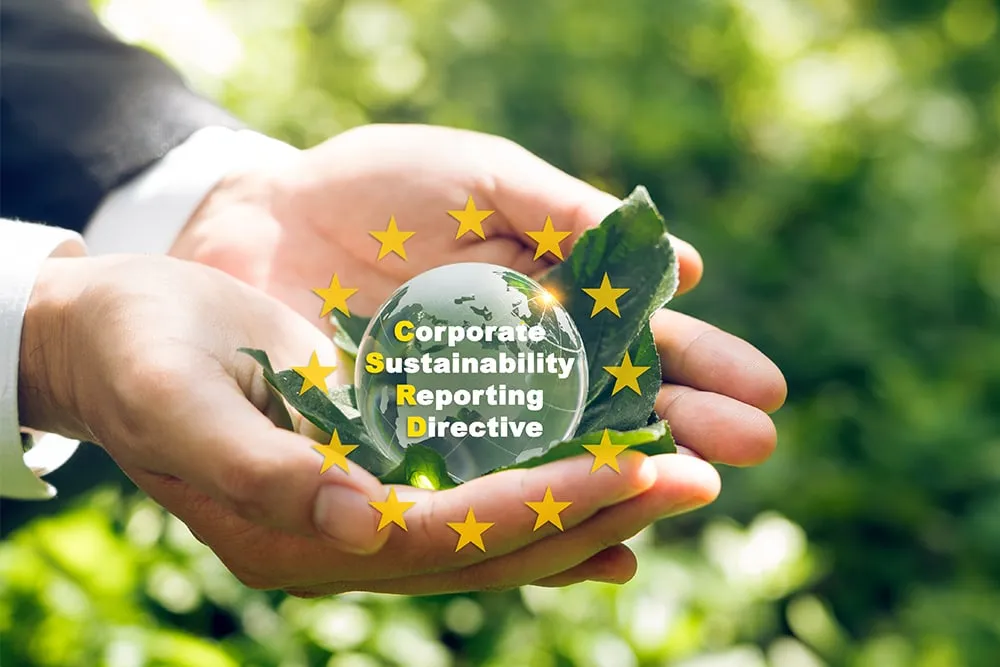
The CSRD (Corporate Sustainability Reporting Directive) comes into force in 2025. Alongside financial information, companies will also have to disclose data on sustainability criteria. The rollout will be phased, with large listed companies first in line. Although many recycling companies are SMEs, they will soon be drawn into the process, because the CSRD rules explicitly require companies to report what they do with their waste streams. “There will certainly be a huge administrative burden, but it also presents enormous opportunities. Try to seize them and realise the added value that all this data and insight can deliver.”
That is the view of Reinout De Clercq, partner, Sustainability & Climate at Deloitte. “I am responsible for services covering all aspects of ESG (environmental, social and governance). We help clients develop a sustainability strategy, implement and operationalise it, and then report on it in compliance with legal requirements. The order is indeed important. Reporting is simply the end product of a well-founded strategy that has been rolled out effectively. For companies where sustainability is central to the way they do business, as it is in the recycling sector, sustainability and the data that must be reported are also financially important. Collecting that information and thinking it through carefully is simply good business management.”
Waste management is explicitly covered by the directive
Customers will undoubtedly start asking questions. Waste and recycling have a prominent place in the CSRD legislation. The reporting standard ESRS E5 (European Sustainability Reporting Standards) explicitly addresses the use of waste streams and the circular economy. “Europe wants this legislation to create greater transparency. If waste is an important issue for a company, it must report transparently on the risks, impacts and opportunities, including data on incoming and outgoing streams. Ultimately, this should act as a catalyst for promoting circularity and enabling companies and consumers to make more sustainable choices,” De Clercq explains.
A five-step approach
But how do you make sense of the hundreds of documents that make up the CSRD legislation? “The first important step is to define the legal scope of reporting. The approach differs for companies that belong to a European or US group, so you need to understand the specific requirements. Everything then starts with the double materiality assessment. This determines what matters to your company and what you will and will not report on. In the third step, we look at what data is already available, often a great deal for recycling companies because of other legal obligations, and what more you need to achieve your goal. This can vary from one company to another. The minimum bar is compliance, but some companies want to lead the way. The steps needed to reach that goal are then set out in a plan, comprising various milestones and sub-projects, and implemented.”
Change management is crucial
De Clercq also identifies the two biggest challenges in this process. “They are a lack of change management to get everyone on board, and a lack of clear roles and responsibilities for collecting, checking and translating the data,” he points out. “These issues arise in all major implementations, but the broad scope of the CSRD legislation and the number of stakeholders involved add another layer of complexity. We often see a lack of knowledge about the subject, and the work involved has to be done on top of existing responsibilities, making it feel like a burden. Management should not underestimate the effort required to implement this. But it is important to do it properly and intelligently, so that the annual cycles that follow can
start from a solid foundation.”
Time is running out
There is no option to wait. “These processes often take two to three years. Companies that have not yet completed their double materiality assessment may struggle to start reporting on 2025 in 2026. Not all data can be filled in retrospectively.” Many companies choose to work with an external partner on CSRD. Deloitte can also support its clients throughout the process, from start to finish, including the selection and implementation of technology. “Our technology hub has screened around 400 software solutions for their functionality, so we can recommend suitable options for every company. But above all, make sure the partner you choose can work in compliance and will pass the future mandatory audit. Otherwise, you may have to repeat the entire exercise,” De Clercq warns.
Question about this story? Ask your question
Keep following this
Get an email when a new story is published. No account needed.
- SubjectNews







