












Oil filters turned back into useful raw materials for a circular society
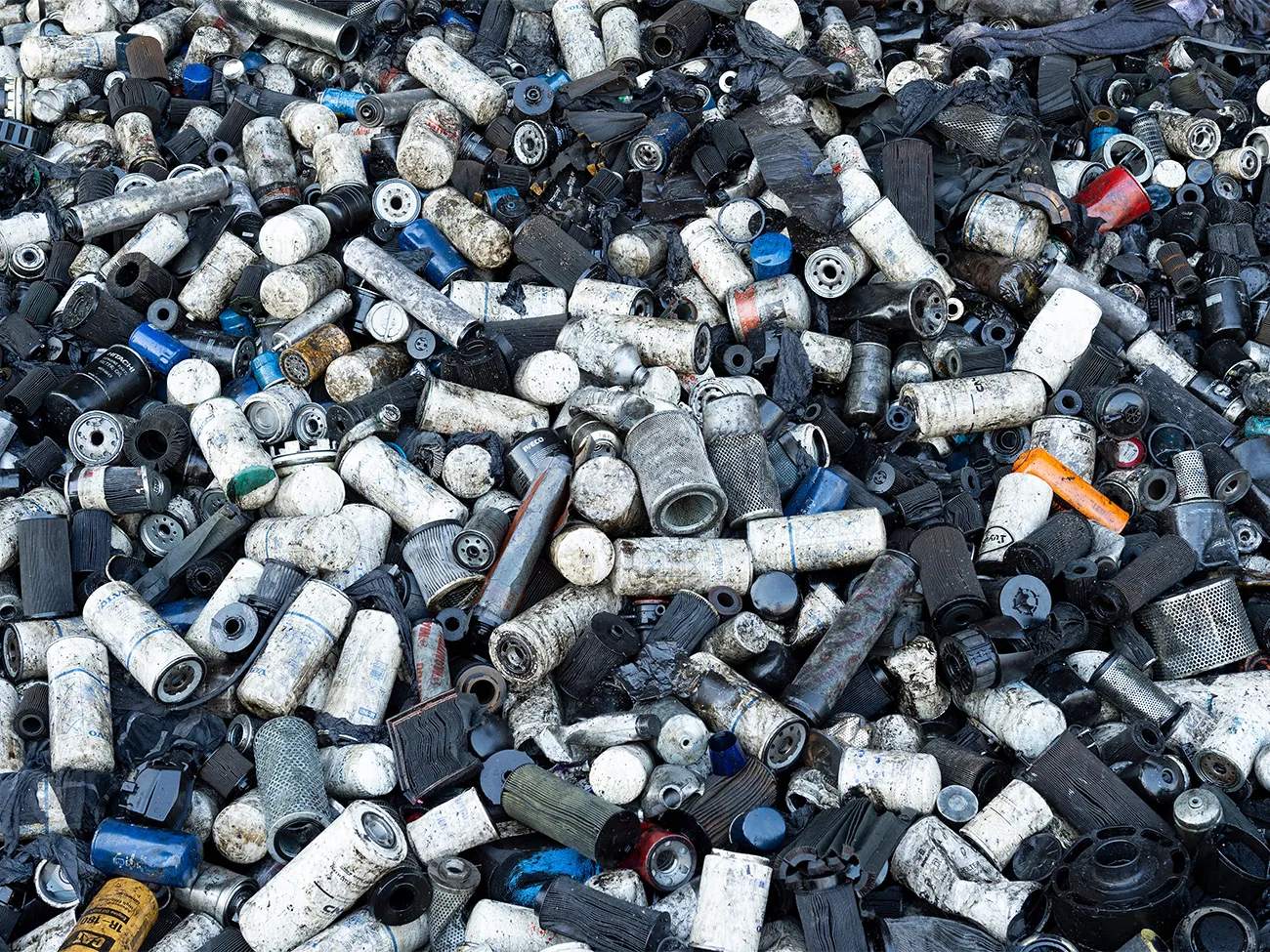
For years, companies have been required to have their waste oil collected and recycled. This is a good thing, especially today, when we need to use every drop of fuel efficiently. But Oilco collects more than just oil. At its highly efficient plant in Houthalen, it processes oil filters into oil, metal and paper, making a significant contribution to reducing its customers’ carbon footprints.
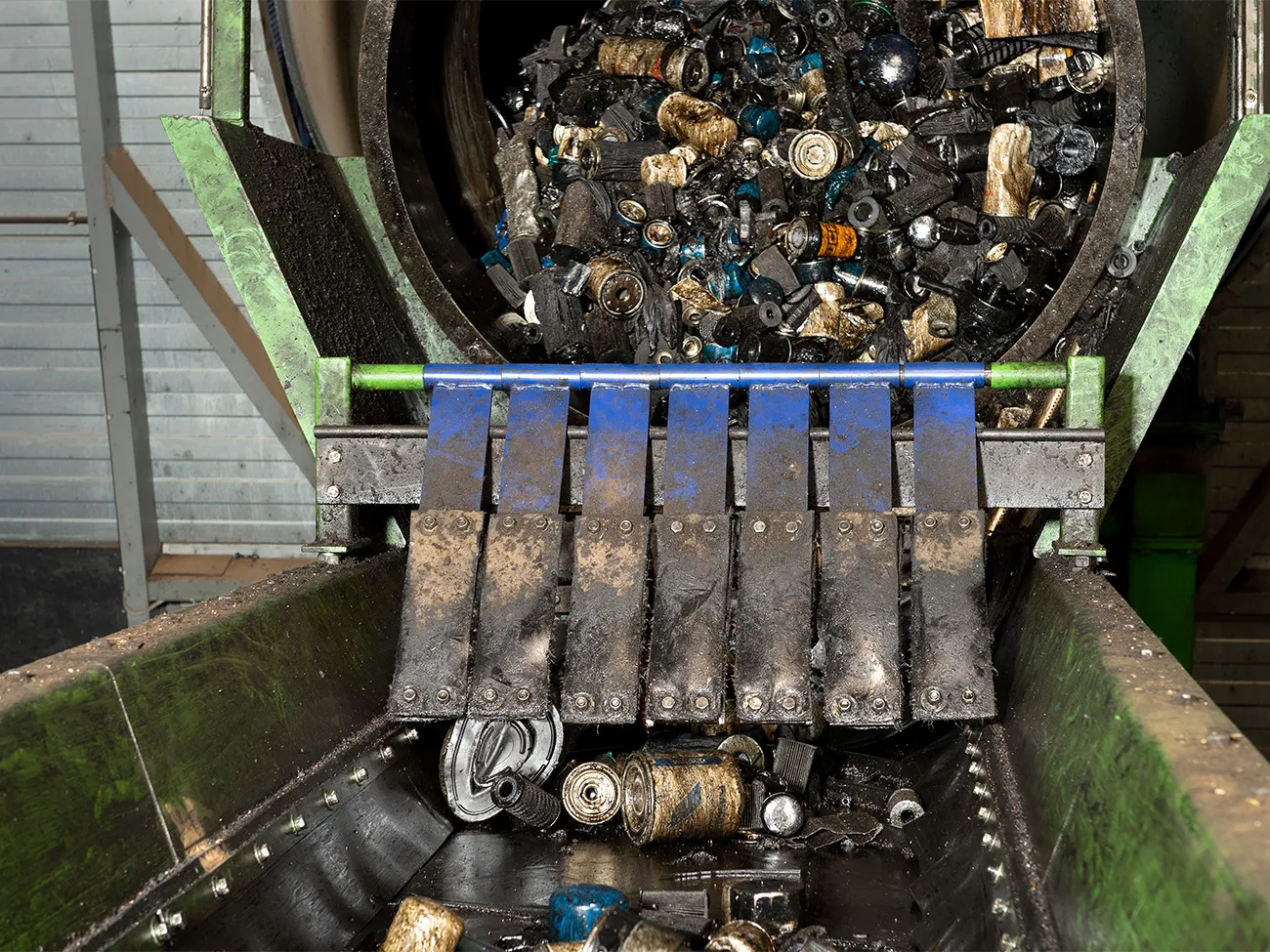
Oilco grew out of the former Waste Oil Services, which specialised in collecting and recycling waste oil into substitute fuel. It was half-owned by SUEZ and half by the Walloon investment company SRIW, the equivalent of the Flemish GIMV. A combination of many years’ experience and extensive in-house expertise made the company a specialist in collecting and transporting waste oils and other hydrocarbon-containing waste streams. In 2015, it refocused on these collection activities and continued under a new name and structure. However, one part of its processing operation remained: the recycling of oil filters. “We are unique in the Benelux in using this process, and there is a market for it,” says business unit manager Michel Poets. “Our Houthalen site has equipment specifically assembled for this process. The operators also have the necessary experience with both the incoming material to be processed and the equipment installed. This means we can process the collected oil filters into new raw materials extremely efficiently.”
6,000 tonnes of material
The synergy between its collection activities, covering waste oil and garage waste, and the recycling of oil filters from garages makes Oilco a strong player in the market. “There are no exact figures for oil filters, but we estimate that we reach at least three-quarters of the Belgian market. Oil filters also arrive in Houthalen from neighbouring countries, the United Kingdom and Ireland.” In total, around 6,000 tonnes of material are delivered to the Houthalen site each year. Approximately 85% consists of oil filters, with oil-contaminated cloths making up the rest. Good figures, but still not enough. Sales manager Anne-Lise Anteunis says: “We are looking at how to get more garages to collect oil filters separately. Many workshops still have just one container for all oil-contaminated waste, including oil filters. If we could collect even more oil filters separately, we could have a greater impact and help create a world that uses raw materials more efficiently. We hope the next version of the VLAREMA legislation will make this mandatory.”
Smaller carbon footprint
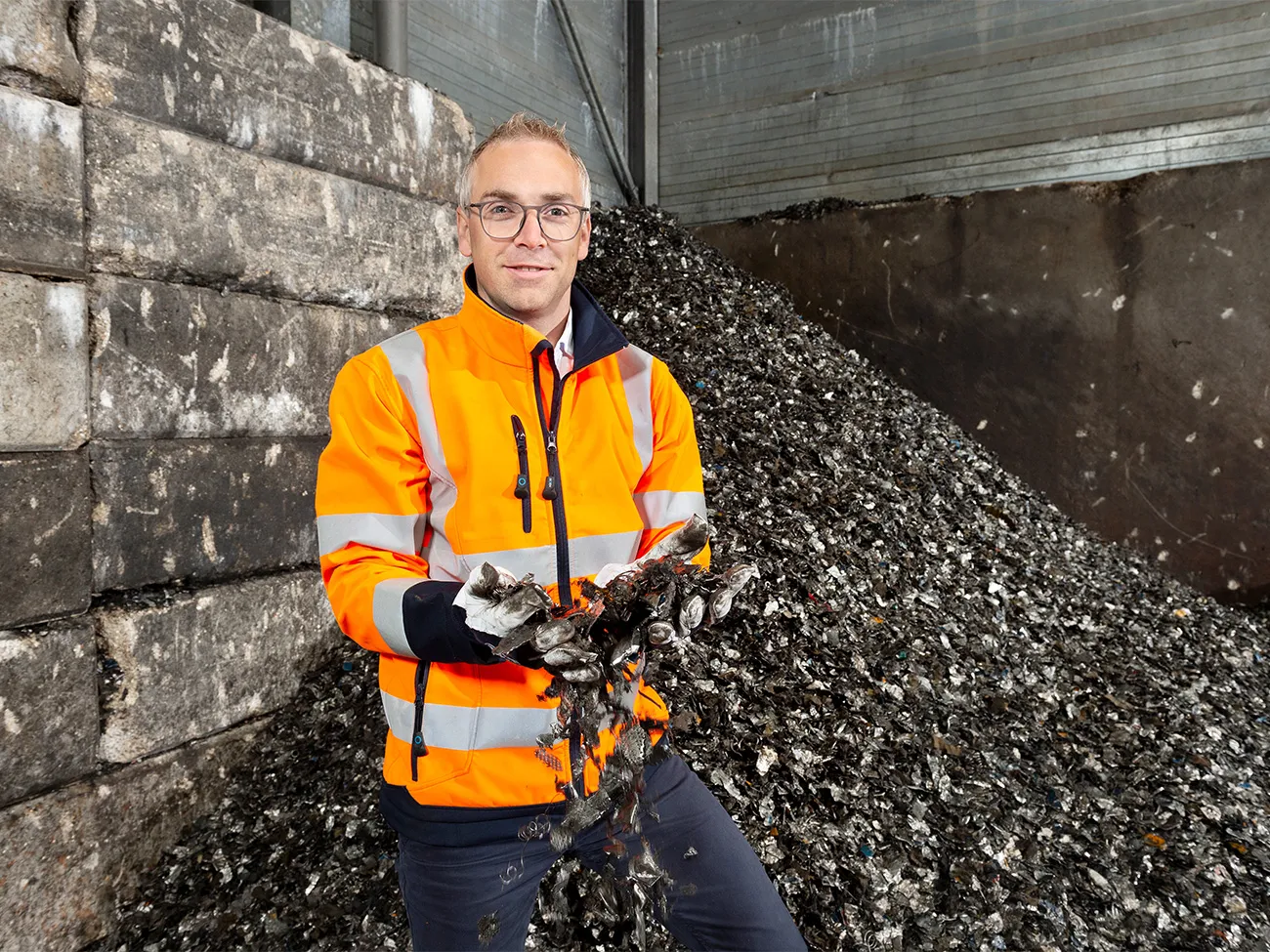
Almost all the material that goes into Oilco’s custom-built machines comes out again as a useful raw material. Less than 1% is lost. Poets says: “That is because we place a strong emphasis on quality control at the start of our process. Non-conforming oil filters can damage the equipment, but above all they stand in the way of high-quality recycling. The cleaner the single-material stream, the more efficient the recycling.” The three streams that eventually leave Oilco’s Houthalen site are oil, recycled into base oil; recycled metal; and paper, used as a substitute fuel by, for example, cement plants. “We produce large volumes of recyclable materials,” says Poets proudly. “By recovering as much raw material as possible, we help our customers achieve a lower carbon footprint.” To complete its sustainability efforts, Oilco has invested in solar panels in recent years to generate its own electricity. “We are seeing sustainability become an increasingly important issue in society. It may not yet be a priority for garage businesses, but we can see that industrial customers are taking an interest. That is why we are now actively looking for a standardised way to quantify how much carbon impact they can avoid by working with us,” says Anteunis.
Looking ahead
Oilco also continues to work on improving the efficiency and reliability of its processes. “It is a relatively old plant,” Poets explains. “So we need to be able to assess when to replace specific items of equipment and which spare parts to keep in stock. This is how we aim to ensure operational reliability in the years ahead. But we are also looking further ahead, at the investments needed to stay ahead of increasingly stringent legislation, for example on emissions. We are also considering which waste streams could complement our current activities. The shift to electrification will bring about the changes that are needed. Fortunately, we have the backing of our shareholders. They have a good overview of the waste sector and the opportunities that lie ahead.”
Question about this story? Ask your question
Keep following this
Get an email when a new story is published. No account needed.
- SubjectNews







