












New waste incinerator firing on all cylinders
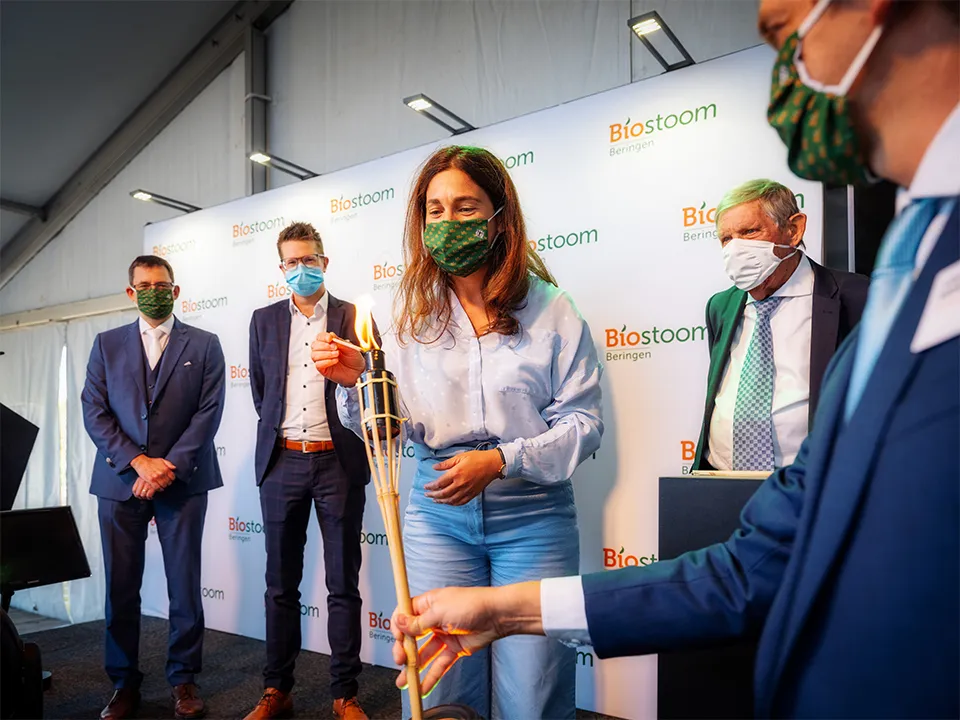
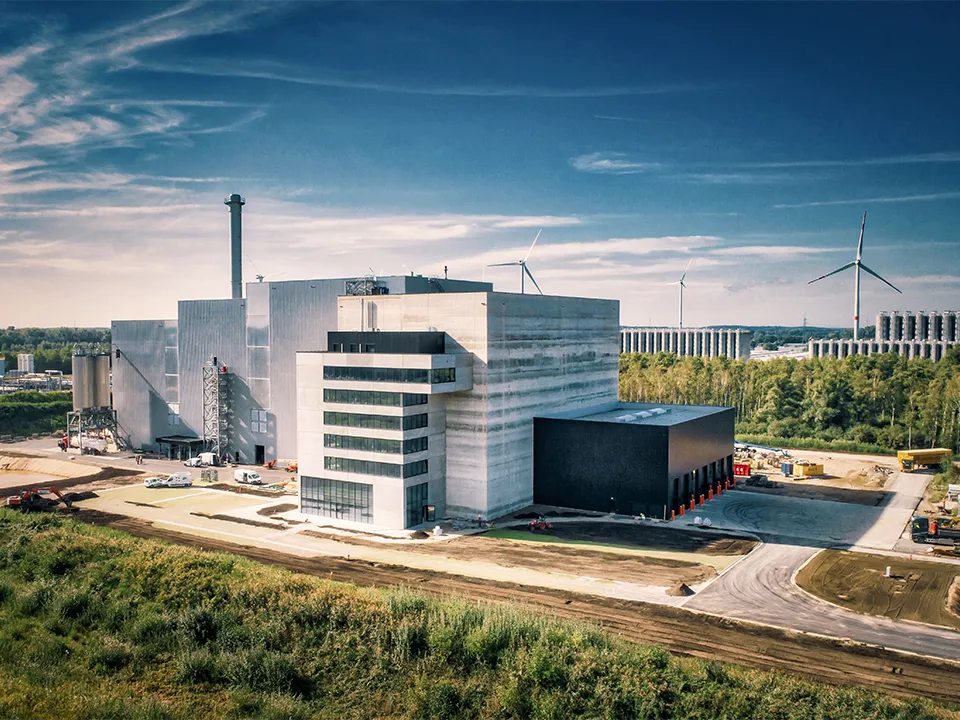
Flemish Minister Zuhal Demir literally came to light the fuse. The ceremony on 10 September marked the official opening of the Biostoom waste incineration plant.
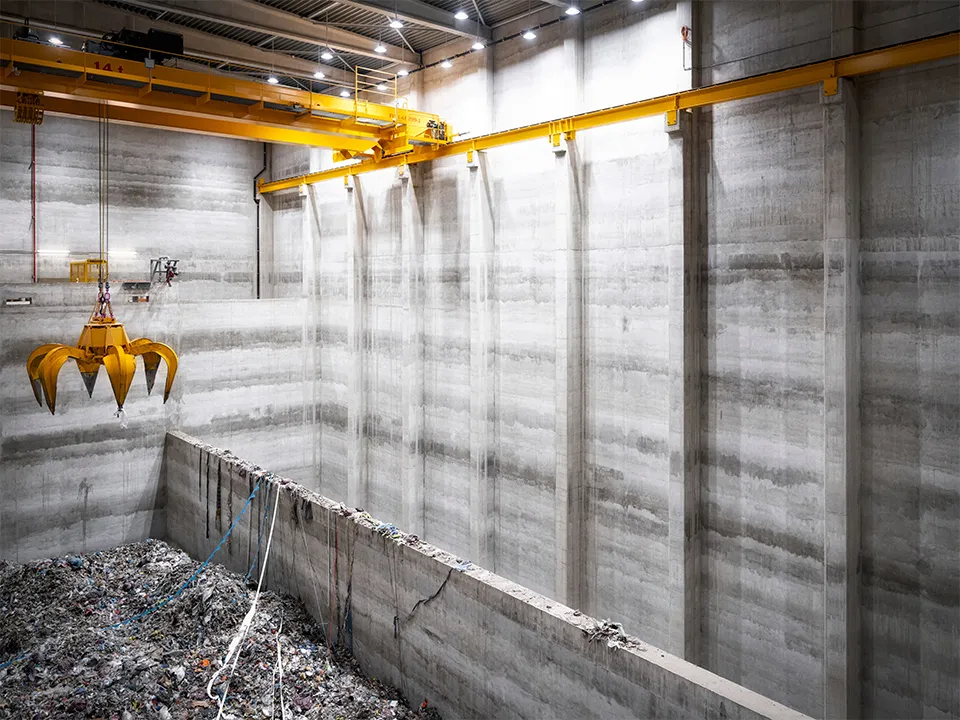
The plant will form the final link in the chain, converting 200,000 tonnes of non-recyclable waste into green energy. It replaces the plant in Houthalen at a new site in Beringen, where there is greater potential to supply heat and make better use of the energy.
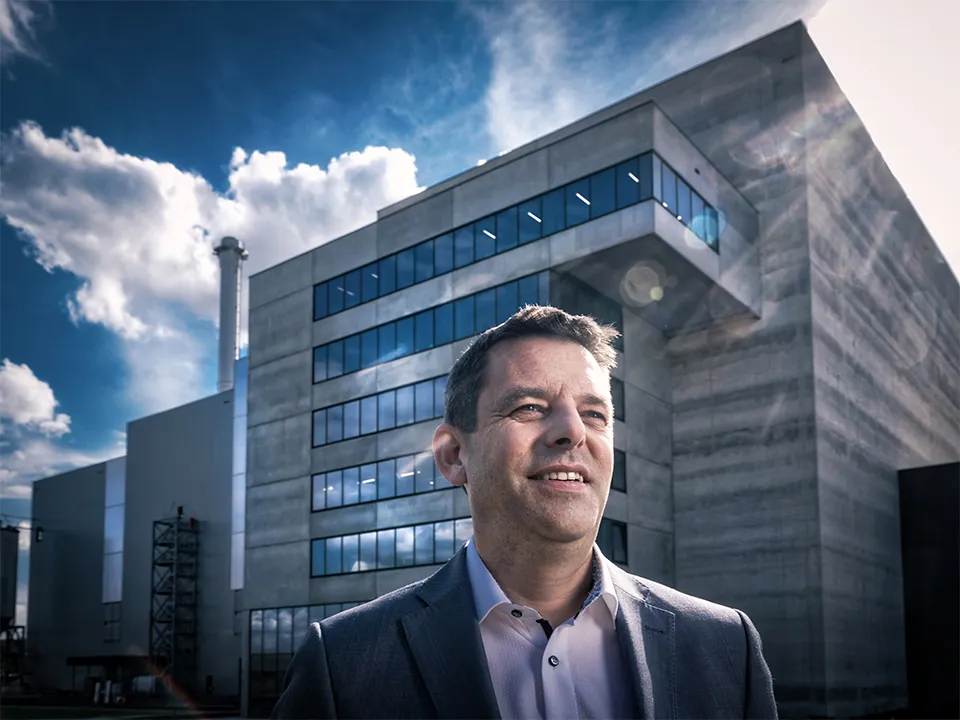
It took some doing, but the new Biostoom waste incineration plant has finally arrived. It will mainly process residual waste collected from residents of Limburg. Bionerga Managing Director Philip Peeters said: “With a capacity of 200,000 tonnes a year, equivalent to 10% of Flanders’ capacity, the new single-line plant is designed to process local waste locally. From the first stroke of the pen on the design, we have sought to make the most of the energy through this investment. We are aiming for the highest possible energy efficiency. That is why we first looked at heat applications, where efficiency rises to 90%. Even a state-of-the-art plant like ours will only just exceed 30% efficiency if we convert the energy into electricity. That was also why we moved from Houthalen to Beringen.”
High-pressure steam for Borealis
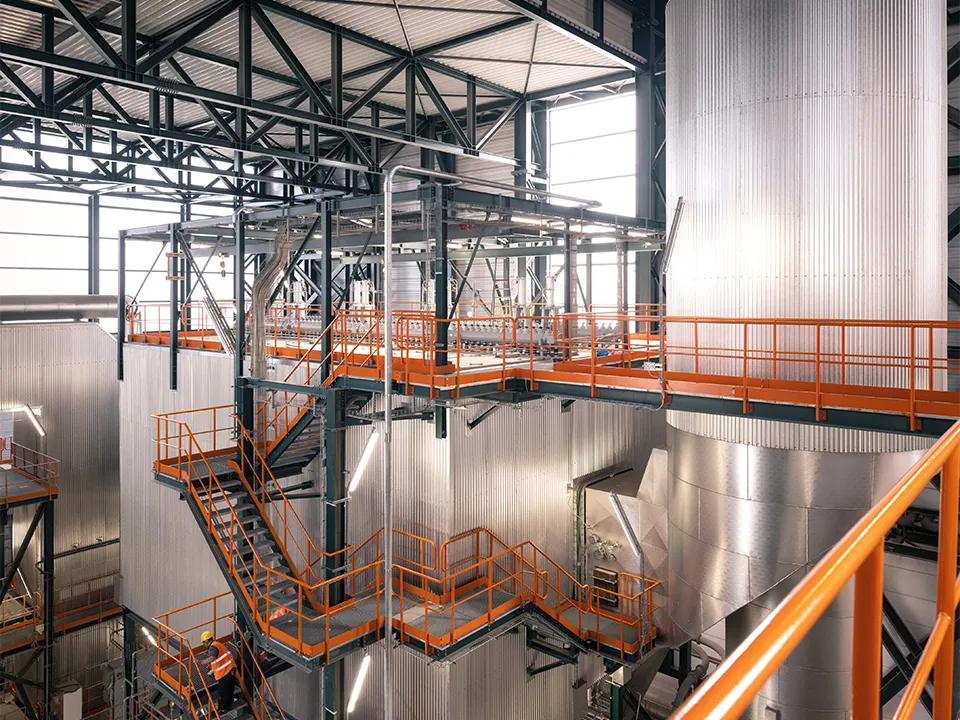
Biostoom’s site borders that of Borealis Polymers. Peeters said: “Their production process for converting propylene gas into propylene relies on a chemical reaction that requires high-pressure steam. Just as we began looking into where there was further potential for heat recovery, Borealis was also undertaking a strategic review of how to make its production process more sustainable. In other words, we found each other at just the right time.” A high-pressure pipeline runs from the Biostoom waste incineration plant, supplying its neighbours with steam at 400 °C and 40 bar. The steam is fed directly into the existing steam network, which previously ran on natural gas. The condensed water then returns via a hot-water pipeline to be turned back into steam. “That way, no water molecules are lost. Around a quarter of the 75 MW of heat we produce per hour goes to Borealis,” Peeters said.
District heating network for future neighbours
There is still plenty of heat available. Biostoom plans to use it to build a district heating network that will also supply other companies with water at around 100 °C. Peeters said: “We have therefore bought the neighbouring plots, giving us a say over who moves in next door. We are currently starting discussions with companies that could benefit from our heat and would like to set up here. For example, businesses with drying or heating processes. This is how we aim to maximise the energy benefits for the environment. In an ideal circular world, our plant would be redundant. Until then, however, we are a crucial link in the chain. Without a waste incinerator as the final link, recycling would not be possible. We provide a sustainable solution for all the materials and residues that cannot yet be recycled.”
Growing into a materials hub
Biostoom has already been thinking about the next step, too. It is putting a strong focus on materials recovery. “We want to make our plant a driver of development in energy and materials synergies. The bottom ash from our incineration is already used externally, giving the remaining minerals and ferrous and non-ferrous metal particles a second life. But we also want to find a use for the fly ash, a residue from flue-gas cleaning. Because it contains chemicals, it currently has to go to landfill. We want to investigate what it would take to reuse it as a material. And in time, we will also be able to capture the CO2 in our flue gases, once applications for it have emerged. So we are clearly not finished yet,” Peeters concluded.
Question about this story? Ask your question
Keep following this
Get an email when a new story is published. No account needed.
- SubjectNews







