












New director of Afvalfonds Verpakkingen: ‘Extended producer responsibility could also apply to other sectors’
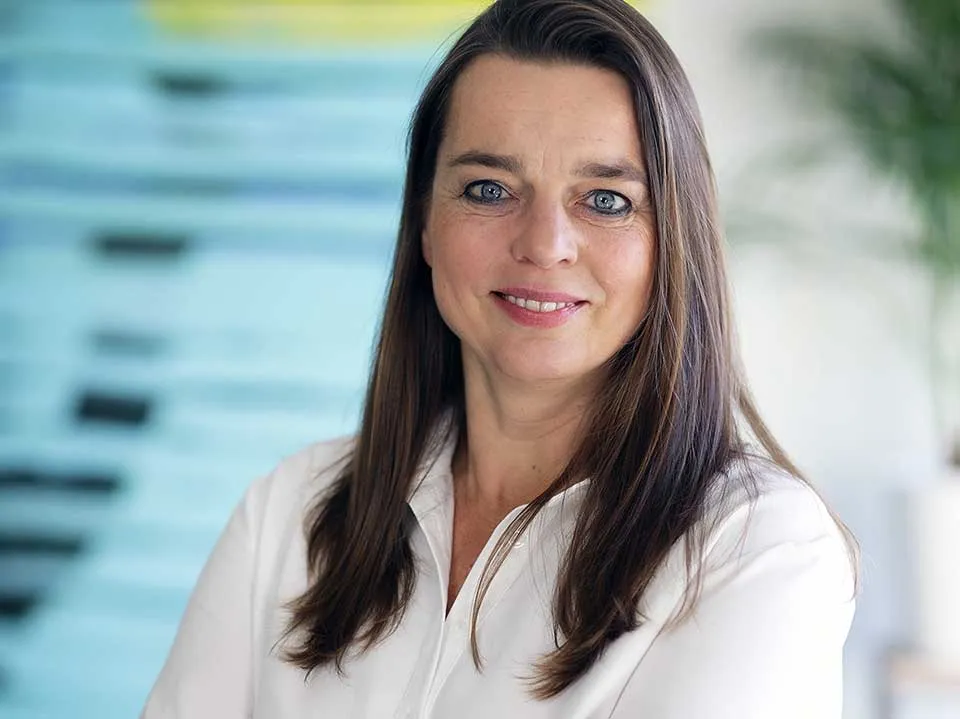
Since 1 January this year, Hester Klein Lankhorst has been managing director of Afvalfonds Verpakkingen.
She is responsible for meeting the statutory waste targets for packaging materials, a task she has taken on with great enthusiasm. Klein Lankhorst believes the Netherlands has its house in fairly good order, but also knows that a great deal of work will be needed to meet increasingly stringent targets. “And please give us the peace and time to make the system as robust as possible.”
Can you briefly explain what Afvalfonds Verpakkingen is and what it does?
“Afvalfonds Verpakkingen is responsible for implementing the statutory extended producer responsibility scheme for packaging. And that covers not only plastic, but also glass, paper and cardboard, wood and metal packaging. The primary task of Afvalfonds Verpakkingen is to meet the recycling targets for packaging waste. This means that the collection and recycling of packaging is funded by companies that place packaged products on the Dutch market. They do this by paying us a levy on their packaging. We also apply differentiated rates for plastic packaging: a lower rate applies to rigid plastic packaging that can be readily sorted and recycled and has a positive market value, because it makes the system less expensive. This encourages companies to produce packaging that is easier to recycle. We also act as a link between the packaging industry and the municipalities responsible for collection.”
So, are we meeting the targets in the Netherlands?
“For now, yes. The Netherlands is ahead of the field in Europe. But the targets will become increasingly stringent. We will need to make particular progress on plastic. That is why we are focusing more on innovation, for example in sorting and recycling. We want to improve existing technologies, while also explicitly exploring new ones. There is still a great deal to gain in sorting, for instance, by using new methods that produce cleaner streams. There are also promising new recycling technologies that we want to support more actively. An innovation agenda for the entire chain will be developed to ensure that we can meet higher targets too.”
Afvalfonds is regularly critical of municipalities. Is that a deliberate part of its role?
“We are not so much being critical as saying that we need to work together to make everything as ‘clean’ as possible. We need everyone in the chain to meet the targets, get as close as possible to a circular economy and close the loops as effectively as possible. So if we find that there is too much residual waste in the collected PMD, we need to discuss it. It is not good for the system, and it does nothing to bring us closer to the circular economy we all want. So we have that conversation. And it works both ways. Municipalities also ask us to ensure that packaging is easier to recycle.”
The Netherlands Environmental Assessment Agency published a critical report on the circular economy. What needs to improve?
“Of course, that report covered much more than packaging alone. We are certainly not doing badly, although we also have work to do. But there are still many waste streams that are not covered by extended producer responsibility. We should look at those too if we believe that the polluter should pay. I am certainly not shirking our responsibility. That is one of the first things I have started working on. At the same time, I wonder how other sectors and other countries can now scale up.”
Waste management structure
Afvalfonds Verpakkingen oversees a number of operational organisations. Their activities are also funded by the fund, through the waste management contribution. Together, they make up the ‘Waste Management Structure’.
NederlandSchoon makes the Netherlands cleaner by tackling and preventing litter in partnership with municipalities, businesses, government bodies, civil society organisations and engaged citizens. Nedvang b.v. records collection and recycling and maintains contacts with municipalities and waste companies. It also ensures the sorting and recycling of plastic packaging by entering into contracts with post-collection sorting facilities, sorters, recyclers, transport companies and transfer stations.
The Knowledge Institute for Sustainable Packaging (KIDV) helps companies make their packaging policies more sustainable by providing practical knowledge and advice. The operational organisation Statiegeld Nederland coordinates the introduction and practical implementation of the deposit return obligation, for both small and large bottles. The deposit return obligation is part of extended producer responsibility for packaging and is implemented collectively.
If you could give advice to the next government, what would it be?
“I would welcome a period of calm. There is so much coming our way: higher targets, deposits on cans, deposits on PET bottles and a new plastics directive. We also need to be given the time to put all of this in place properly. Introducing deposits on small PET bottles involves an enormous amount of work. Cans will be even more challenging. If we are constantly confronted with new questions and requirements, we will end up with a Pippi Longstocking-style house, with one extension after another. Ultimately, we all want the same thing: a society that is as circular as possible. And we want a system that works as well and as robustly as possible. That is what we should ultimately be judged on. I do not mean this defensively, but other sectors also need to take responsibility now. The packaging industry has had a great deal to deal with. I think that is fair, because we are highly visible. But please give us the peace and time to do the job properly.”
Who is Hester Klein Lankhorst?
Hester Klein Lankhorst began her career in legal practice, specialising in environmental law and spatial planning law. She then spent ten years at the ministries of VROM and I&W and was a manager at the investigative service, the inspectorate’s criminal investigation division. Her last government post was as manager of Waste and Sustainability. It was in this role that she first encountered extended producer responsibility. After spending some time in Africa working on plastic recycling, she was asked to become interim director and later director of the Knowledge Institute for Sustainable Packaging. “I did that for six years, and it was great fun setting something like that up.” She then spent two years as a partner at Rebel Next Economy, before Klein Lankhorst was asked to join the management team of Afvalfonds Verpakkingen. Since 1 January this year, she has been managing director.
Question about this story? Ask your question
Keep following this
Get an email when a new story is published. No account needed.
- ThemeMaking plastics and packaging circular
- SubjectNews







