












New depackaging plant for organic waste
Text and images Veolia
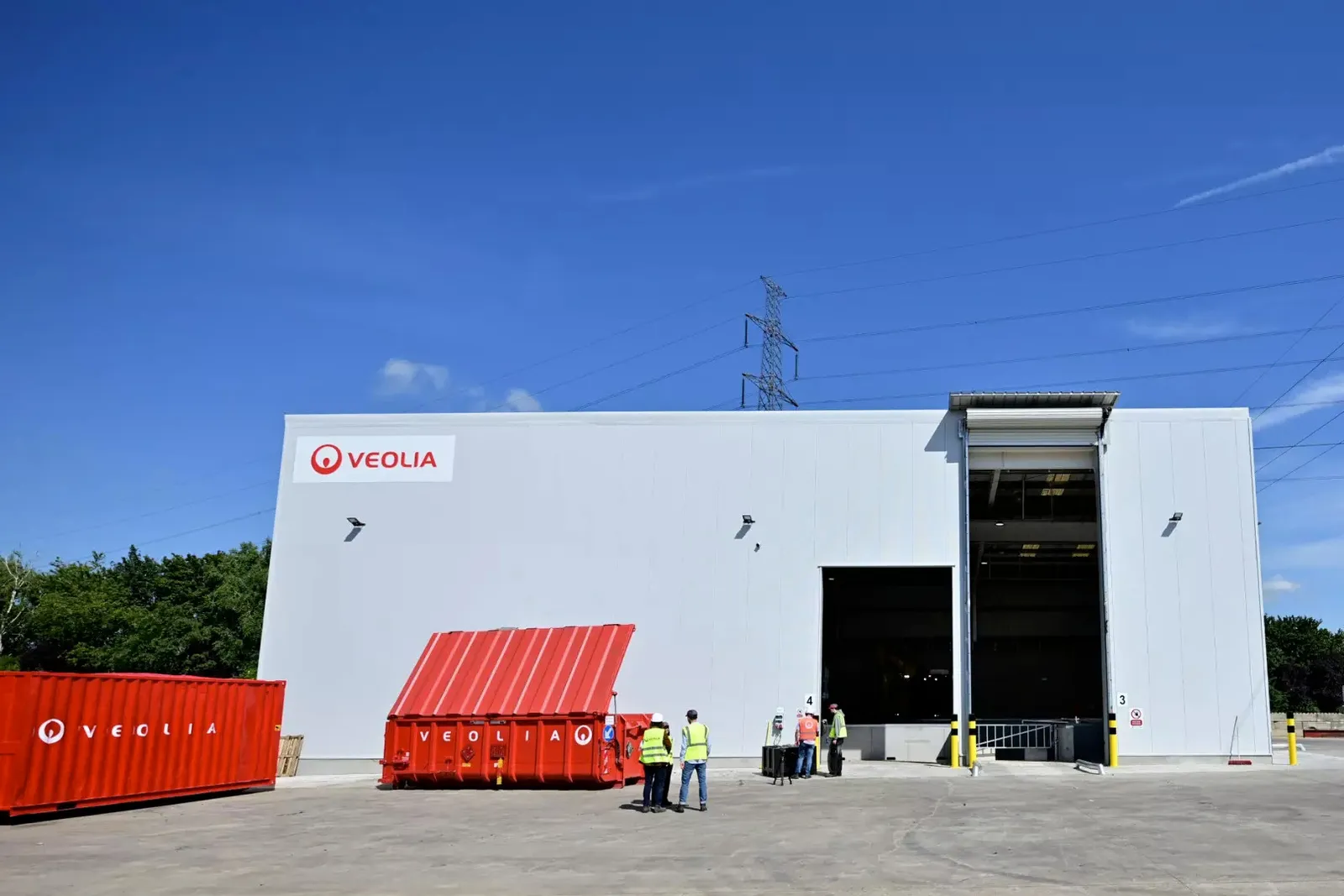
Veolia, the European leader in waste, energy and water management, opened its first depackaging plant in Belgium in July, in Sombreffe (province of Namur). With an investment of 2 million euros, the site will process up to 30,000 tonnes of organic waste a year. The waste comes from local businesses and industries, mainly in the agri-food, wholesale and hospitality sectors. It is then converted into green electricity through biomethanisation, which is fed into the Belgian electricity grid.
Until recently, there was no sorting requirement in Wallonia. As a result, mixed waste, a combination of packaging and food waste, often ended up in incinerators because recycling was not possible. Expired or unsold food in its original packaging, such as bread, vacuum-packed fruit, meat in trays, restaurant leftovers or biscuits no longer fit for consumption, was inevitably lost. Since 2024, sorting organic waste has been compulsory throughout Belgium, for households and businesses alike. Veolia responded by investing in dedicated collection solutions for organic waste. With the opening of this specialist sorting and processing site, the company is now expanding its service offering in Belgium.
1.4 times more electricity
The new site in Sombreffe is a first for Veolia in Belgium and Luxembourg. This industrial depackaging solution makes organic waste suitable for conversion into biogas and green energy. The waste is recycled to the fullest extent through specialist partners, reducing the amount of residual waste sent directly to incinerators. After processing in Sombreffe, partner companies convert the organic material into biomethane, generating up to 1.4 times more electricity than the traditional incineration of the same quantity of waste.
From sorting to green electricity: a multi-stage process
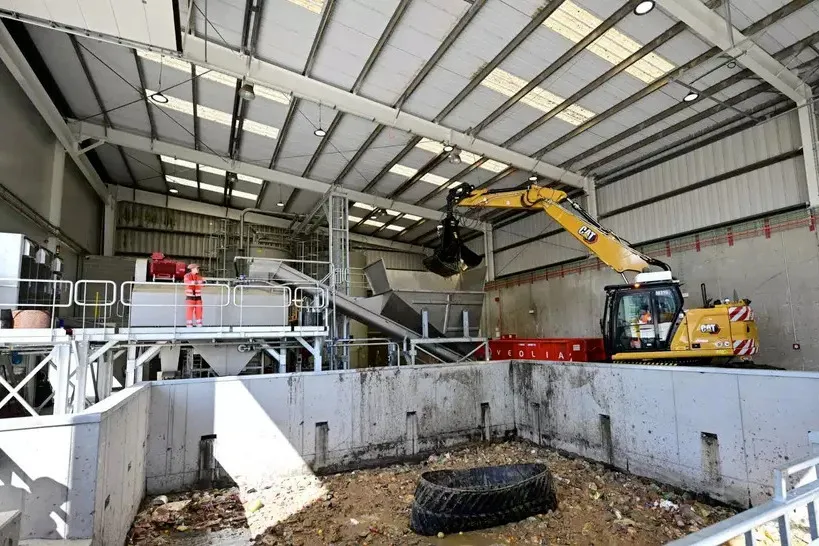
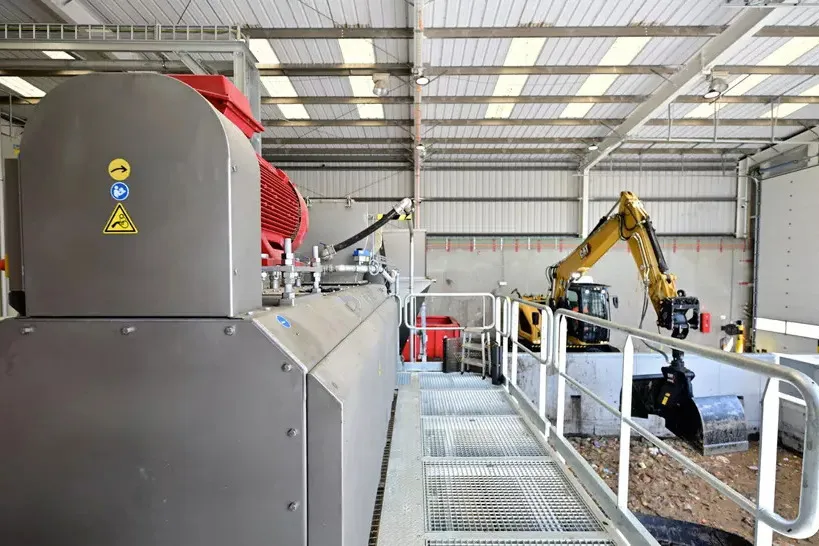
At the site, organic material is separated from so-called ‘soft’ packaging, such as flexible plastics, to simplify further processing. Specifically, refuse collection vehicles tip the packaged food waste into a reception pit, after which a crane transfers it to the processing line. There, the packaging is mechanically separated from the organic material. The remaining organic material is ground into a liquid mass, also known as ‘soup’. This organic ‘soup’ is stored in tanks on site and then transported by tanker to different local biomethanisation units, depending on the composition of the waste. Once processed, the organic material is converted into green electricity. This process will enable the waste treated in Sombreffe to produce up to 7.6 GWh of green energy a year, enough to meet the annual consumption of 2,100 Belgian households.
A project aligned with Veolia’s GreenUp strategy
In Belgium, where the recovery of organic waste is becoming increasingly important, the new site in Sombreffe strengthens Veolia’s local involvement across the entire value chain, from collection to recovery. To deliver on this ambition, the company invested 2 million euros in the project. This investment clearly demonstrates its commitment to continuing to invest in Wallonia and supporting local stakeholders in their efforts to promote renewable resources in the region. Philippe Tychon, Chief Operations Officer at Veolia Belgium and Luxembourg: “With this new site in Sombreffe, Veolia is taking a concrete step towards recovering local resources. Our aim is to transform what once seemed like a limitation, packaged organic materials, into a valuable resource for our customers and the environment. This project is a perfect example of our GreenUp strategy: turning an environmental challenge into a practical solution that contributes to the circular economy.”
A site in the start-up phase
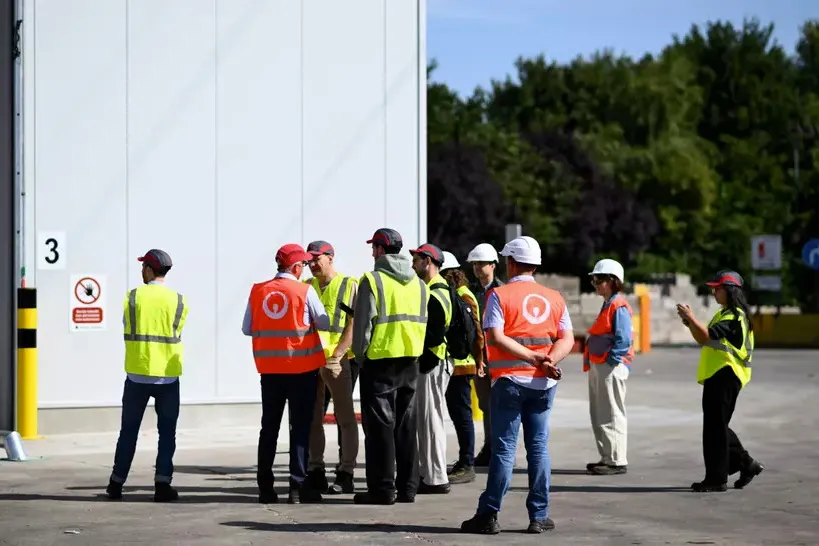
Work began last November at a former composting site, which was completely converted into a new processing line for packaged food waste. The site has been in the start-up phase since this summer and is already processing its first tonnes of waste. The plant will be fully operational and running at full capacity by the end of 2026.
Question about this story? Ask your question
Keep following this
Get an email when a new story is published. No account needed.
- SubjectNews







