












Nappy recycling a priority for ‘recycling hub Flanders’
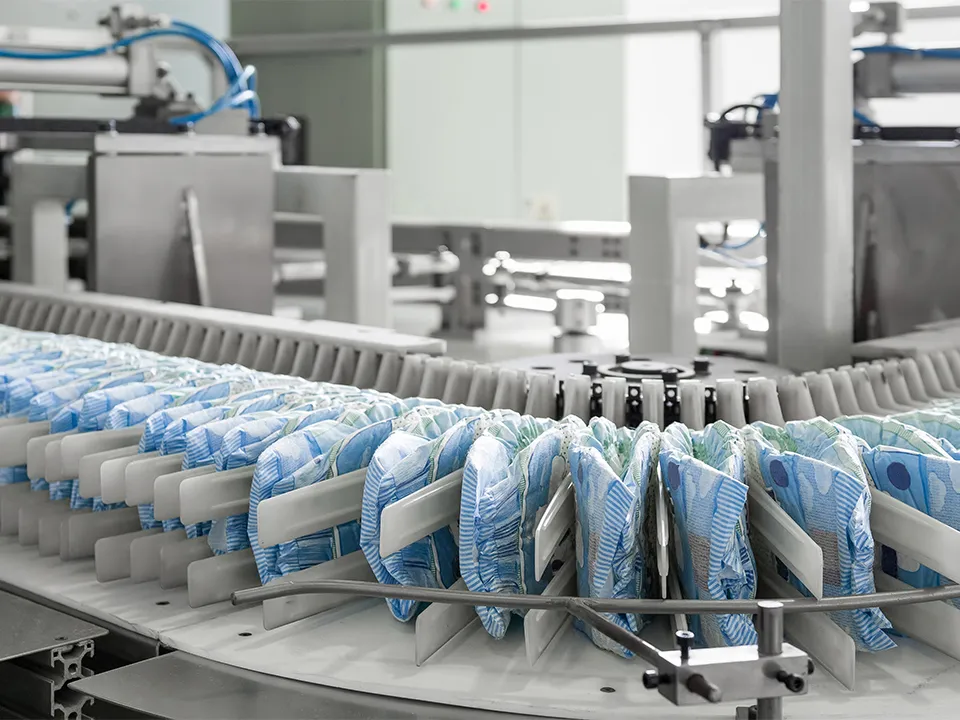
A sorting analysis in 2013 showed that the residual waste stream consists of 11.55% hygiene waste, a category that includes nappies and incontinence products.
Flemish Environment Minister Zuhal Demir therefore wants nappy recycling to be a priority for her cabinet. “Every year, 65,000 tonnes of baby nappies end up in landfill. We want to do something about that,” says Demir.
Anyone with children knows all too well how much of the residual waste stream can consist of nappies. On average, each child uses around 4,000. Waste figures confirm this too: the so-called hygiene fraction, comprising nappies and incontinence products, accounts for 13.2 kg per resident per year in household residual waste. This statistic does not yet include nurseries and residential care centres. Today, this waste is still incinerated with household waste. But the Flemish Government now wants to change that. “As part of the transition to a circular economy, we hope to close the nappy loop in the future. Recycling nappies not only provides new raw materials, but also helps reduce CO2 emissions,” says Environment Adviser Nick Vliegen. “Prevention and ecodesign can also help reduce the use of raw materials in nappy production.”

Breaking down pathogens and medicines
This is not the first attempt to remove nappies from household waste. There have been various initiatives in the past, but no tangible breakthrough. What makes this waste stream so challenging, and why is the time now right for another attempt? Vliegen says: “The possible presence of pathogens and residues from medicines is a key issue. Any treatment process will therefore have to ensure that these substances are adequately broken down. Regardless of the recycling technology used, the policy framework will set minimum requirements that the technology must meet to guarantee that the recovered raw materials are safe for both human health and the environment.” What has changed is, first and foremost, the attitude of manufacturers of these products. “Producers are already applying ecodesign to use fewer raw materials, but this process is still in its infancy. They are actively helping to find a solution for this material stream, and that makes a real difference.”
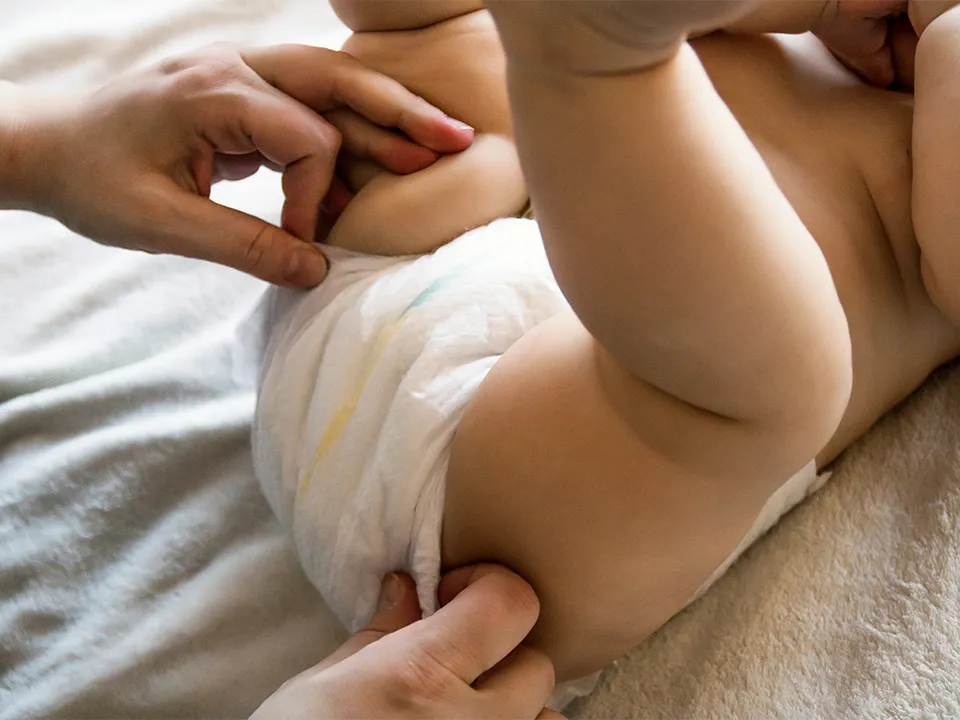
Circular nappies are still a distant prospect
We should not yet expect fully circular nappies. “The strict legal quality requirements for nappies, which ensure that safety and health are never compromised, make this impossible for now,” Vliegen explains. No post-consumer recycled materials are currently used to produce new nappies. However, technologies for recycling them efficiently are developing rapidly. “Several promising initiatives abroad, in the Netherlands and Italy, show that there is potential. Naturally, we have drawn on their experience when developing this policy framework for Flanders.” VITO is currently examining, on behalf of OVAM, the best ways to treat and recycle nappies. Possible collection scenarios will be mapped out during the course of this year. “The cost of the recycling process, potential markets for the recycled materials, and the willingness of nurseries, residential care centres and municipalities to set up separate collection schemes will all be examined,” says Vliegen.
Plans to be finalised by the end of 2022
This initiative is part of the broader ambition to make Flanders a recycling hub. Some of the €30 million allocated for this purpose will be used to assess which waste streams have the greatest potential. The Flemish Government hopes to identify the first concrete options for nappy recycling when the new implementation plan for household and similar commercial waste is approved at the end of 2022.
Question about this story? Ask your question
Companies in this story

Keep following this
Get an email when a new story is published. No account needed.
- ThemeImproving waste collection and transport
- SubjectNews
- CompanyOVAM







