












Move to a water-connected site and new washing plant
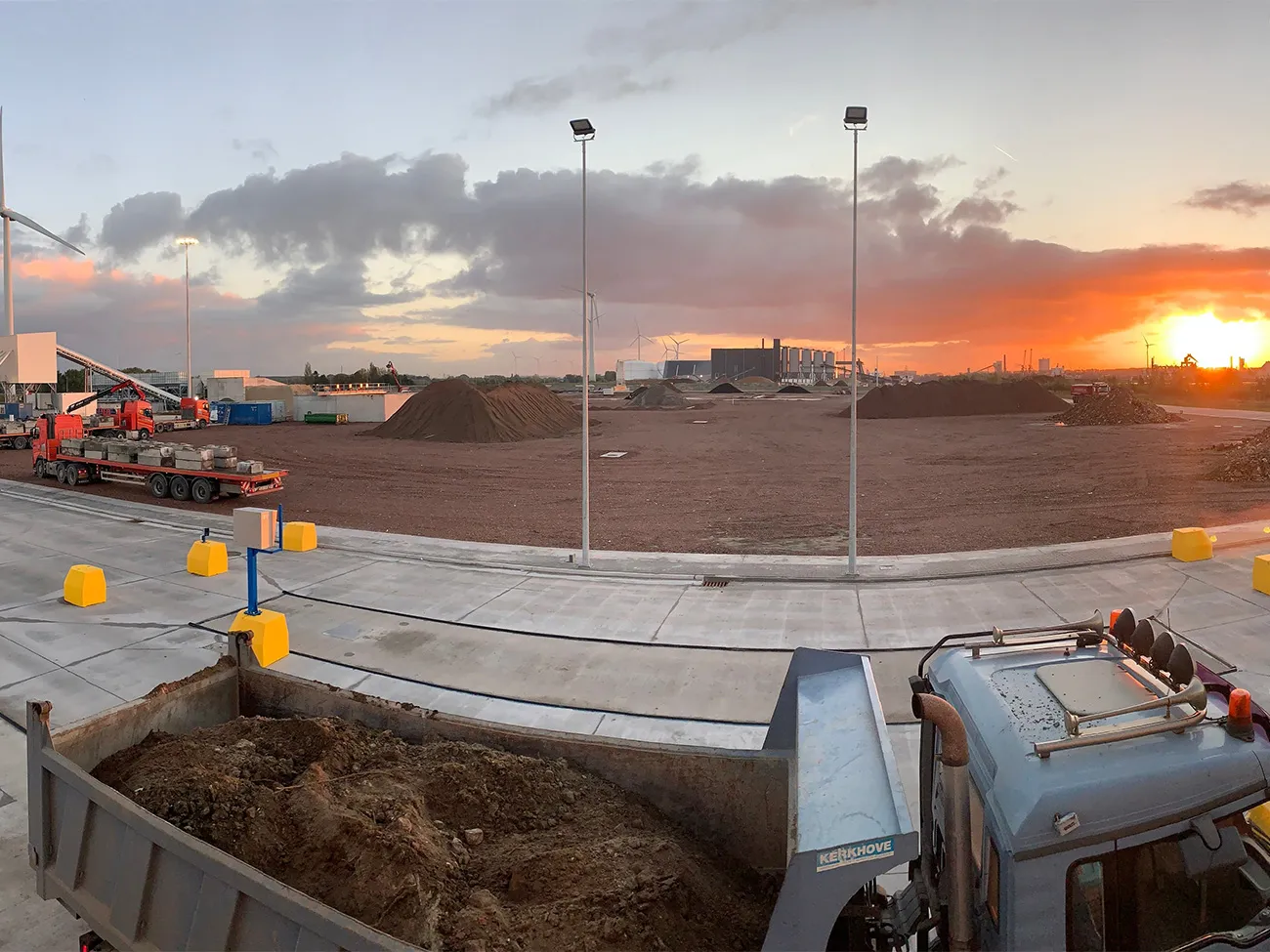
AC Materials is part of Square Group and operates across five sites: Brugge, Gent, Vlierzele, Puurs and Heist-op-den-Berg. Its core activities are the recycling of concrete, asphalt and brick rubble. The aggregates produced from this material are then processed into concrete products at the company’s concrete batching plant. Recycled aggregates and naturally sourced aggregates are also sold to third parties.
This autumn, AC Materials moved its site in Wondelgem to a larger water-connected location at Kluizendok in the Port of Gent. In 2021, it also commissioned a washing plant to produce high-grade rubble aggregate. In doing so, it is fully committing to sustainability and the circular economy.
High-grade mixed aggregate
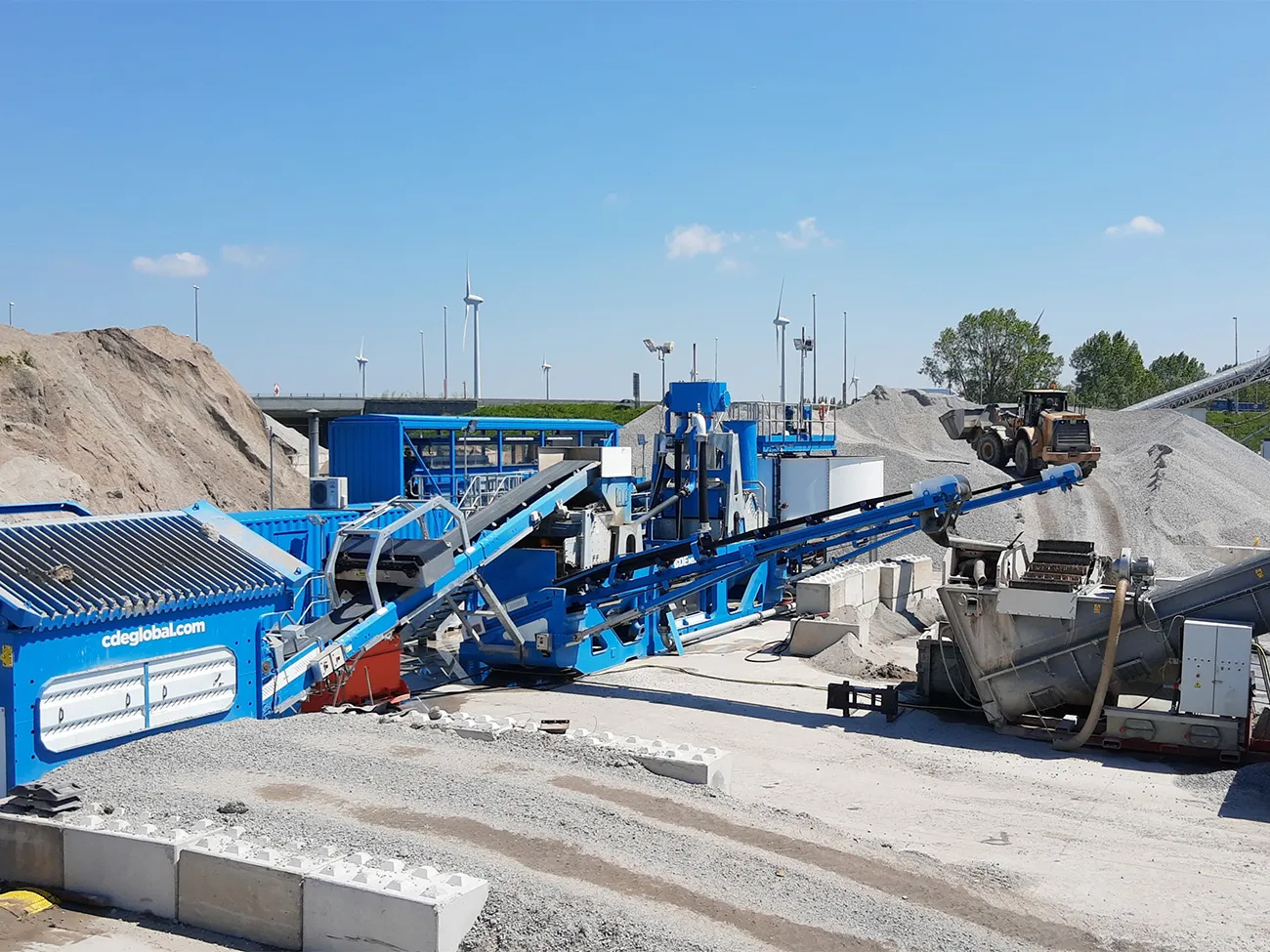
With the commissioning of a washing plant this spring, AC Materials became the first company in Belgium able to offer high-grade mixed aggregate, known as B+ aggregate. Unwashed mixed aggregate typically contains too many fine particles, as well as floating and non-floating contaminants. “Investing in a high-performance washing plant means we can control the consistency and purity of the finished aggregates. This allows these recycled aggregates to be used in certified applications,” says managing director Johan Baeten. This further completes AC Materials’ circular business model. “Concrete from structural beams can therefore be reused in load-bearing structures, adding more value than if the aggregates could only be used in concrete for foundations,” Baeten continues.
“Building with recycled waste is the future”
The company’s final activity is the temporary storage of uncontaminated soil (E-TOP). This is soil that, for example, is surplus to requirements on a construction project and for which the contractor needs temporary storage. After the necessary analyses and treatments, such as screening and liming, the soil can then be taken from stock for another project and reused. Baeten sees a growing market for recycled aggregates. “For economic reasons, natural aggregates are still often chosen at present, but it seems likely that the government will tighten the regulations and give preference to circular aggregates,” the managing director says, sharing his expectations. “Building with recycled construction waste is the future.”
Efficiency gains
The washing plant is currently located at the site in Brugge, but will soon move to the facility in the Port of Gent. This autumn, the company began using a 15-hectare water-connected site there. It replaces two small water-connected sites near Gent. By bringing its activities together on a large site, the company is able to improve efficiency. Its location at Kluizendok is also an important factor. “The importance of inland shipping will only continue to grow,” Baeten explains. “We already see this in the delivery of rubble from Brussel and Antwerpen, where some projects require inland shipping to be used. We also regularly use inland shipping for transport out, either for internal transport or to ship mixed aggregates to the Netherlands, for example.” The new site in the Port of Gent has been designed with visitors’ convenience in mind. Administrative procedures have been kept to a minimum, and automatic number plate recognition is used, for example. As a result, lorry drivers no longer need to report to reception, and the necessary documentation is provided via a kiosk.
Question about this story? Ask your question
Keep following this
Get an email when a new story is published. No account needed.
- SubjectNews







