












Local processing, local production of raw materials
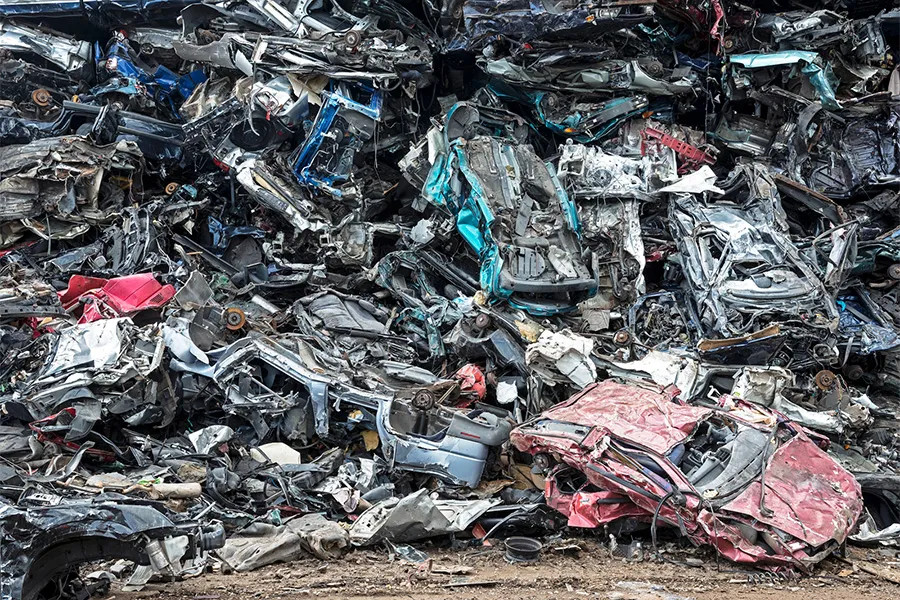
The fourth step on our path towards a circular economy may well be the most crucial. We need to process as much waste as possible locally, so that we can produce our own raw materials. This will make us less dependent on imports of raw materials. In this article, we highlight the obstacles and offer practical solutions to make this step a reality.
Too much waste is still ‘disappearing’ from the system. End-of-life vehicles are a case in point. Around 32% of deregistered vehicles are missing; we do not know where they are. A further million vehicles end up on foreign markets as second-hand vehicles, where they pose a risk to road safety and the environment. This must be avoided at all costs. But support is needed to create an incentive to develop local economic activity based on waste.
Practical solutions
To promote local processing and enable us to supply our own valuable raw materials, we propose the following practical measures:
1. More enforcement and awareness-raising. The assessments in the ‘Waste Early Warning Report 2023’ are an important starting point for improving waste policy. In addition, every Member State should be required to comply with and enforce existing European legislation. In Belgium, regional authorities must make sufficient resources available to detect environmental offences and raise producers’ awareness when new waste measures are introduced.
2. Ambitious local reindustrialisation. This calls for a thorough overhaul of administrative permitting procedures. The Critical Raw Materials Act, which sets binding deadlines for permitting recycling facilities, could serve as a source of inspiration.
3. A shared vision for residual streams. Every recycling process generates residual streams that cannot be recycled. If we want our recycling facilities to continue developing, we need clarity on what can be done with these residual streams. The regions therefore need a clear, shared vision on residual streams
and ‘safe sinks’.
4. Green gas production. Energy and climate policy could receive a major boost by focusing on the local production of green gas, which our sector produces from organic waste. Belgium should source at least 10% of its gas consumption from biomethane by 2030 and take the necessary legislative measures to achieve this.
5. More local recycling and reuse. Introduce binding measures as part of the approval of all management organisations. These could be based on the concept of recycling premiums, as applied by Valipac, with additional incentives for local processing.
Question about this story? Ask your question
Keep following this
Get an email when a new story is published. No account needed.
- ThemeCircular business under changing regulations
- SubjectNews







