












Limited use of tar-containing asphalt granulate permitted again
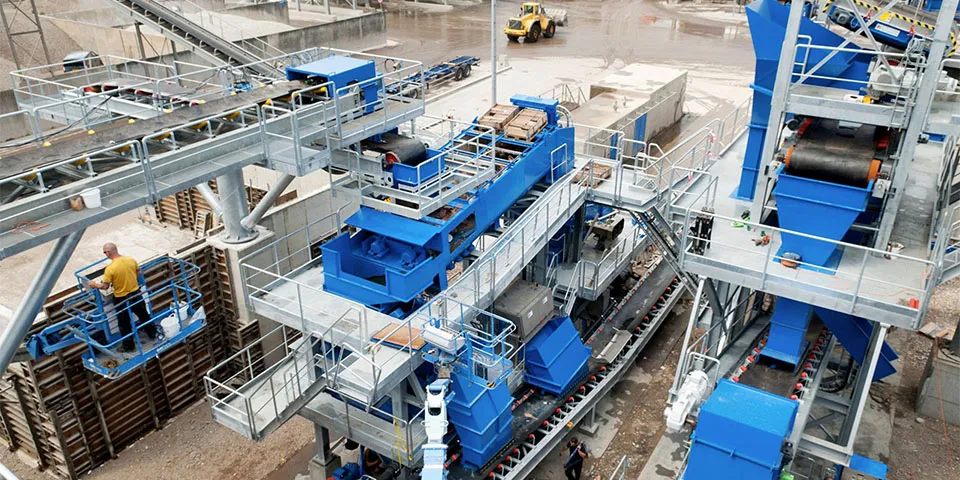
The use of thermally cleaned tar-containing asphalt granulate (TAG) will once again be permitted under strict conditions. This was announced recently by Stientje Van Veldhoven, State Secretary for Infrastructure and Water Management, in a letter to the House of Representatives. It marks the end of a ban introduced in 2017. Since then, millions of tonnes of thermally cleaned soil have been awaiting a destination in Eemshaven (Theo Pouw) and Moerdijk (ATM).
Tar-containing asphalt granulate is produced when roads are replaced or widened. Because of the contamination, it cannot be reused or exported. Theo Pouw Groep and ATM invested in machinery years ago to clean TAG. The resulting product is thermally cleaned soil (TGG), which was used, among other things, in dike reinforcement projects.
A ban on the use of TGG followed in 2017, after it emerged in 2016 that its quality at three sites (Westdijk in Bunschoten, the lake at Heenvliet and Perkpolder) failed to meet the standards set by the Soil Quality Decree. Other risks also came to light, including geotechnical deformation.
The Human Environment and Transport Inspectorate (ILT) therefore launched an investigation into Theo Pouw and ATM. The ILT then required changes to the production process.
Both companies successfully made those changes, and in December 2019 the ILT once again authorised the limited use of thermally cleaned soil. According to the ILT, TGG is not environmentally suitable for use in or in the immediate vicinity of (sensitive) agricultural and nature areas or groundwater protection areas, nor is it suitable for use in groundwater or surface water. TGG is also unsuitable as fill for capping layer structures. In terms of regulated substances, however, TGG meets the maximum values for industrial-use class and use in a large-scale soil application (GBT). Permission from the competent authority is always required to use TGG.
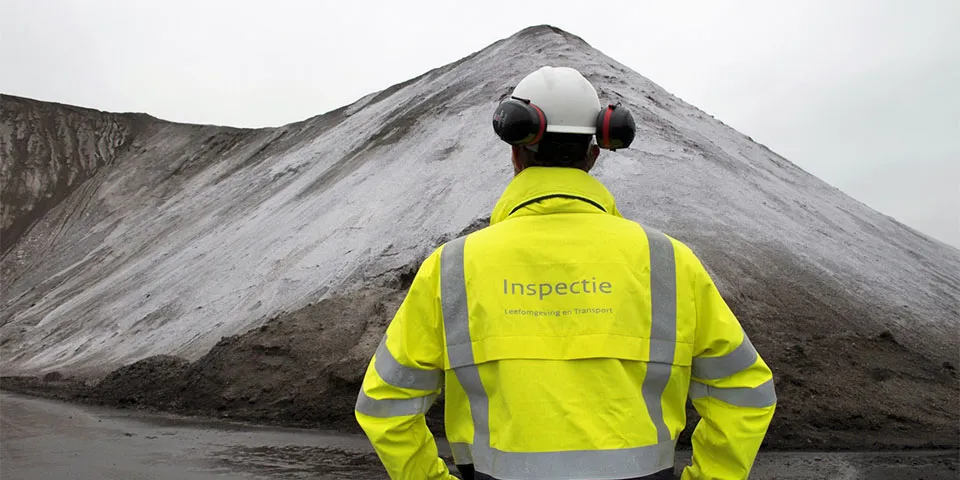
The ILT concludes that TGG may once again be used on a limited basis.
Risks
State Secretary Van Veldhoven now agrees with the ILT’s conclusions. At the request of the House of Representatives, she had the risks investigated further by engineering consultancy Tauw. Based on this assessment, she now concludes that TGG may be cleaner than previously thought. “The aim is to resume the use of TGG under certain conditions, provided, of course, that it meets the quality requirements set out in the Soil Quality Decree,” she writes in her letter to the House. “However, because of TGG’s leaching behaviour, existing stockpiles can only be used under special conditions, namely in brackish and saline environments.”
ATM and Pouw, however, say that thermally cleaned soil can be used much more widely. The State Secretary has promised to talk to the companies. Rijkswaterstaat is meanwhile continuing its investigation into a number of projects where TGG was used in the past.
Question about this story? Ask your question
Keep following this
Get an email when a new story is published. No account needed.
- ThemeCircular construction and demolition
- SubjectNews







