












Insulation manufacturer takes another step towards its sustainability goals
Text Laureline VansteenkisteImage URSA
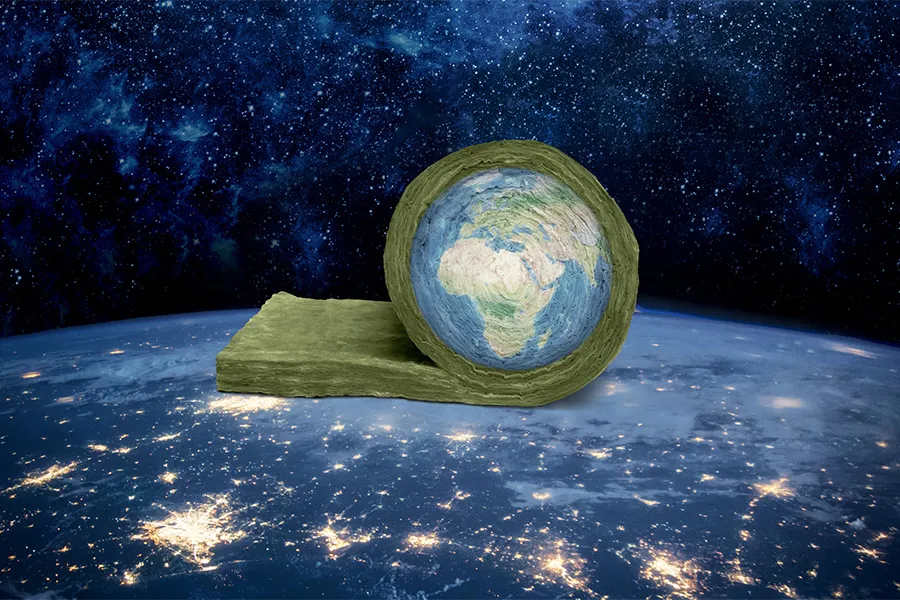
The impact of climate change is being felt worldwide, while the effects of the energy crisis continue to resonate with many consumers and businesses. Reducing energy consumption efficiently is one thing, but simply not using energy takes things a step further. With its high-quality range of glass wool and XPS insulation, URSA is helping to reduce the environmental footprint and create a more sustainable world.
As a manufacturer of mineral wool and extruded polystyrene (XPS), URSA, part of Etex Group, offers high-quality solutions for optimally insulating commercial, residential and industrial buildings. Mineral glass wool is one of the most efficient and easy-to-use thermal and acoustic insulation materials, both in terms of environmental impact and cost-effectiveness. Glass wool consists of more than sixty per cent sand, a naturally renewable resource, and is fully recyclable. In addition, URSA’s glass wool products meet very high fire safety standards. XPS, or extruded polystyrene, is unique in its combination of high thermal insulation, exceptional compressive strength, excellent resistance to water and freeze-thaw cycles, and ease of installation.
Sustainability as a philosophy
Sustainability is central to the insulation manufacturer’s vision and mission. URSA therefore aims to minimise its impact on people and the environment, both as a company and through its product portfolio, by taking a considered approach to product development, optimising production and ensuring efficient transport.
The most effective way to save energy is to avoid consuming it in the first place. Energy-efficient buildings are a crucial part of the solution. Better insulation in buildings and homes not only lowers energy bills, but also improves the quality of life for residents and users. URSA insulation provides optimum thermal resistance while also contributing to greater acoustic comfort and a healthy indoor climate. Thanks to their high quality and long service life, URSA solutions also make economic sense for you and your customers.
In line with this sustainability philosophy, URSA considers the environment not only during the use of its insulation solutions, but also throughout their production. The company has set itself the target of using eighty per cent recycled and reused glass in mineral wool production and fifty per cent externally recycled polystyrene in XPS production by 2030. Production waste is also used as a raw material. The manufacturer also ensures safe handling and a high level of recyclability when buildings are demolished.
Glass wool in metal construction
The impressive BUDA project demonstrates why glass wool is ideal for industrial buildings with metal construction. The new sorting centre for the Brussels Agency for Cleanliness took shape on an industrial estate alongside the canal in Neder-over-Heembeek. The office building and warehouse are built with timber frames and metal cladding made from vertically mounted profiled steel sheets. HD Systems, a specialist in façades, roofs, cladding and frames, chose URSA CLADURSA 32, with a thickness of 190 millimetres, for the project. This dimensionally stable wool slab is faced on one side with glass fleece and has a groove along its length, allowing for quick and easy installation. The longitudinal rebate ensures correct fitting against the inner liner flange. With its excellent thermal properties and very good acoustic performance, this product is ideally suited to insulating metal buildings.
Pallets? Return them. Sorted.
Since September, URSA has been using reusable pallets to deliver its glass wool products. The manufacturer has introduced a return scheme under which customers can arrange free collection of at least forty pallets. Pallets must be in good condition or suitable for repair. Reusing them significantly reduces the manufacturer’s timber consumption, saving many trees. It also cuts CO2 emissions from their manufacture and transport. Finally, URSA reduces the amount of waste, as returned pallets are reused five to eight times. This return scheme marks another step in URSA’s sustainable approach.
Question about this story? Ask your question
Keep following this
Get an email when a new story is published. No account needed.
- SubjectNews







