












Innovative circular economy and recycling projects recognised
Text and images Fonds Harzé
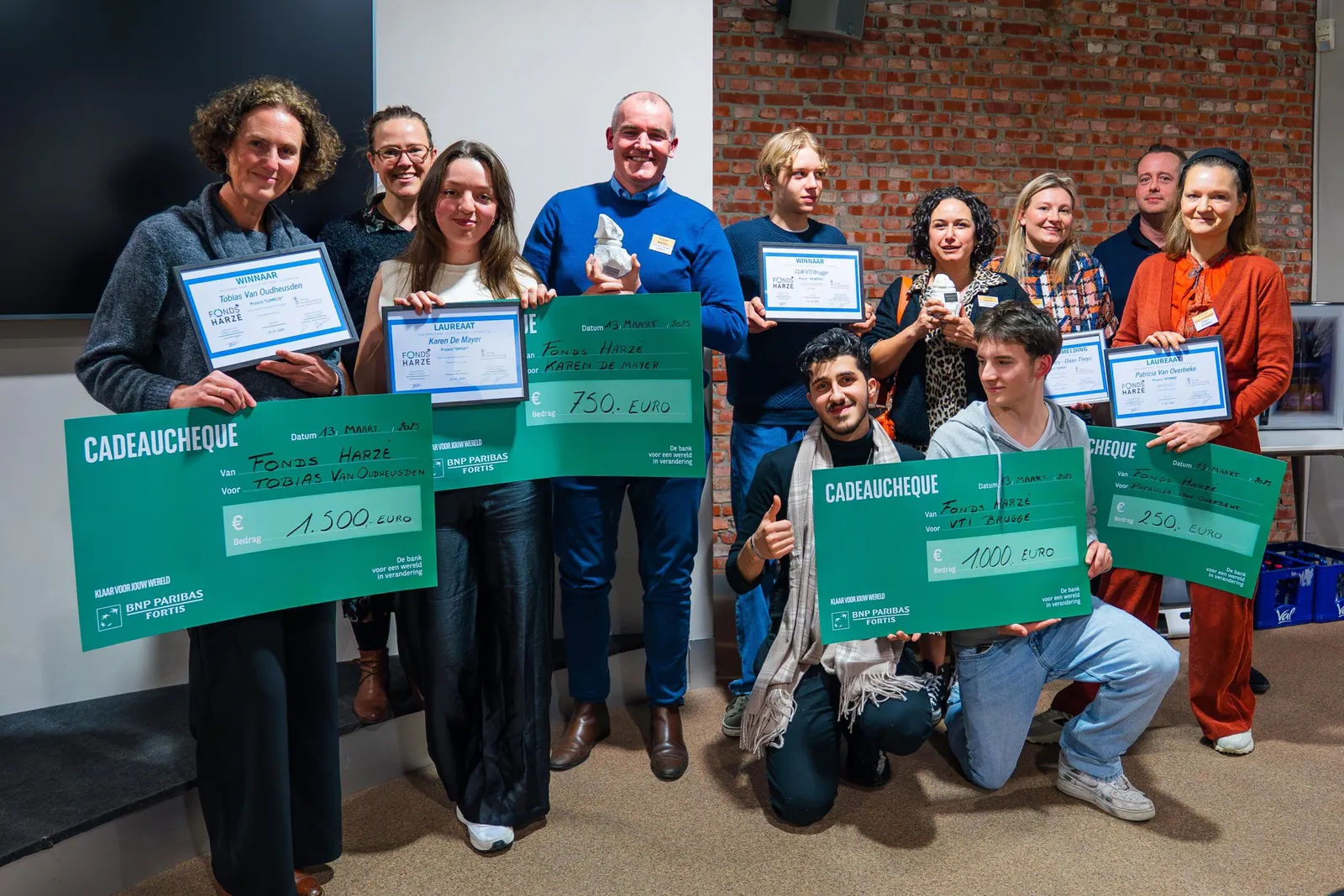
Clothing and toy swap project and glucose sensor come out on top
During the 2023-2024 academic year, numerous students and student groups took part in the call issued by Fonds Harzé. The fund supports innovative projects in the fields of the circular economy, recycling and sustainability. Students’ interest highlights growing awareness of and engagement with sustainability issues in education.
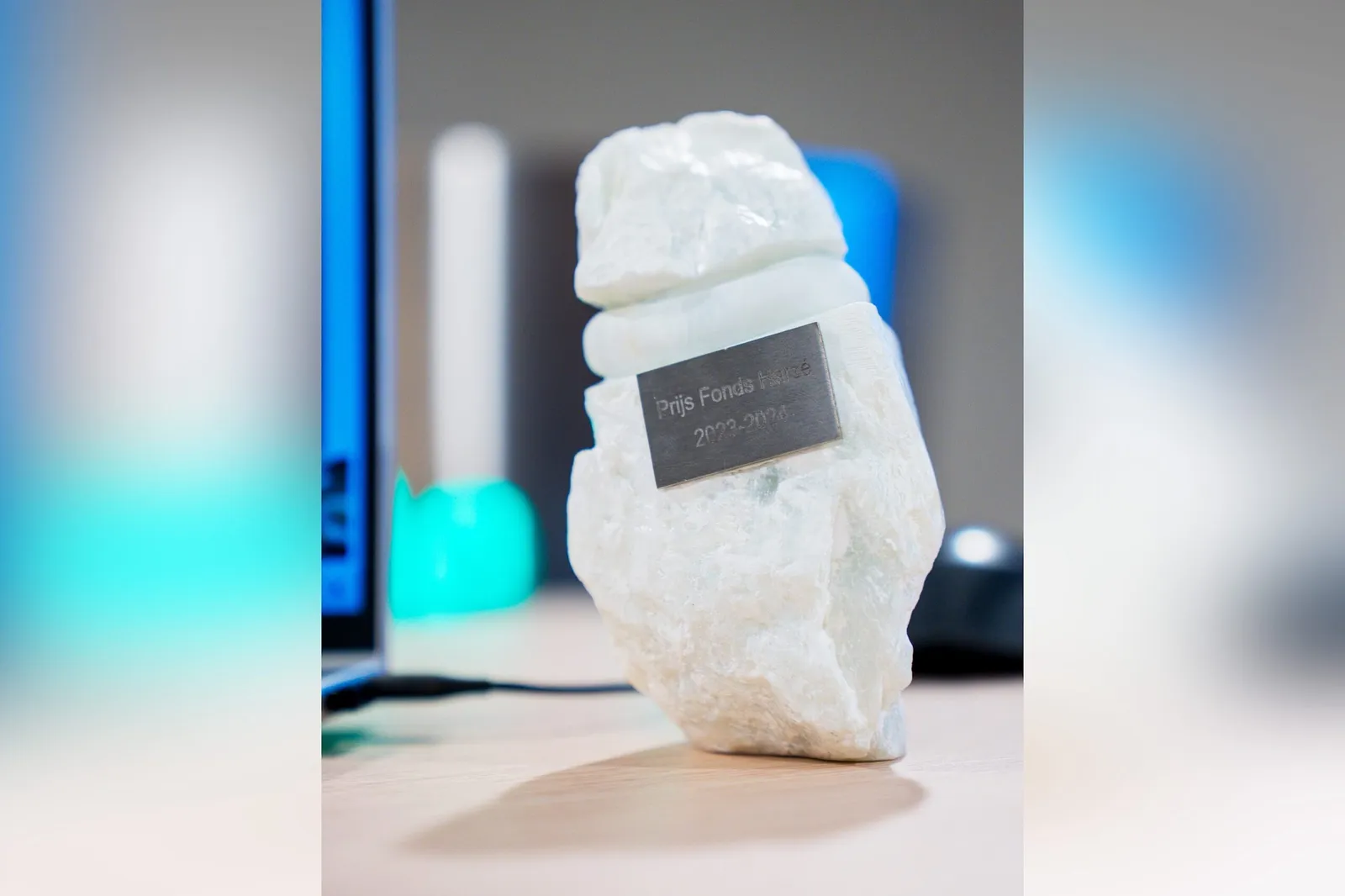
The submitted projects were assessed on their level of innovation, feasibility and impact in the fields of the circular economy and recycling. The jury, made up of experts in sustainability and education, selected the most promising projects for a cash prize. The educational institutions of the winners in the 15+ and 18+ categories also received a trophy. The trophy is different every year. The only criterion is that the artist should express the circular ethos in the artwork. This year, Nele Brughmans did so beautifully in soapstone: the rough, irregularly shaped stones were given a hand-carved, polished ring to represent circularity.
Clothing and toy swap project
In the 15+ category, the CLW-VTI Brugge project ‘De wissel’ was named the winner. The pupils on the ‘sales’ course of the work-based learning programme set up a swap project, initially to prevent waste by swapping clothing and toys. When they encountered children and young people who needed clothing but had nothing to swap, they developed the project further. They found a way to support children and young people experiencing poverty. The pupils received a cheque for 1.000 euros, while the school received the trophy. Motivated teachers such as Valerie Laoufi had backed the pupils and provided support.
Reusable glucose sensor
In the 18+ category, Tobias Van Oudheusden won with his Lumeco sensor for glucose monitoring. You may know him from these pages, as RecyclePro previously covered him after he won the Ecodesign Award from OVAM and Vlaanderen Circulair. Drawing on personal experience, Van Oudheusden set out to develop a sustainable continuous glucose monitoring sensor. He investigated which components could be used for longer and developed an application module that needs replacing far less often. His commitment, the thorough case he made and his motivation made a strong impression on the jury. His sister Sarah and mother Ingrid proudly accepted the cheque for 1.500 euros and the certificate on behalf of Fonds Harzé. His equally proud supervisor at Universiteit Antwerpen, Regan Watts, was there to accept the trophy for the university. Van Oudheusden himself took part in both the jury presentation and the awards ceremony online from Sweden, where he is currently continuing his studies.
Other award winners
The other award winners were Patricia Van Overbeke (Thomas More Hogeschool Mechelen) and Karen De Mayer (Universiteit Antwerpen). In the Atomiq project, Van Overbeke worked with sheared wool from local sheep farmers that would otherwise have been destroyed. She is making a seating object made entirely of wool, using various techniques to give it a solid shape. Further research is also being carried out into whether the same techniques could be used to make insulation boards or rigid panels that could serve as a base material for a wide range of applications. She received a cheque for 250 euros and a certificate. De Mayer sought a way to package sofas in reusable transport packaging that would also be ergonomic for users. The packaging can be adjusted to fit different sizes and reused many times. It also makes unpacking and repacking sofas for quality checks easier. Her design significantly reduces the mountain of waste from cardboard, binding strips and disposable film. She has also received the Flemish Thesis Prize and an award from Valipac. Fonds Harzé awarded her a certificate and a cheque for 750 euros.
Question about this story? Ask your question
Companies in this story

Keep following this
Get an email when a new story is published. No account needed.
- ThemeCircular business under changing regulations
- SubjectNews
- CompanyOVAM







