












Ingrid Niessing, Managing Director of ARN, looks to the future: ‘We want to still be able to recycle 95% of cars in 10 years’
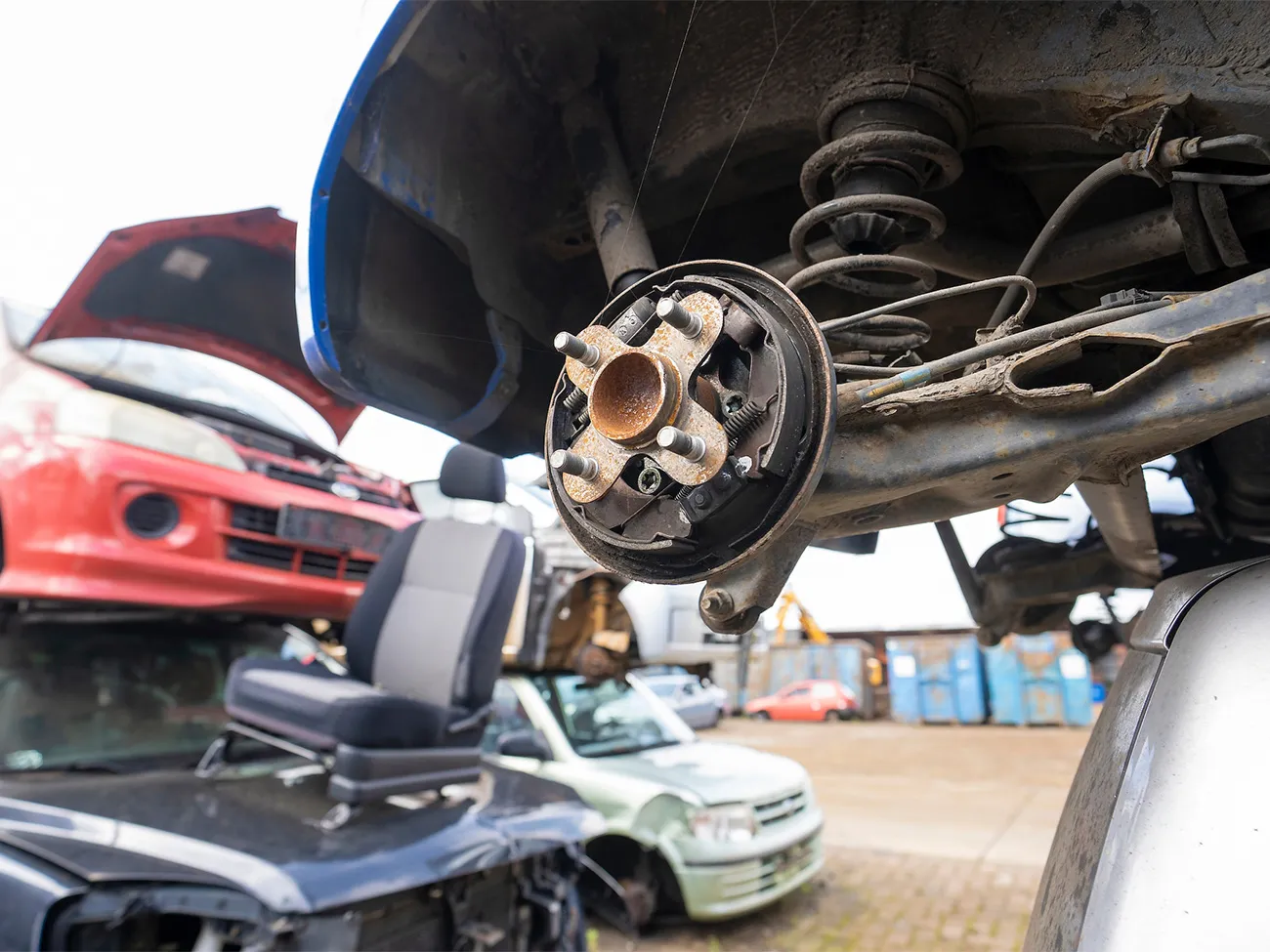
As technology advances and cars powered by fossil fuels are phased out, the automotive recycling industry is on the brink of huge changes. It is no coincidence that ARN (Auto Recycling Nederland) has developed three scenarios to help the organisation look to the future. Managing Director Ingrid Niessing explains.
“We are a facilitator and coordinator for the automotive recycling industry,” says Niessing. “A recycling contribution is levied on every new car that comes onto the market. Part of this goes to the vehicle dismantlers where an end-of-life vehicle first arrives. We ensure that hazardous substances are collected properly and safely, and support vehicle dismantlers with expertise and skills, for example by providing training. Once a dismantling company has taken the vehicle apart, some of it goes to metal recycling companies, where the valuable metals are recovered. Separation using ‘Post Shredder Technology’ (PST) is the final step in the recycling process. The PST plant in Tiel, owned by ARN until 2020 and since then by HKS Scrap Metals, separates the remaining shredder residue into reusable materials such as plastics, minerals, fibres and metal residues. As a result, in 2020 the automotive recycling industry as a whole was able to recycle 98.3 per cent of an end-of-life vehicle.”
Scenarios
Despite these impressive figures, the European Union requires a recycling rate of 95 per cent for cars, ARN is not standing still. As technology advances rapidly, recycling methods are changing too. Niessing says: “For that reason, over the past year we have set out a number of scenarios looking ahead to 2050. We have called the phase we are in now ‘conventional car’, which covers ‘normal’ cars with an internal combustion engine, for which the current system, as I have just described it, was designed. We call the period up to 2030 ‘connected car’. During this period, digitalisation will advance rapidly, as will the battery component. This means that the dismantling of end-of-life vehicles will look very different, and business models will have to adapt accordingly. Finally, we envisage a ‘circular car’ scenario. This will take place roughly between 2030 and 2050, when we expect materials in cars to become circular or fully reusable.”

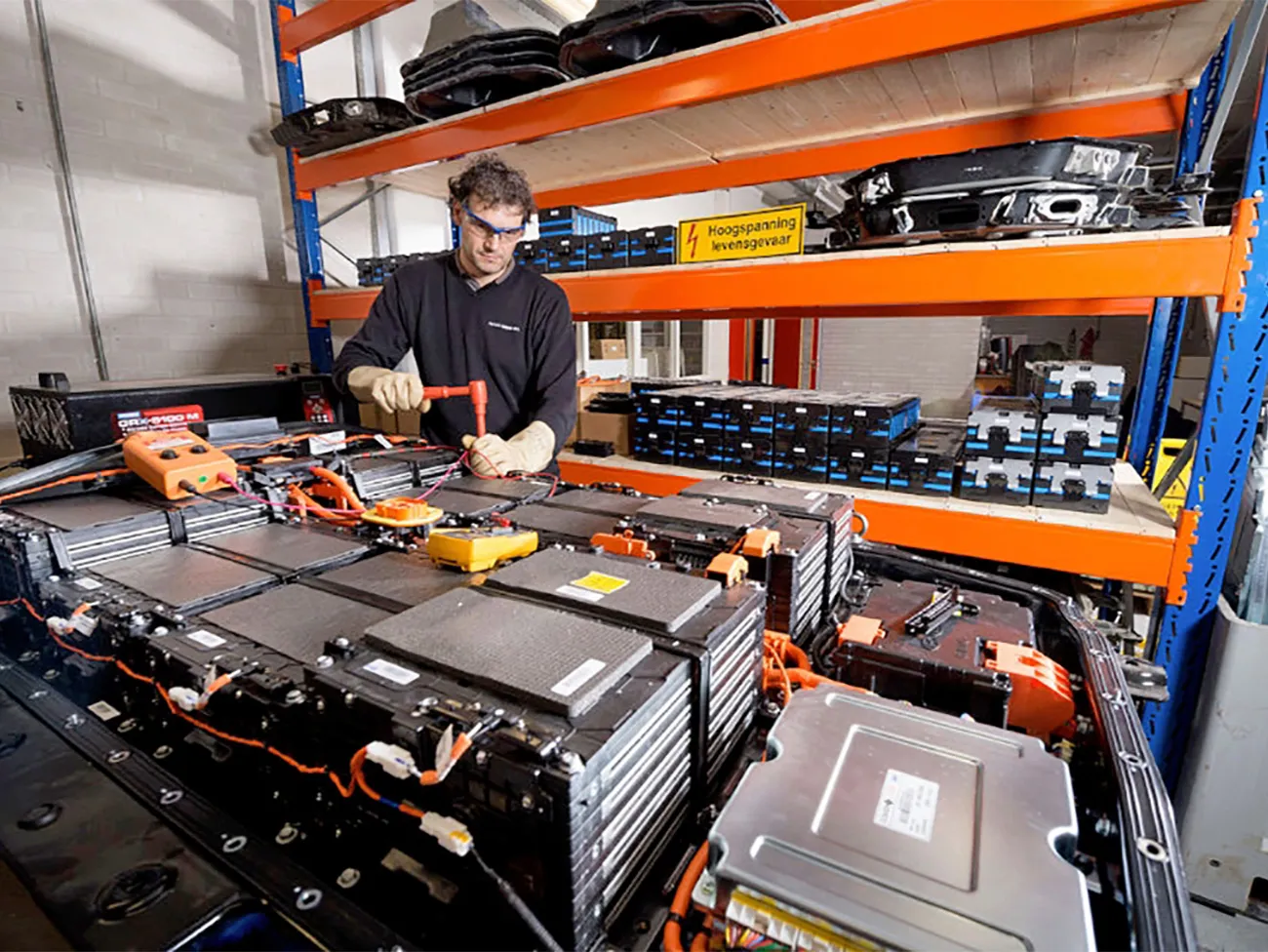
To prepare for the different scenarios, ARN is already working on a number of innovations to support the automotive recycling sector. “This includes the composition of vehicles, in which plastics are playing an increasingly important role, as well as batteries and everything associated with them,” Niessing explains. “The latter in particular will bring about huge changes. There is currently relatively little recycling capacity for batteries, for example. We are also working hard on issues such as removing batteries from cars safely and responsibly, and the increased use of composites instead of metals. Digitalisation has also made a great deal of data about cars available. This creates opportunities for platforms for the reuse of parts, as well as for traceability and fair competition.”
Opportunity
Niessing knows she does not have a crystal ball, but she does expect the scenarios outlined to help the industry continue to achieve the required 95 per cent recycling rate in ten or fifteen years’ time. At the same time, she is not ignoring the challenges that may lie ahead. “Our work currently falls under the EU end-of-life vehicles directive and the EU battery directive. These European directives are currently under revision and are likely to be converted into EU regulations. In other words, the rules will become stricter and more binding. Batteries may currently be recycled at a rate of 50 per cent, but this will rise to 60 or 70 per cent. I actually see that as an opportunity: an opportunity to do even better.”
Making useful use of materials
ARN (Auto Recycling Nederland) was established in 1995. It is the organisation responsible for implementing producer responsibility on behalf of the RAI vereniging (car importers), BOVAG (dealerships), FOCWA (vehicle repair companies) and Stiba (vehicle dismantling companies). In other words, it ensures that every car sold is recycled to the extent of at least 95 per cent at the end of its life. Its aim is to help the Netherlands meet European standards and make vehicle dismantling and recycling as clean, sustainable and comprehensive as possible.
Under the 2015 ‘European End-of-Life Vehicles Directive’, all European Union Member States must recover at least 95 per cent of the weight of end-of-life vehicles: 85 per cent through the reuse of components and materials, and 10 per cent through energy recovery or other forms of recovery. In the Netherlands, ARN helps the sector meet this target, and preferably exceed it. Last year, it achieved a rate of no less than 98.3 per cent.
Question about this story? Ask your question
Companies in this story
Keep following this
Get an email when a new story is published. No account needed.
- SubjectNews
- CompanyHKS Scrap Metals BV







