












Indaver starts construction of pioneering plastics recycling plant in the Port of Antwerp
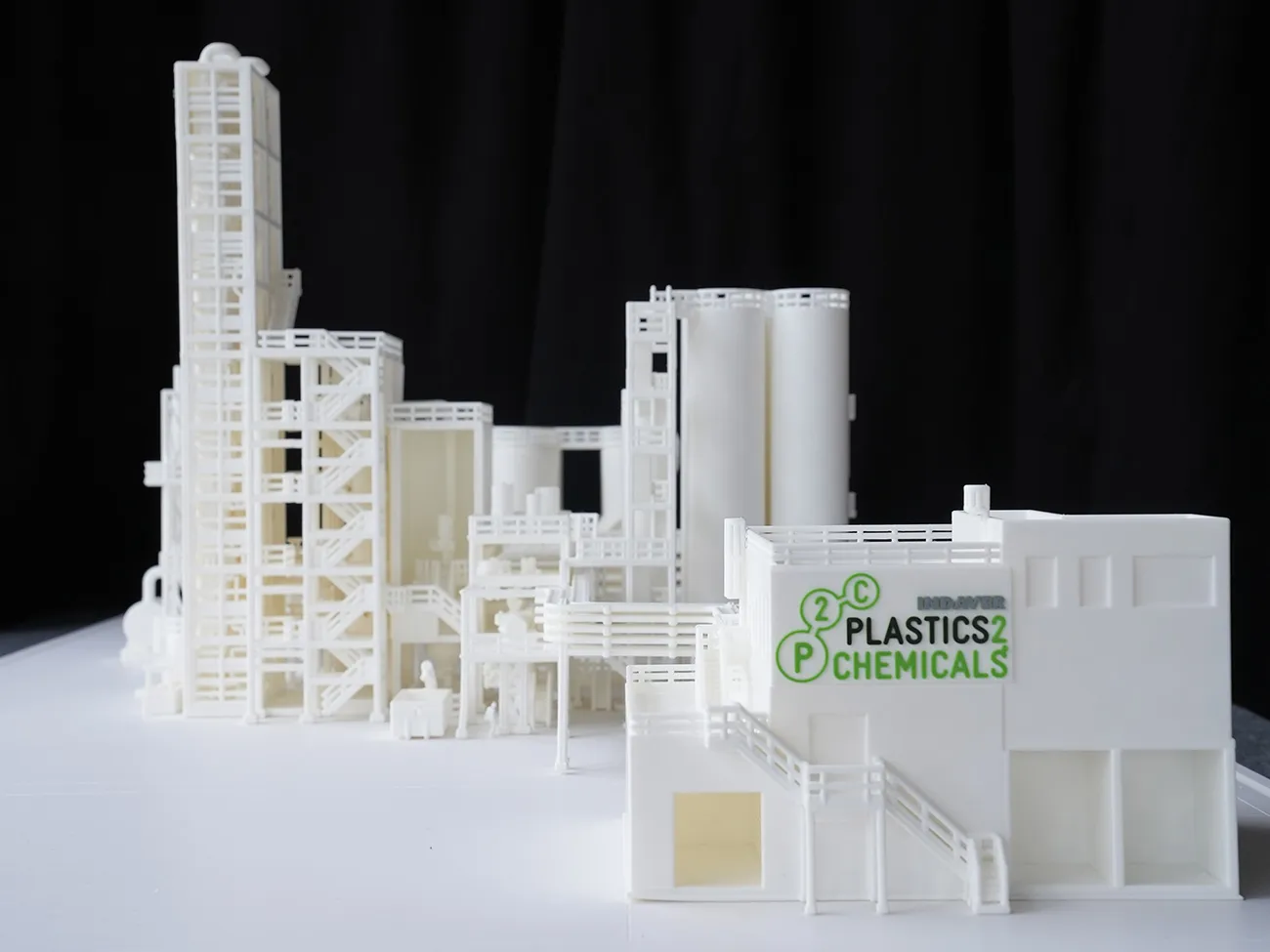
Indaver has started building a new facility to recycle end-of-life plastics into valuable basic chemicals for industry.
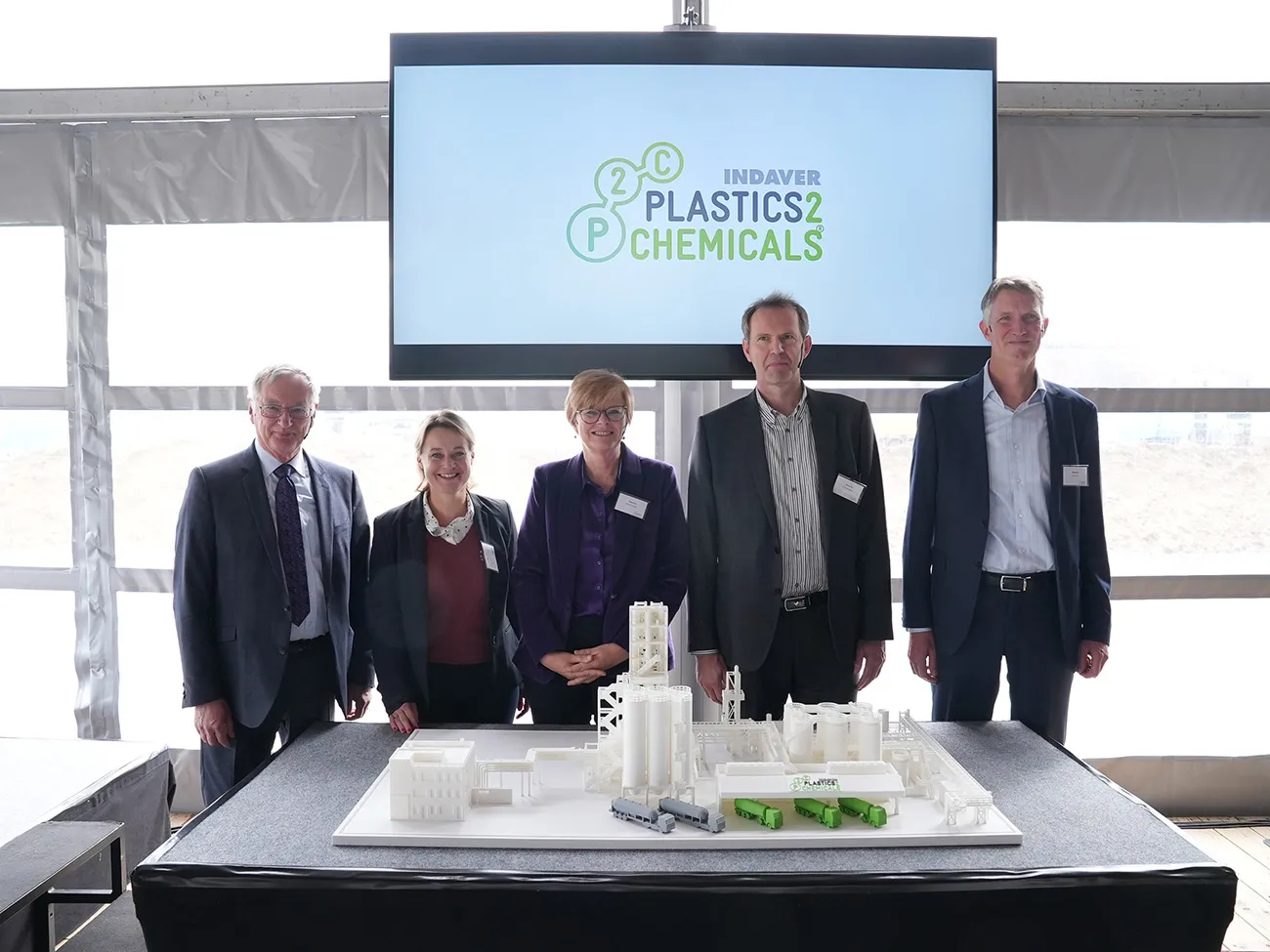
This Plastics2Chemicals facility will recycle around 65,000 tonnes of end-of-life plastics a year, making it the first and largest fully industrial-scale plant in the EU. The foundation stone was laid in September 2022. Start-up is scheduled for early 2024, with an initial capacity of 26,000 tonnes. This will be scaled up so that the plant is operating at full capacity from 2027. The new facility will provide direct employment for around 50 people.
Flanders invests in sustainable recycling
The total investment amounts to EUR 100 million. Indaver can also count on EUR 7.5 million in support from the Flemish Government, through the office of Innovation Minister Jo Brouns. A further EUR 3 million in support was awarded through the Flemish recycling hub. The project offers a sustainable solution for plastics that are currently difficult to recycle. Thanks to this innovative Plastics2Chemicals technology, Flanders can take a major step towards meeting the European plastics recycling targets.
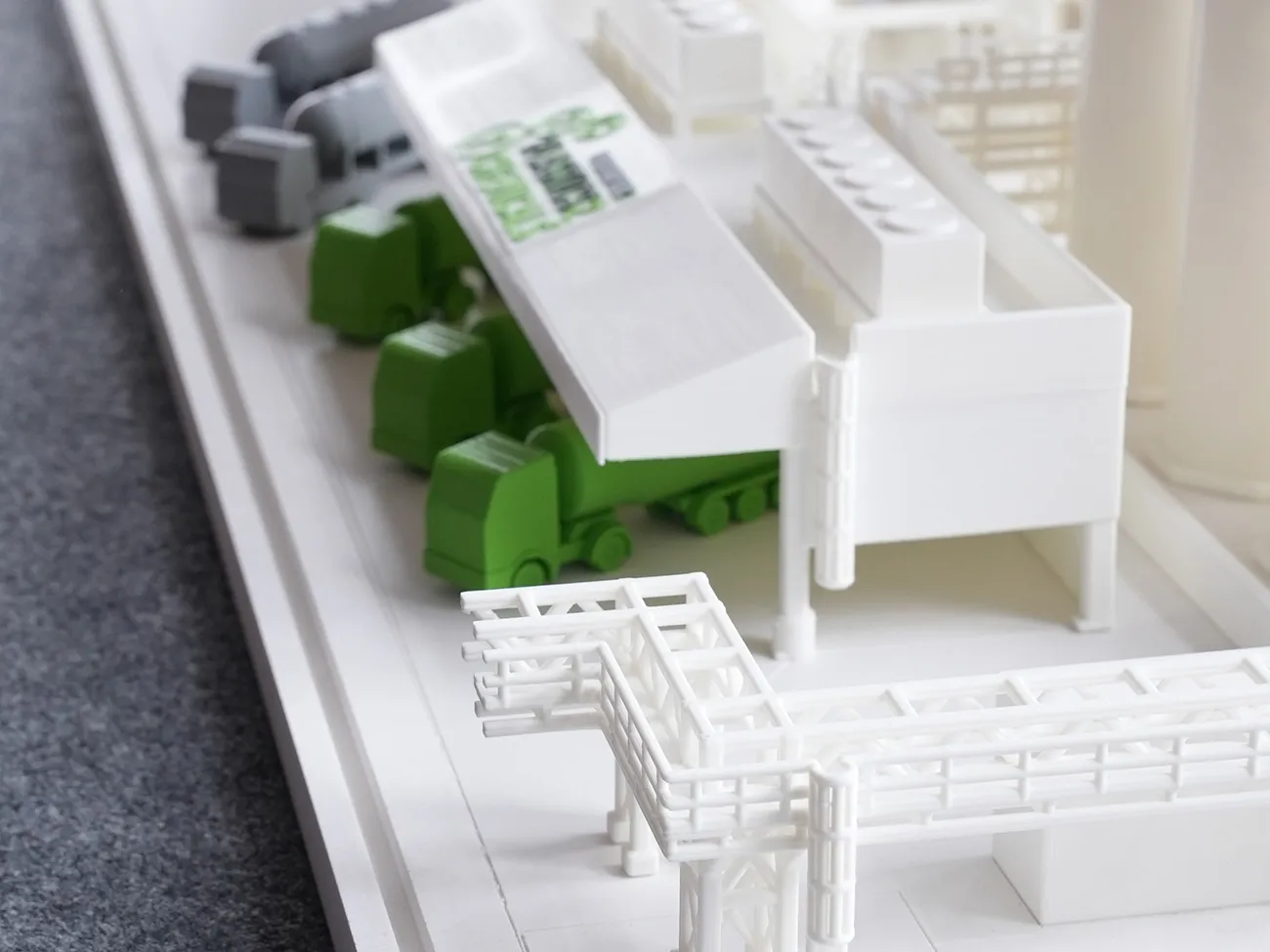
For the first time, the Flemish Government is doing this through so-called ‘recoverable advances’. These advances mean the Government shares some of the risk, but also benefits when the project succeeds. In this way, if the project is successful, part of the subsidy flows back to the Flemish Government.
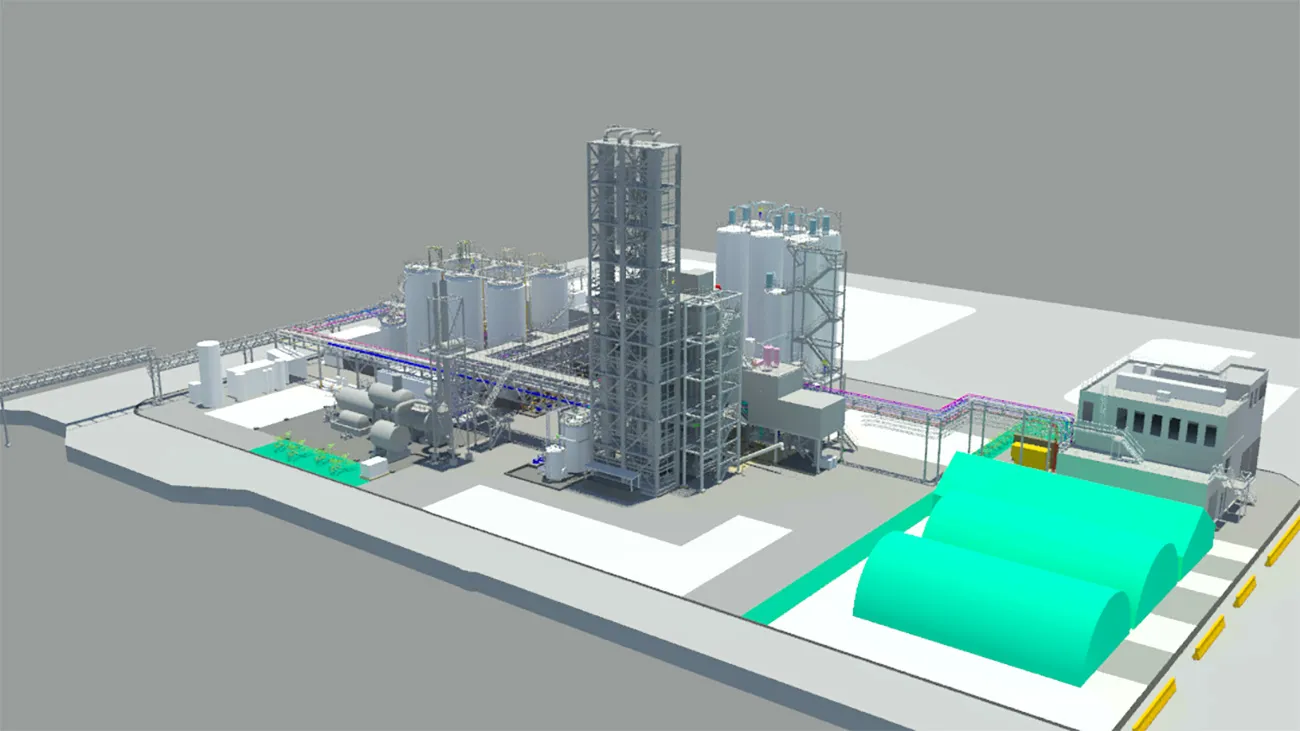
Flemish Minister for Science and Innovation Jo Brouns: “The future will either be sustainable or there will be no future. The transition to a circular economy is more relevant than ever amid the energy crisis. Our Flemish economy must, and will, become less dependent on fossil raw materials. We can do that with projects such as this one at Indaver, where plastic is broken down again into its basic components, which can then be reused. Flanders is a pioneer in circular innovation, which is why we are pleased to support this project. With the new system of recoverable advances, the Government shares in the risks, but also in the success of this venture. This means we can continue to support sustainable investment.”
From pilot to world-scale solution
Since 2017, Indaver has extensively tested the chemical recycling process in a pilot plant, in collaboration with several Flemish universities. This R&D phase has demonstrated that the process works with real waste streams. The quality of the recycled products has also been validated repeatedly by P2C’s customers, namely the chemical and petrochemical industries. In the newly planned facility at its Antwerp site on the right bank, up to 26 000 tonnes of plastic waste will be recycled in the first few years, with separate campaigns for polystyrene and polyolefins. In a second phase, the facility will be converted into a dedicated polystyrene plant and expanded with an additional line to process up to 65 000 tonnes of plastics a year. With this industrial-scale expansion, Flanders will be home to Europe’s largest recycling plant for the depolymerisation of polystyrene. The facility will be able to recycle 50% of Europe’s household polystyrene packaging waste to a high standard.
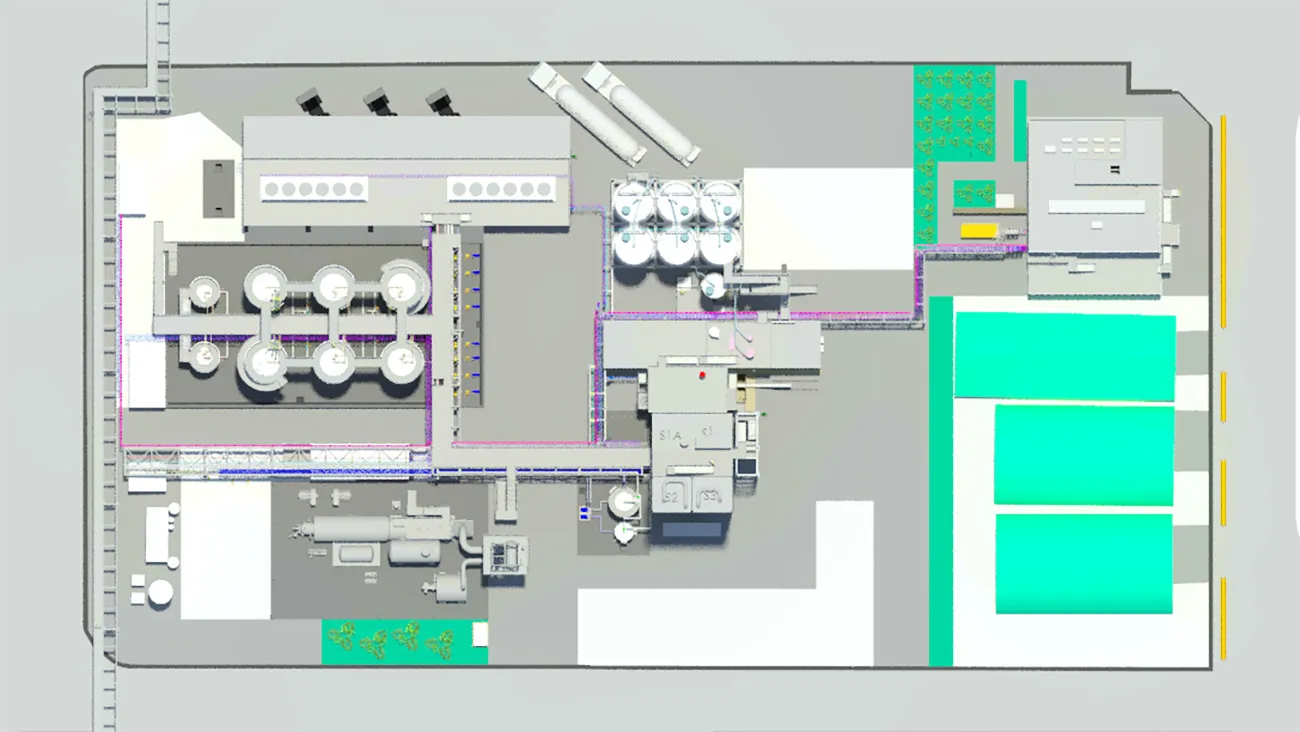
In the future, Indaver also wants to build an industrial facility for polyolefins. The Port of Antwerp could be an ideal location, given the presence of its petrochemical cluster. Recycling solutions of this kind support Flanders’ ambitions as a recycling hub.
Chemical recycling: a solution for end-of-life plastics
Indaver’s new P2C facility will process plastic streams that are unsuitable for other forms of high-quality, mechanical recycling. These are mainly plastics made from polystyrene or polyolefins. They may include household packaging waste, as well as other plastic fractions of household or industrial origin. Materials for the new facility will be sourced from Belgium and abroad.
The recycling process is a thermochemical process in which the longer carbon chains in the plastic are broken down, or depolymerised. The materials recovered in this way are basic raw materials with specifications equivalent to those of materials derived from fossil streams. They even meet the quality requirements of the food industry. The P2C process therefore closes the materials loop, making it a prime example of the circular economy.
A bespoke facility with a unique chemical recycling process
Indaver worked with various Flemish knowledge institutions on the facility’s concept and engineering. After years of research to develop and refine the process into a proprietary technology, it is now ready to move into real-world application. Indaver is also working with reputable suppliers on the construction. The heart of the process, from the extruder through to distillation, has been custom-designed to ensure high-quality recycling. These components are widely used in the chemical sector and are also used to make new plastics from primary raw materials, but their application in high-quality chemical recycling of plastics is unique.
Contribution to plastics recycling targets
Europe has clearly set out its ambition to provide a sustainable solution for end-of-life plastics. The target of recycling plastics into valuable raw materials has been enshrined in European legislation. The European Union’s Packaging Directive sets out its recycling ambitions. By 2030, 55% of plastic packaging waste must be recycled. Belgium is going a step further, aiming to recycle 70% of household plastic packaging waste and 65% of plastics from industrial packaging by 2030. In addition, a European proposal is in place to ensure that around one-third (30%) of plastic packaging is made from recycled materials by 2030.
Meeting these targets requires existing mechanical recycling technologies to be complemented by new technologies such as chemical recycling. This makes it possible to recover valuable basic chemicals from end-of-life plastics and reuse them in almost all plastic applications.
CO2 reduction potential
Recycling polystyrene and polyolefins into chemical building blocks contributes to the transition to a circular economy. This goes hand in hand with a significant reduction in CO2 emissions. In its initial phase, the P2C plant will save around 90,000 tonnes of CO2 a year. With the planned expansion, this will rise to an annual saving of 227,500 tonnes of CO2 by 2027.
Strategic importance for Flanders
In addition to contributing to the Flemish climate targets outlined above, P2C will also help strengthen Flanders’ economic and industrial fabric. Developing a recycling hub in the Port of Antwerp will not only create direct employment, but also anchor the petrochemical cluster. Initiatives such as the Circular Plastics Alliance indicate that access to recycled raw materials will be an important consideration for future petrochemical investments. P2C is therefore a cornerstone of the circular economy.
CEO Paul De Bruycker: “Indaver is always striving to close material cycles without losing value. With this innovative Plastics2chemicals project, we are able to supply basic chemicals for industry. This is how we are delivering on our ambition to play an essential role in the circular economy as a waste management company. P2C is a revolution in sustainable plastics recycling.”
Direct employment for 50 employees
Around 50 people will be employed at the new facility. The development team currently consists of around 20 people and will be expanded over the coming months with a team of around 30 colleagues: operators, process engineers, maintenance technicians and laboratory technicians.
Question about this story? Ask your question
Keep following this
Get an email when a new story is published. No account needed.
- ThemeMaking plastics and packaging circular
- SubjectNews







