












Incinerator ash turned into low-carbon and circular construction materials
Text Valérie CouplezImage Christophe Guyot
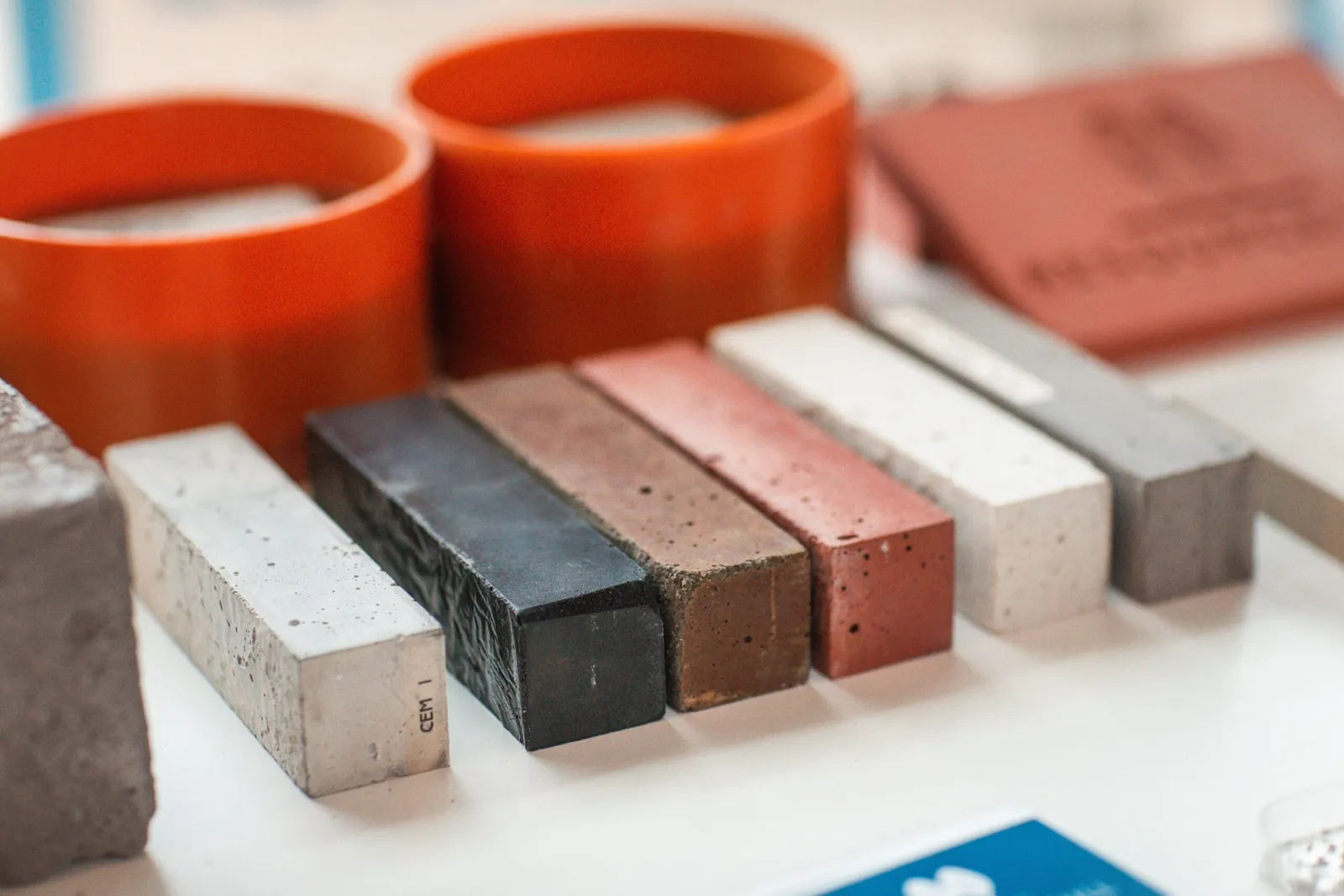
It is no news that this has been a difficult year for many companies active in recycling. The particularly impressive initiatives and investments made to take recycling to the next level despite these challenges therefore deserve extra recognition. RecyclePro is ending the year with three standout innovation projects. Veolia gets the ball rolling. The company is innovating with a unique paving stone made from ash produced by the incineration of household waste. The collaboration with Ghent University, Resourcefull, Orbix and SECO is part of the European ‘Horizon Europe Ashcycle project, which aims to turn residues from processing operations into sustainable construction materials.
Incinerating residual waste to generate energy produces around 20 kg of ash for every 100 kg of waste processed. Some of these residues are currently reused in Belgium. The AshCycle project, funded by the European Union to the tune of more than €10 million, is investigating how more ash can be safely reused and converted into raw materials for construction.
Belgian consortium
In Belgium, the first step is to collect ash from waste-to-energy plants and then process it further at Veolia’s processing facility in Grimbergen. The treated ash is then transported to Ghent University, where researchers assess its quality and reactivity at the material and construction product levels. They do this in collaboration with specialist companies ResourceFull and Orbix, which use the ash in low-carbon concrete products. SECO contributes to quality control. Stijn Matthys, professor at Ghent University and project coordinator, explains: “In our laboratories, we analyse this incinerator ash to assess its use in different types of low-carbon concrete. We test its strength, durability and environmental safety to determine whether it is suitable for use in the construction sector.”
Three potential applications
Three potential applications are being investigated:
- using the ash as a supplementary cementitious material (SCM) to replace some of the Portland cement;
- mixing and chemically activating ash and slag to produce so-called geopolymer concrete that is free of Portland cement;
- incorporating a mixture of ash and slag into processes that permanently store CO2 in concrete during production.
These solutions could reduce concrete’s carbon footprint by around 0.7 tonnes of CO2 for every tonne of conventional cement replaced. If this approach were adopted on a large scale across Europe, annual CO2 emissions could be reduced by as much as 20 million tonnes. This would make incinerator ash a valuable, high-quality mineral or binder for sustainable construction. In time, these developments could not only transform the construction sector, but also foster the emergence of a new generation of sustainable materials for the circular economy.
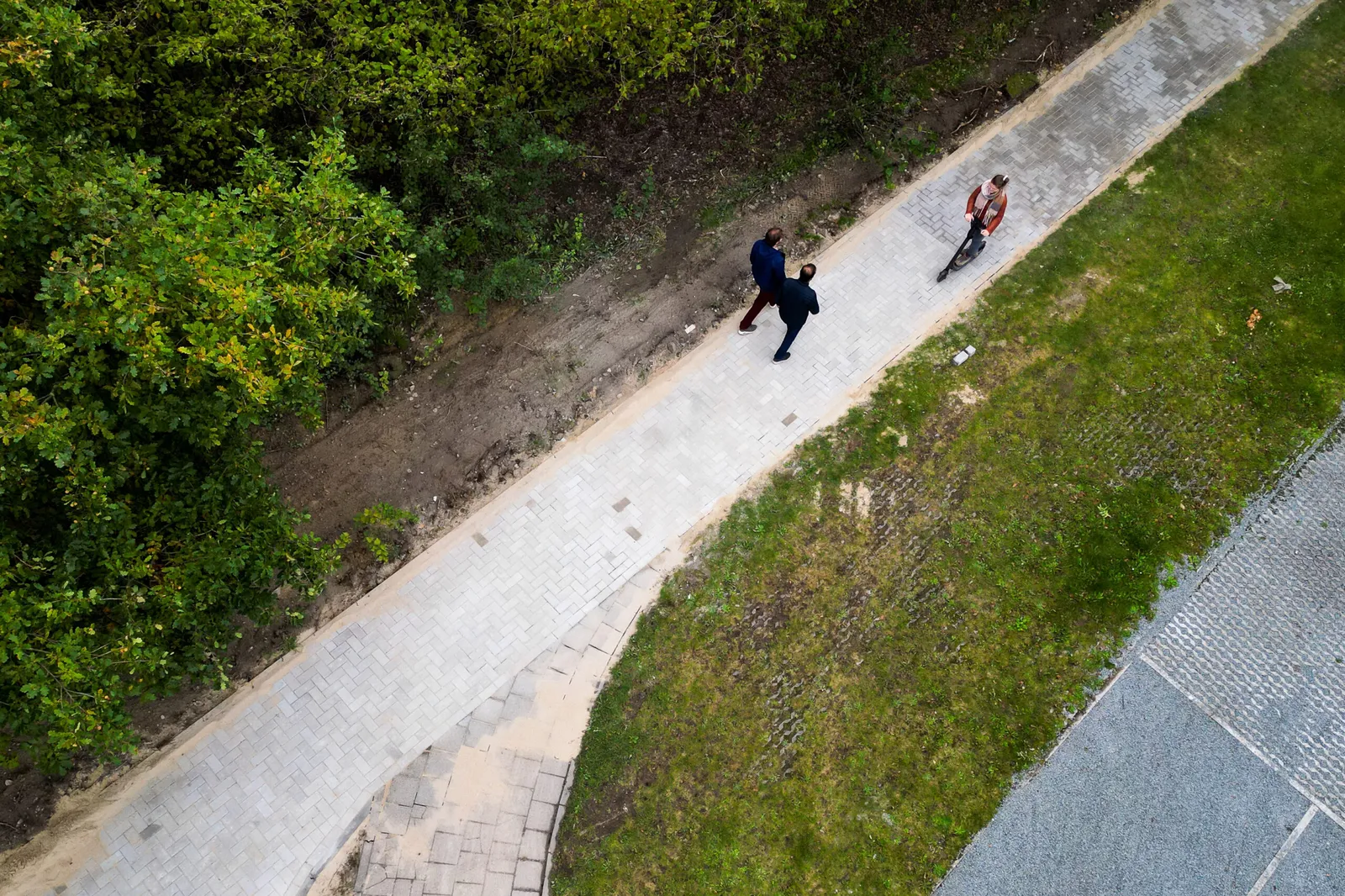
Low-carbon paving stones on the Ghent University campus
The AshCycle consortium is demonstrating the technology through pilot projects across Europe, with Ghent University playing a coordinating role. The Belgian AshCycle team is showcasing a practical example on campus by using innovative AshCycle paving stones:
- Veolia supplies treated incinerator ash;
- ResourceFull develops low-carbon alkali-activated paving stones;
- Orbix produces a variant using CO² curing technology (Carbstone);
- SECO is responsible for the quality, safety and environmental performance of the concrete produced.
Following promising tests and successful scale-up, two 50 m² pilot areas were laid out on the Ghent University campus: one with alkali-activated concrete pavers and one with Carbstone pavers.
New solutions
Franck Arlen, CEO of Veolia Belgium and Luxembourg, concludes: “At our sites in Grimbergen and Ghent, we already recycle ash from waste-to-energy plants, but we are constantly looking for new solutions to recycle even more effectively. This research is therefore fully aligned with our GreenUp strategy, which focuses on reusing resources and decarbonising industry. By taking part in projects such as AshCycle, which bring researchers and industrial partners together, we are exploring new alternatives for turning today’s untapped resources into useful materials for tomorrow.”
Question about this story? Ask your question
Keep following this
Get an email when a new story is published. No account needed.
- ThemeCircular construction and demolition
- SubjectNews







