












Impressive demolition project for Ghent hospital
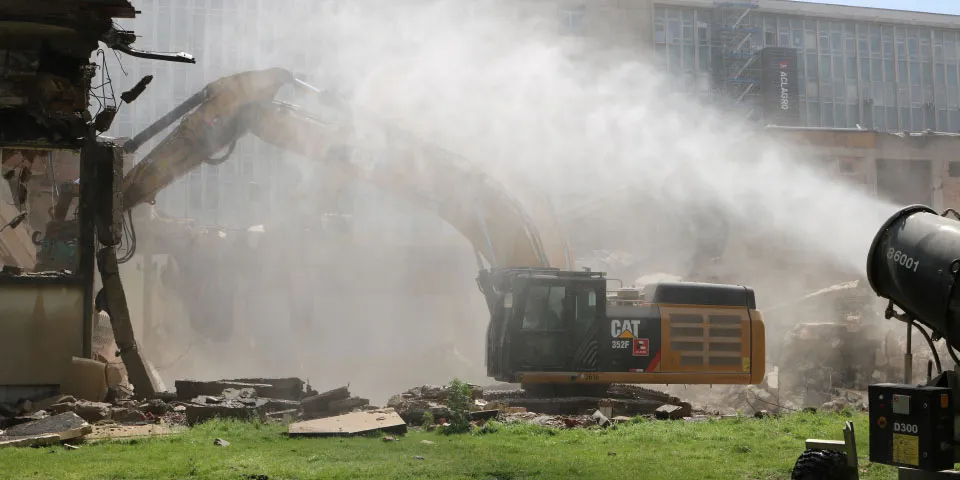
UZ Gent has been a landmark in the city of Artevelde since 1959. In 2029, it will reach another milestone in its history with the arrival of a new iconic building covering around 75,000 m². But on the busy site, this means old buildings first have to be demolished. K4 and P7, for example, must be removed to maintain parking capacity during the works. However, the presence of asbestos meant the work had to be handled with extreme care. Aclagro was happy to take it on.
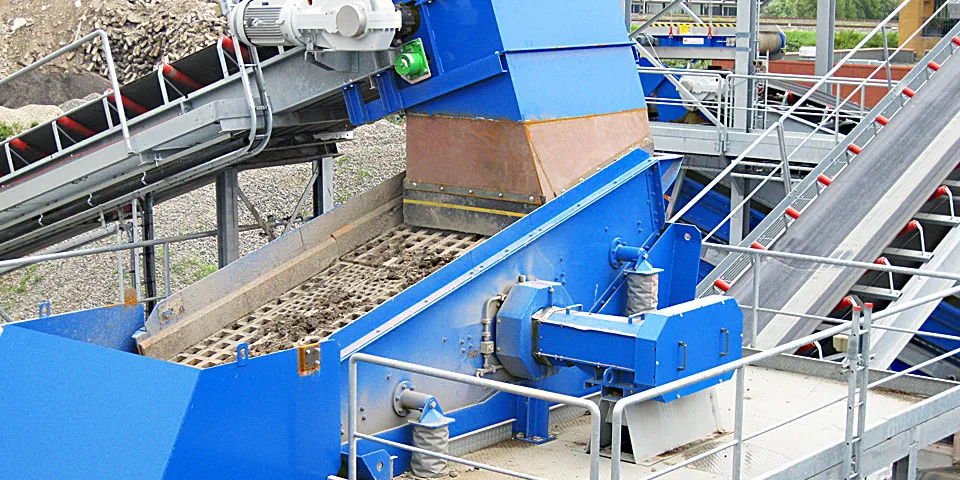
Aclagro knows exactly how to safely remove asbestos-containing materials from a building.
The new building for UZ Gent is to become the heart of the approximately 40 ha campus, connecting its main buildings into a single complex. Once ready for use, it will be adaptable to future needs and requirements, and provide a pleasant environment for patients, visitors, staff and all other campus users. But first, space has to be cleared. The new building will be constructed on the site of today’s car park building and will also include an underground car park. Buildings K4 and P7 are being demolished to provide temporary parking capacity during the construction phase. Because they contained asbestos, these buildings had been empty for some time. Demolition is therefore no easy task. It is just the kind of job Aclagro is well equipped for, with extensive experience in asbestos processing and familiarity with the site and the operations of UZ Gent from previous projects.
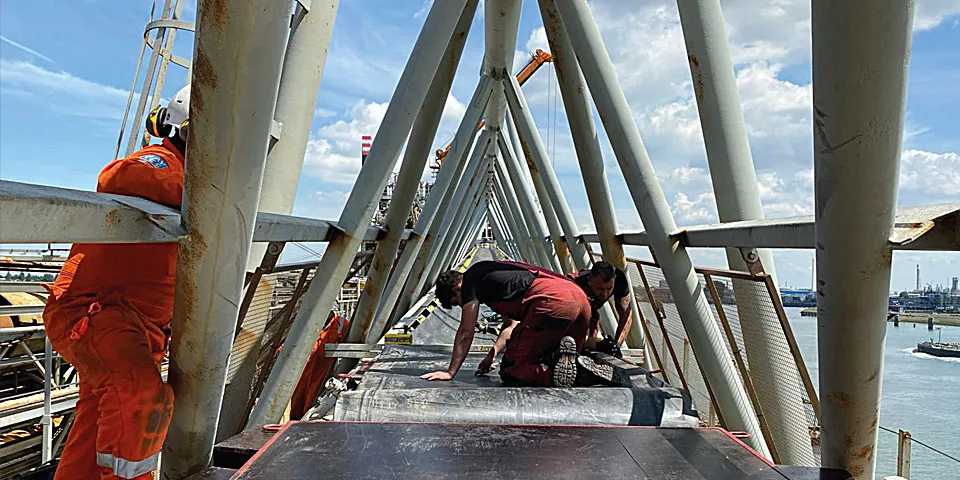
K4 and P7 on the UZ Gent site must be removed to maintain parking capacity during construction of the new building.
Demolition in three phases
Project manager Wim Grammens speaks to us on site as demolition of the first building, P7, is well under way. “Every demolition takes place in three phases. The first step is the removal of fittings and equipment. Once all the materials have been taken out of the building, we can start dealing with the asbestos.” To prevent hazardous asbestos fibres from escaping, the building is sealed off and placed under negative pressure. “The legislation is very clear about the procedures to follow when dealing with asbestos. For example, measurements are taken every day to monitor the negative pressure. Our people are also trained to handle this material. They know the risks and what they are doing.” That is Thomas Laton speaking. He works for Aclagro as an asbestos site supervisor. Only after this phase can the actual demolition begin. The project is currently experiencing some delays, all due to the additional precautions Aclagro has taken in response to coronavirus. To ensure the work could be carried out safely, only half the staff could work on site.
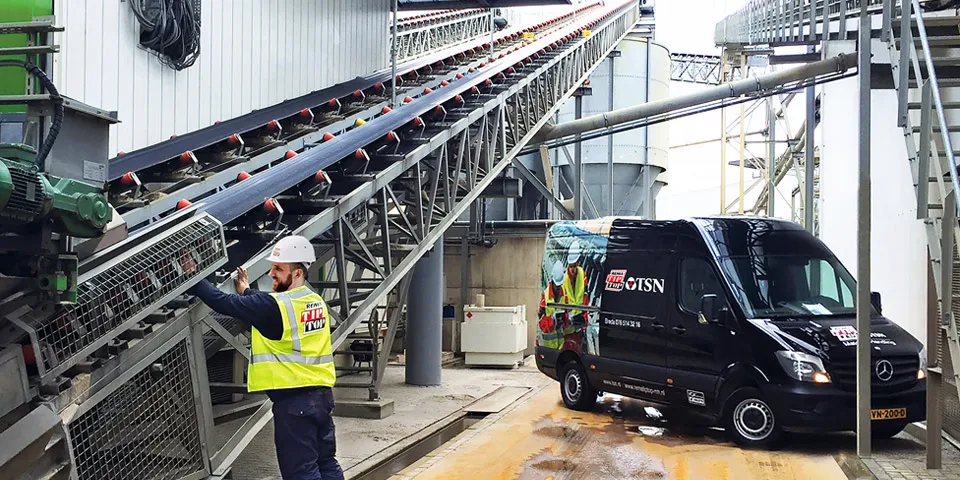
Thomas Laton and Wim Grammens during the demolition of K4 and P7. “Aclagro’s sensitivity to the particular requirements of a hospital site means we remain a familiar face at UZ Gent.”
Minimising disruption to the surrounding area
Asbestos was not the only sensitive issue in this demolition project. As the site is a hospital, Aclagro has also done everything possible to minimise disruption for patients. Grammens: “Before the project started, we carried out tests over the weekend to see what impact drilling into the concrete would have.” Cancer patients receive radiotherapy right next to the K4 building. “We wanted to be absolutely sure that no vibrations would be felt there. So we planned for the worst-case scenario and brought out the heavy equipment at the most critical point in the building. Although the results showed that we could proceed with the demolition without concern, we are of course continuing to monitor this closely throughout the work,” says Grammens. A third consideration is the site’s location. There is heavy traffic not only within the UZ Gent grounds, but the site is also in the middle of an urban area. “The concrete walls are metres thick. Demolition inevitably generates a lot of dust. We therefore keep mist cannons running continuously to suppress the dust and prevent it from causing a nuisance to the surrounding area.”
The presence of asbestos made the demolition of K4 and P7 no easy task. Aclagro, however, has an experienced team with expertise in this field.
Everything handled within the same group
It is precisely this attention to the particular requirements of the site that has made Aclagro a familiar face at UZ Gent for more than ten years. “Our strength also lies in our size. We can handle everything ourselves, from demolition and asbestos removal to remediation and infrastructure works, using specialised teams within our group. This means the management has just one point of contact to oversee the entire project,” Laton concludes.
Question about this story? Ask your question
Keep following this
Get an email when a new story is published. No account needed.
- ThemeCircular construction and demolition
- SubjectNews







