












How long does Covid-19 survive on surfaces?
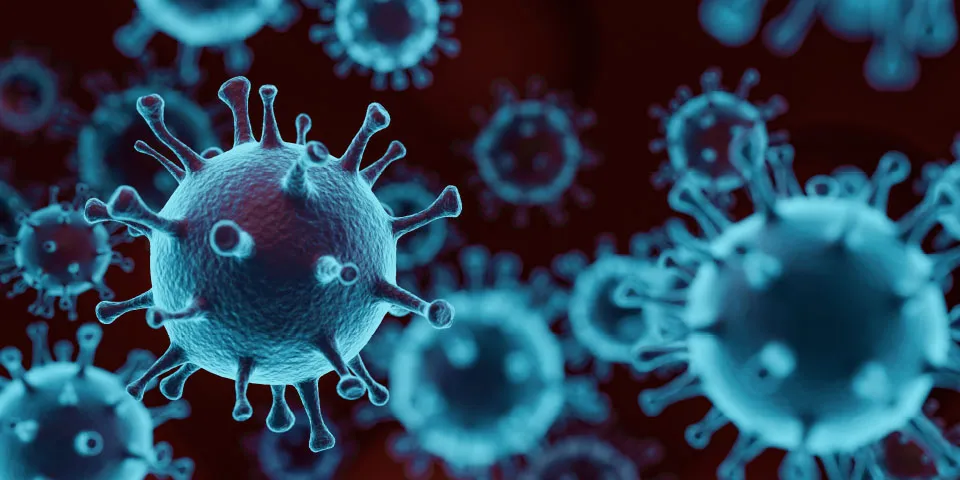
When this article went to press, we were all still in lockdown. This was a protective measure intended to prevent the further spread of the Covid-19 virus. Waste collectors and processors continued working throughout this period, as they are considered an essential sector. Even so, their work was not without risk for people in our sector. Research has shown that the virus can survive for some time on certain surfaces. So always make sure all your employees have adequate protection.
What began as a local outbreak in Wuhan, China, has since grown into a pandemic. The Covid-19 virus has dominated the news for weeks. Scientists agree that transmission from person to person occurs mainly through coughing and sneezing. The droplets released in this way end up in the air, on objects and on surfaces. Anyone who breathes them in or gets them into their mouth, nose or eyes via their hands risks becoming infected too. So far, there is no evidence that infection can also occur through the skin. Maintaining sufficient distance, touching your face as little as possible and practising good hand hygiene have been the main recommendations in recent months.
Viable for up to three hours after aerosolisation
It is important for employees involved in waste collection and processing to continue following this advice carefully. Several studies have shown that the coronavirus can survive for several hours, and sometimes even days, on smooth surfaces and materials. A recent study by the National Institute of Allergy and Infectious Diseases in Hamilton, in the US state of Montana, led by virus ecologist Vincent Munster, compared the survival of the current coronavirus variant with that of the coronavirus most closely related to it, the strain that caused the SARS epidemic in 2002. The study involved a total of ten experiments, in which five materials were sprayed with the two viruses to simulate coughing or sneezing. The Covid-19 virus remained viable in the air for the entire duration of the experiment, which lasted three hours. However, the number of viruses fell, from around 3,160 to 501 TCID50 per litre of air. The half-life in aerosols is therefore approximately 1.1 to 1.2 hours.
More stable on plastic and stainless steel
On surfaces, Covid-19 proved more stable on plastic and stainless steel than on copper and cardboard. These are therefore the materials that require extra care. The virus remained viable for up to 72 hours after being applied to the surfaces. This result was consistent with the kinetics of the related coronavirus. The Covid-19 virus was no longer detectable on copper after four hours, and on cardboard after 24 hours. However, the number of viruses fell sharply over time. After a certain period, depending once again on the surface, the number of viable viruses had halved. The half-life was 6.8 hours on plastic, 5.6 hours on steel, 3.5 hours on cardboard and 48 minutes on copper.
Keep washing your hands
The main reason this strain developed into a global epidemic has to do with its potential to infect other people before showing any symptoms itself. Given that the Covid-19 virus can survive on surfaces, particularly plastic, employees involved in waste collection and processing must continue to take adequate precautions. Survival on clothing is likely to be very limited. The virus does not survive well on absorbent materials such as cardboard, paper and textiles. It is also sensitive to drying out, heat and sunlight. But if you are unsure, the advice remains the same: wash your hands thoroughly with soap and water.
Question about this story? Ask your question
Keep following this
Get an email when a new story is published. No account needed.
- SubjectNews







