












How can lithium-ion batteries be handled safely to prevent fires?
More and more waste management companies are having to deal with fires caused by the presence of lithium-ion batteries.
However, there is a separate system for the safe collection and treatment of all batteries. This article looks at what exactly causes the fire risk and which measures can help prevent it.
The electrification of society has made lithium-ion batteries commonplace. We find them in all kinds of shapes and sizes in cars, bicycles, smartphones, electric toothbrushes, kitchen appliances, garden tools, toys … In consumer electronics, the rechargeable lithium-ion battery is a particularly popular type thanks to its high energy density and reusability. It also lasts much longer than conventional alkaline batteries. Its share of the battery market has grown rapidly in recent years, not so much in terms of numbers, but in volume. Around 75% of lithium-ion batteries are built into WEEE (compared with 6% of alkaline batteries). These are usually the larger, heavier lithium-ion batteries, which pose a greater fire risk.
The fire risk is real
According to EuRIC’s report ‘Characterisation of fires caused by batteries in WEEE’, fires broke out at 53% of the companies surveyed in the WEEE take-back chain in 2018. There were 109 respondents in total. 53 of the 58 companies also gave the cause. Almost all pointed to batteries as a possible cause. Three-quarters reported that the frequency of fires had increased in recent years. The areas most susceptible to waste fires in the WEEE chain were found to be storage and shredding. This is not surprising, since these processes can damage batteries and therefore lead to more fire incidents. The risk extends beyond companies involved in WEEE treatment. The fire risk is also real in household waste. E-cigarettes and electric toothbrushes are regularly found in it. More than a quarter of waste fires are said to be caused by batteries. In very rare cases, fires also occur during the collection and processing of waste paper and cardboard.
Why is the risk of fire increasing?
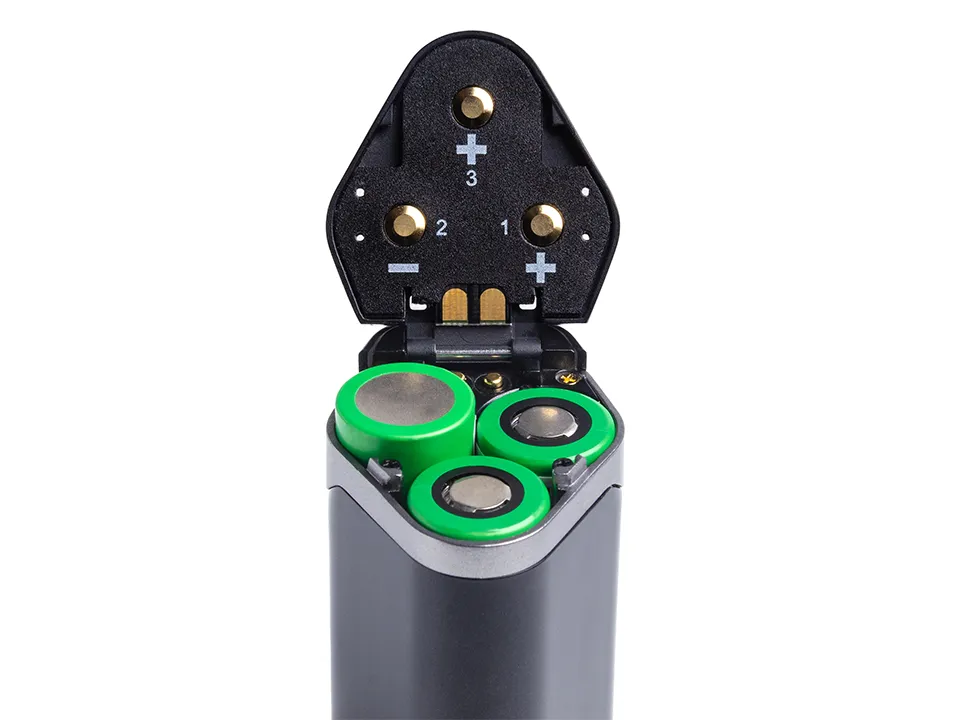
But what is it about these batteries that creates a fire risk? One possible cause is self-discharge resulting from a short circuit. This can happen, for example, when the terminals touch. Damage can also expose the terminals, increasing the likelihood of a short circuit and making it more likely to happen sooner. Lithium-ion batteries are more susceptible to this because of the complex composition of their cells and their higher energy density. A second possible cause is the development of leakage currents due to damage. A third is the use of non-certified batteries. These inherently carry a higher risk of discharge.
How can the fire risk be reduced in non-formal collection streams?
What can we as a sector do to limit the risk? This is not straightforward in non-formal collection streams, because the volumes involved are very small. Raising awareness and taking measures to increase battery collection will be the preferred approach. Given the growing popularity of lithium-ion batteries, this will only become more important in the future.
How can the fire risk be reduced in WEEE?
When batteries do enter the correct system, optimising collection channels and adapting collection containers can help reduce the risk. Bebat is currently working on a track-and-trace system to establish which batteries end up in which collection channel, and which are damaged and secured. For example, schools are no longer allowed to collect lithium-ion batteries. Larger collection containers could, for instance, be fitted with a temperature monitoring system. A rise in temperature could then trigger an automatic fire suppression system. Plastic collection containers could also replace metal ones, or the deposit opening could be adapted to prevent hazardous batteries from being deposited.
Question about this story? Ask your question
Companies in this story

Keep following this
Get an email when a new story is published. No account needed.
- ThemeCircular processing of electronics and batteries
- SubjectNews
- CompanyBebat vzw







