












Greater smartphone sustainability required from 2025
Text Valérie CouplezImage iStock
The European Union has introduced new rules to make smartphones and tablets more sustainable. Officially known as Regulation 2023/1670, they were adopted under the 2009 Ecodesign Directive. Work is already under way on a new Ecodesign Directive, which means the rules will be tightened further in due course. For now, however, there is a framework to build on and first steps can be taken towards smartphones that are reusable, repairable and recyclable.
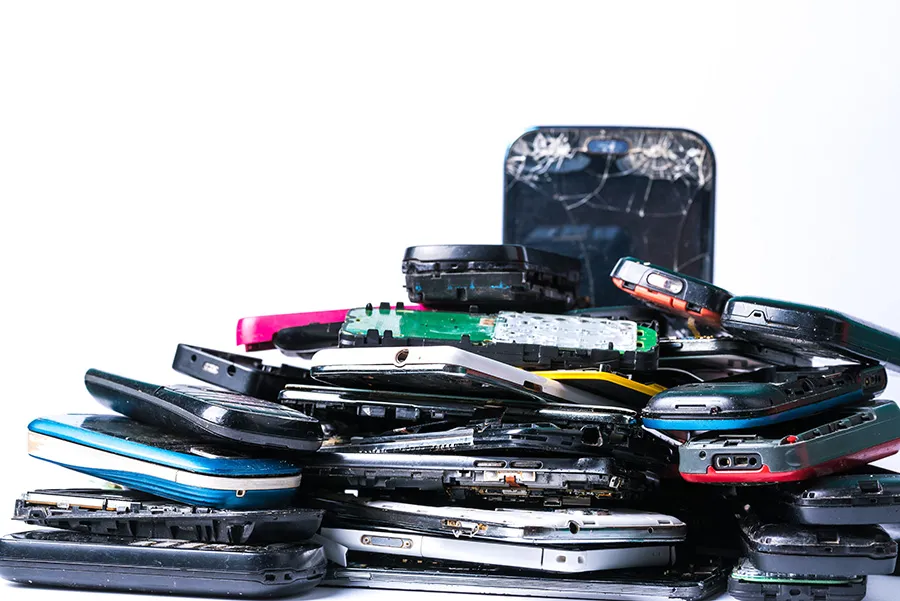
Have you tried taking the battery out of your smartphone recently? Chances are you didn’t manage it. The difficulty of dismantling components is one of the main reasons why smartphones perform so poorly in terms of recyclability today. Of course, it would also be wrong to tar them all with the same brush. There are already models that contain recycled material or are designed to be easy to dismantle. But they are certainly not the norm. So the introduction of a regulatory framework to make progress in this area can only be welcomed, particularly when you consider the wealth of urban mining potential a smartphone can offer. The new rules will not take effect immediately, however. Manufacturers have until 20 June 2025 to adapt. Smartphones placed on the market from then on must meet the new criteria.
Make more information available
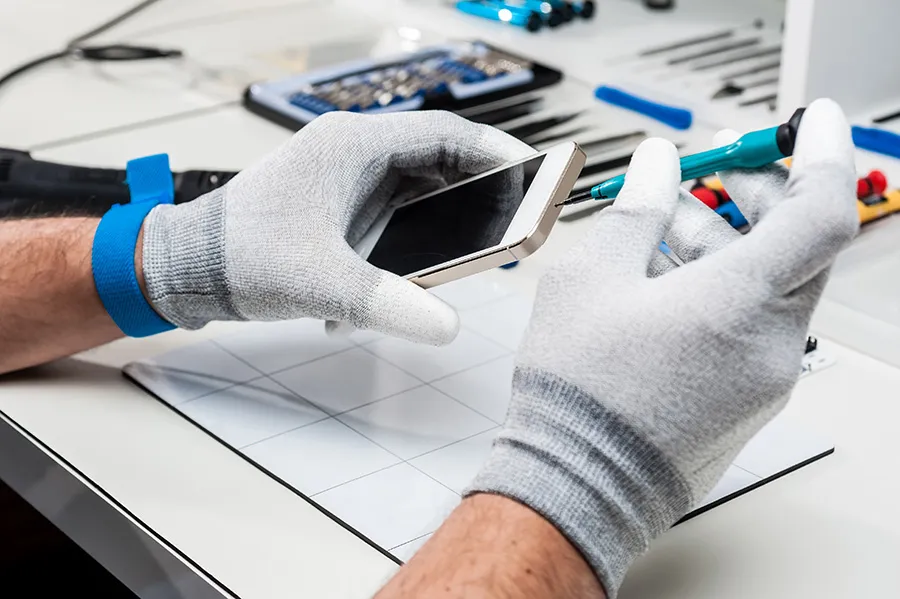
But what exactly are the main points of the rules approved so far? Importantly, the regulation covers more than recyclability alone. Manufacturers will also have to take account of reuse and repair. They must therefore provide free access to information about their devices in digital form. For example, how long will spare parts be available? What are the delivery times? What are the different dismantling steps, and what technology is needed to carry them out?
Declare recycled content
The aim is clear: having more information available at the end of the chain should improve recycling quality. A recyclability percentage can be displayed on new smartphones and, under legislation on greenwashing, can also be effectively verified. A second figure that smartphone manufacturers will have to disclose is the amount of recycled content they contain, both in the smartphone as a whole and in the specific components used. For now, there are no requirements for a minimum amount of recycled content. However, provision has been made to introduce such a requirement through a new regulation following extensive research.
Focus on CRMs
A third main point is linked to Europe’s drive for strategic independence. Smartphones contain a range of so-called critical raw materials, which have been identified as crucial to Europe’s future. Manufacturers will have to provide an indicative weight for the amount of cobalt in batteries, tantalum in capacitors, neodymium in magnets and gold in all components. In doing so, Europe wants to make clear to the recycling sector that recovering these materials from the smartphone in question is worthwhile.
Longer service life
Finally, greater clarity is also expected on the performance of smartphones and their components. The minimum battery life will have to be stated. By comparing this with the number of cycles the battery has already undergone, recycling companies will know whether it is still suitable for reuse or should instead be recycled. The screen will also be assessed. A number of drop tests will be used to check how long screens last. A minimum quality standard will also apply. There will also be
Collection also needs work
Fortunately, this regulation is being introduced so late in the current legislative term. There was no time to lose. Waiting for the new Ecodesign Directive, which is currently being drafted, would have caused a delay of several years. The regulation does, however, leave room to take this into account in the longer term. These rules will at least raise awareness and increase transparency around smartphone contents and recyclability. That is a good thing, but collection also needs attention. Smartphones often end up gathering dust in a drawer instead of entering the right collection channels. Without collection, there can be no recycling, however sustainable those smartphones may be.
Question about this story? Ask your question
Keep following this
Get an email when a new story is published. No account needed.
- SubjectNews







