












Global Recycling Day: recycling is the reason 1 in 2 Belgians sort their waste every day
Survey highlights the importance of better understanding what happens to waste: 1 in 3 think residual waste is recycled
A wide-ranging survey of sorting behaviour in Belgium shows that 96% of respondents sort often or always. They do so for environmental reasons and because waste can be recycled this way. This explains Belgium’s position among Europe’s leading countries for sorting and recycling packaging waste. However, not everyone yet understands what happens to (packaging) waste, and the sorting message is not always clear, particularly when it comes to the new types of packaging accepted in the New Blue Bag.
To mark Global Recycling Day on Friday 18 March, Fost Plus, which organises and finances the separate collection, sorting and recycling of household packaging waste in Belgium, carried out a wide-ranging survey[1] into Belgians’ sorting behaviour.
Belgium is now among Europe’s leaders in packaging waste recycling, thanks to the way Belgians sort their waste2. 96% of respondents say they sort ‘often’ or ‘always’, with the clear leaders being over-55s, of whom 99% say they sort ‘often’ and 91% ‘always’. Among younger respondents (aged 18-34), 69% sort ‘always’. The lower figure can be explained by household composition: while they still live at home, young people seem more likely to leave sorting to other household members, such as their parents or partner. Nevertheless, this younger group is aware of the importance of sorting properly, and sorting behaviour is discussed most often among them. Young people are also the most optimistic when asked whether recycling 100% of packaging is achievable. 91% say it is.
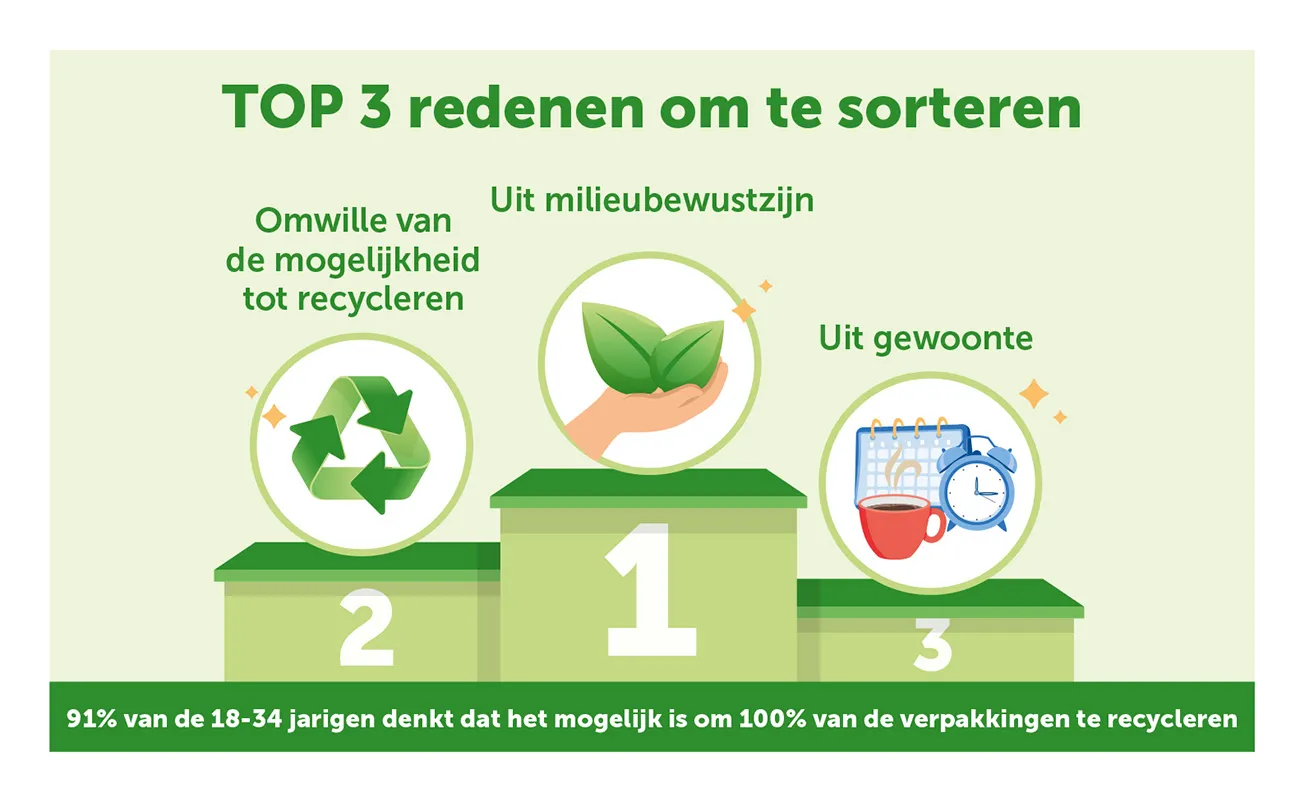
People sort packaging because they want to do something good for the environment (54%), because they know the materials can then be recycled (46%), or out of habit (41%). Sorting and recycling give packaging materials a second life as secondary raw materials, reducing the need for new raw materials and significantly cutting CO2 emissions. The New Blue Bag, for example, saves an additional 100,000 tonnes of CO2 a year.
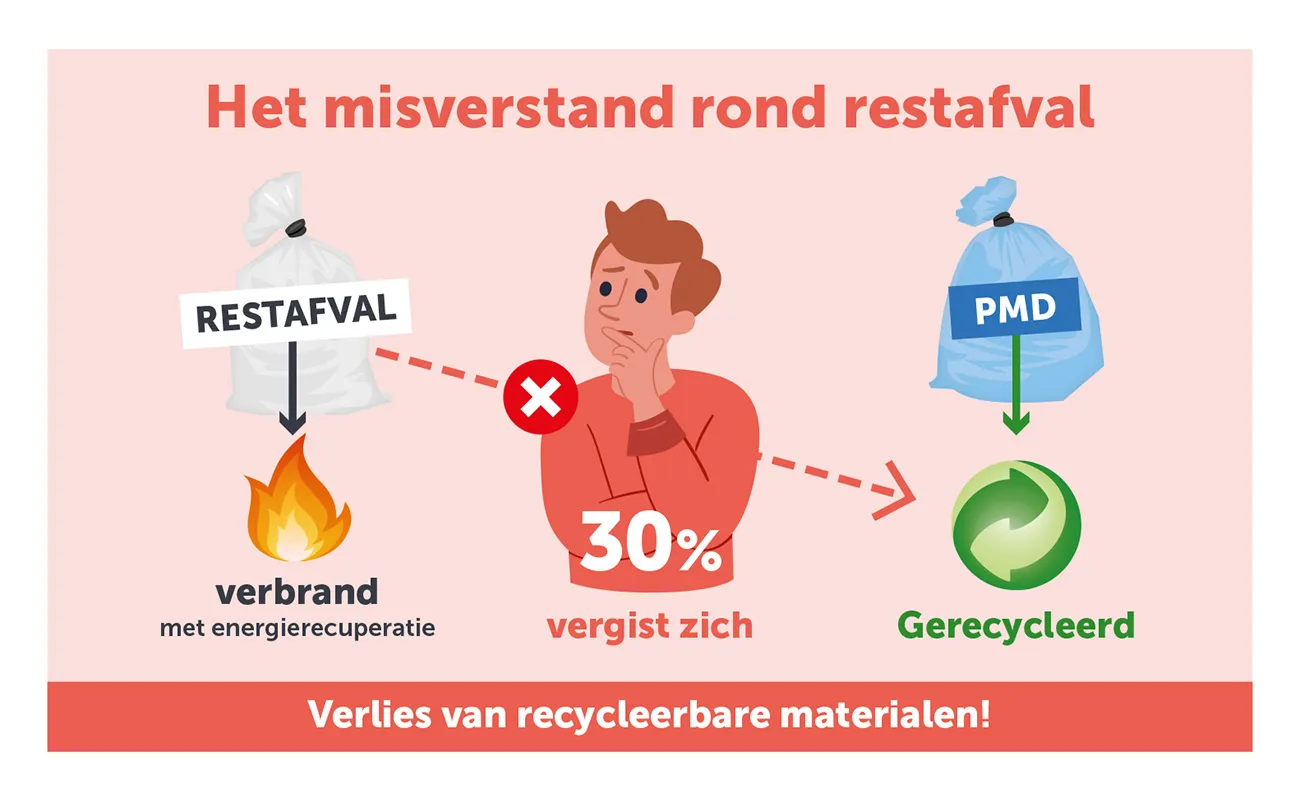
The misconception about residual waste
Since more packaging was allowed in the blue PMD bag, an additional 8 kg of household packaging per resident has been collected each year, on top of the 15 kg already collected. This is good news and shows that communications about the expanded sorting message have had an impact. Recycling does indeed start with everyday sorting: if packaging is not sorted and ends up in residual waste, it is unfortunately lost for good.
There is still room for improvement. On the one hand, the study shows that awareness of what happens to residual waste remains insufficient: as many as 30% of people think it is still recycled, when in fact it is incinerated, with energy recovery. This is probably why, when unsure how to sort, 33% of respondents put packaging in residual waste rather than finding out, for example by using the Recycle! app, the betersorteren.be website or the collection calendar. On the other hand, 1 in 4 do not believe that the plastic tubs and bags accepted in the New Blue Bag are recycled, although they are.
It is often assumed that people who live in smaller homes or have no outdoor space sort less. However, the study contradicts this. There appears to be no causal link between sorting behaviour and people’s living arrangements, whether they live in a flat with or without a balcony, or a house with or without a garden or terrace.
Items that cause uncertainty
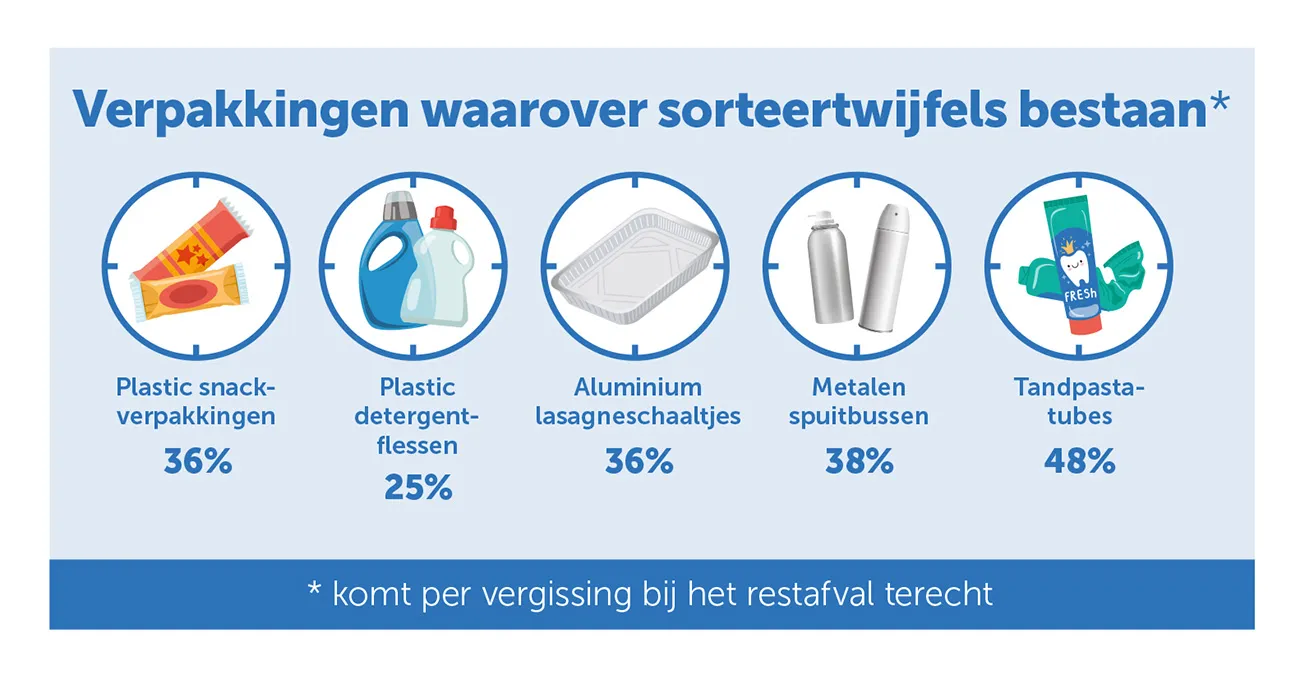
We recycle almost all our packaging in Belgium, but the survey shows that people are still unsure which bag to use for some types of packaging. There is uncertainty about plastic wrappers, for example for biscuits (36%), plastic detergent bottles (25%), aluminium trays (36%) and metal aerosol cans (38%). Finally, toothpaste tubes (48%) also often end up in residual waste by mistake, even though they belong in the blue PMD bag.
To be clear: P stands for plastic packaging, M for metal packaging and D for drink cartons.
Wim Geens, Managing Director of Fost Plus: “Almost half of those surveyed say they sort used packaging because it can then be recycled. We want to highlight this circularity further through a communications campaign. A better understanding of the importance and tangible results of sorting means people sort more effectively. The better we sort together, the better we can recycle used packaging materials. After all, recycling all packaging remains our ultimate goal.”
‘Recycle all packaging. Let’s do it’ campaignBelgium is firmly on the right path towards maximum recycling. Fost Plus is determined to get back every can, bottle, tub and any other type of packaging. Only when every package is sorted can it be recycled. It is in this context that Fost Plus has launched a national communications campaign, which is currently running on radio, television and social media. The campaign, which will be visible throughout the year, focuses in particular on the tangible results of packaging recycling and shows that consumers can make a difference through their sorting efforts.
Question about this story? Ask your question
Keep following this
Get an email when a new story is published. No account needed.
- SubjectNews







