












Getting the sizing and composition right puts reuse higher up the ladder
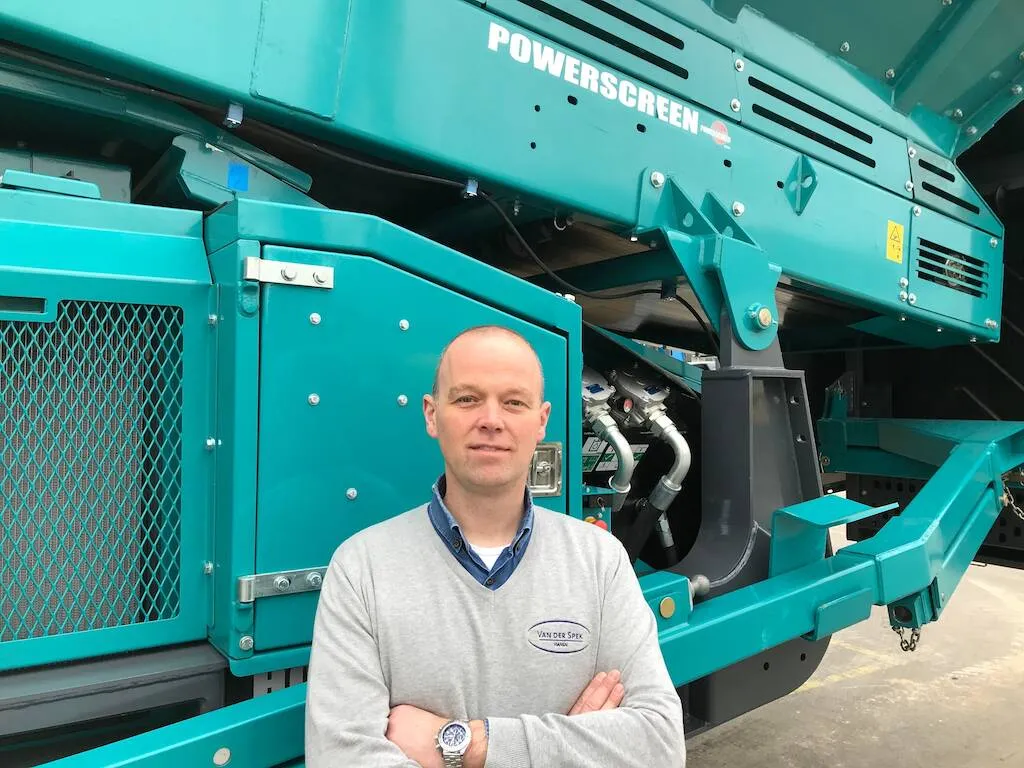
Fortunately, we are heading in the right direction together. Since the second week of May, the COVID-19 figures have been increasingly favourable and the next steps towards easing restrictions look set to follow one another. We therefore hope that in the coming months we will be heading towards a ‘normal’ summer, with the normality we are looking forward to becoming reality again.
The reuse and use of recyclable material streams is also becoming a reality, with these materials being used more and more widely. It is becoming increasingly important for recyclable streams to remain suitable for repeated use, rather than leaving the supply chain after their next application.
To use recycled product streams as effectively and efficiently as possible, the first priority is to make them as clean as possible. Almost as important is sizing them to the right specifications, so that they can be used in place of the primary raw materials normally used in production.
Concrete aggregates are a good example. They can be used in concrete production at high, and even very high, percentages. As is well known, their use is already growing steadily. For the quality of the end product, the right particle size is just as important as the required purity, meaning no floating or contaminating materials. This allows them to be optimally combined with the primary raw materials, gravel and sand. We are talking about grading, not mixing. To put it even more precisely, I would describe it as carefully considered grading: using the right composition makes it possible to produce products that are indistinguishable from those made entirely from primary raw materials. At the end of their service life, these products can then be recycled for use in concrete again. In practice, we are seeing more and more screening machines being supplied that screen not only finer sizes but also a wider range of sizes, with as little carry-over into the next fraction as possible. The aggressive, adjustable screen decks on Powerscreen screening machines make it easy to achieve this. These screened products can be used to optimise concrete mixes, with as little primary material and no more cement than necessary.
We are seeing similar requirements in asphalt, although here an unexpected development is emerging. There is a risk of a shortage of recyclable porous asphalt (ZOAB). Market demand and pressure from the government (Rijkswaterstaat) have led to the development of many new asphalt products incorporating screened and processed recycled ZOAB asphalt. These mixes are now being used so widely that a shortage is emerging, and primary raw materials have even occasionally had to be used again because recycled materials were unavailable. These are temporary problems, of course, and innovation will undoubtedly lead to other material streams being ‘discovered’ for use in producing new asphalt.
I would like to close once again by saying: stay healthy, and may life return to the way it was soon. Of course, I am not referring to developments in the use of recycled products. In that area, the future we anticipate must become reality.
Question about this story? Ask your question
Keep following this
Get an email when a new story is published. No account needed.
- ThemeCircular business under changing regulations
- SubjectNews







