












From the Rethink Plastics Expo and a circularity knowledge programme to exploring the possibilities of 3D printing at Kunststoffenbeurs 2024
Collaboration across the value chain has given the plastics and rubber industry a significant boost in innovation. “Companies have realised over the past fifteen years that working together gets things moving faster. By collaborating, we can find better solutions sooner and bring them to market more quickly,” says Martin van Dord, Innovation Coach at Federatie Nederlandse Rubber- en Kunststoffenindustrie (NRK). Innovation has helped companies significantly increase their knowledge and expertise. The Netherlands is ahead of other countries when it comes to collaboration. “They look on admiringly at how it works in the Netherlands.”
As processors, we must step up and act as enablers, so that end customers can make sustainable choices” Martin van Dord, Innovation Coach, Federatie Nederlandse Rubber- en Kunststoffenindustrie
Milestone
Kunststoffenbeurs, taking place this year on 18 and 19 September at Brabanthallen in ’s Hertogenbosch, is the annual meeting place for the entire value chain in the Benelux. It is a must-attend event for manufacturers of products such as injection moulding machines, says Mark Verveer, Managing Director of KraussMaffei Benelux. “You speak to dozens of people in a day. A trade fair is incredibly effective.”
For Mark Verveer, the move from Veldhoven to ’s Hertogenbosch is a milestone in Kunststoffenbeurs’ 25-year history. Koningshof had its advantages. “You only miss something once you no longer have it. But Brabanthallen makes it possible to bring machines to the fair. They are not just eye-catching; they also make it much easier to explain things to visitors.” For Mark Verveer and his team, Kunststoffenbeurs will be primarily a networking event this year.
Sector under pressure
The pressure on the sector is being felt across the market. According to Verveer, the first reason is that 50% more injection moulding machines were sold during the Covid-19 crisis than in a normal year.
You speak to dozens of people in a day. A trade fair is incredibly effective. This year, we see Kunststoffenbeurs primarily as a networking event”Mark Verveer
“The market hasn’t grown by 50%, so sales will be lower in subsequent years.” In addition, Dutch industry has contracted for six consecutive quarters; the contraction in the plastics industry is even twice as high as that of industry as a whole. One reason is that the use of plastics, as they are commonly called, is under pressure because of their perceived environmental impact. “Which material isn’t under public scrutiny?” asks Martin van Dord. Fairly or not, the public image of plastics is negative.
Circular raw materials
The sector’s biggest challenge is to switch to circular materials, says the NRK Innovation Coach. That is also what politicians are demanding. It is no coincidence that the slogan for Kunststoffenbeurs 2024 is Endless possibilities with circular plastics. At present, circular, bio-based or recycled plastics account for 12 to 15%. By 2030, this figure must reach 50%. And under European legislation, it must reach 100% in 25 years. The master plan for achieving these targets is ready. “We have a major step to take,” acknowledges Martin van Dord. Mechanical recycling capacity appears to be sufficient. The question, then, is whether the market is willing to use these circular materials. “It is a long process, so you have to persevere and keep innovating. Consumers and businesses alike will have to change their behaviour. It all comes down to collection, sorting, separation and recycling.”
Visitors to Kunststoffenbeurs can find inspiration for working with circular materials at the Rethink exhibition, which will once again be on the show floor this year
According to Van Dord, the difficulty is that there are many different plastics that cannot all be treated alike. In principle, each type of plastic has its own value chain, and agreements need to be made within each one. “For convenience, they are all lumped together, but that underestimates the complexity of the value chains. Each one faces different challenges.”
In some cases, legislation prohibits the use of circular materials. In others, the bar for an application is so high, for example in the aerospace industry, that companies choose virgin materials for that reason alone. Then there is the international market: virgin plastics are offered more cheaply from outside Europe than recyclers here can produce recycled material. In 2022, more than half of the plastics used ended up in incinerators. “We will have to move towards recycled plastics,” says Mark Verveer of KraussMaffei. “We cannot keep incinerating plastics indefinitely, even if one consequence may be that materials become more expensive.”
3D printing as a solution?
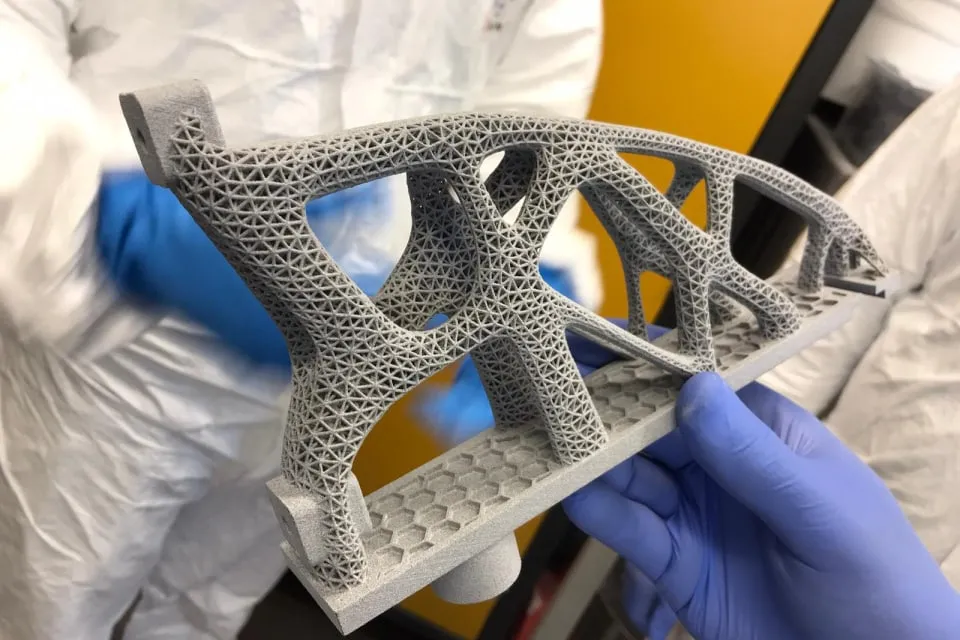
Can 3D printing help make production more sustainable? This year, Kunststoffenbeurs will feature an AM for Plastics Area, and the conference programme will also cover the technology. Karl Wallecan, Managing Director and owner of SEIDO Systems and SEIDO Solutions, both exhibitors at the fair, believes 3D printing can certainly help reduce material waste.
Karl Wallecan believes 3D printing can certainly help reduce material waste
He gives an example from the work of SEIDO Solutions, a supplier of both plastic and metal components. A customer asked for a quote for 1,000 small plastic parts. “When we spoke to them, it turned out they only needed 220 a year. But they ordered 1,000 because that was the minimum order quantity for injection moulding, and the cost of the mould was amortised across that number. They eventually threw the rest in the bin,” he explains. In this case, 3D printing is not only cheaper, but also more sustainable, because no material is wasted.
3D printing injection moulds
Over the 16 years he has represented 3D printer manufacturer Stratasys, Karl Wallecan has become convinced that the application is crucial when weighing 3D printing against other technologies. “With Loctite resins and Stratasys 3D printers, we have high-quality materials and printers tailored to the specific requirements of different sectors. We have carbon fibre materials that are as strong as aluminium. But if the application is not suitable for 3D printing, it won’t work.” At the fair, Seido Systems will also demonstrate 3D printing of injection moulds, together with resin manufacturer Loctite. A French food company 3D prints moulds for new cups to test them with consumers before investing in an expensive injection mould.
At the fair, Seido Systems will demonstrate 3D printing of injection moulds together with resin manufacturer Loctite
“It is the initial products that matter. With 3D printing, we can often replace the aluminium mould at this stage.” For production moulds, SEIDO Systems has the tooling solution from Xact Metal, which has developed a 3D metal printing process for mould inserts with internal cooling channels together with Uddeholm. The material used for printing is Corrax, a stainless steel alloy that is not susceptible to corrosion. For larger production runs of injection-moulded products, this can shorten cycle times. Karl Wallecan believes this innovation is well worth investigating in a sector where margins are under pressure.
Injection moulding with recycled material
KraussMaffei is also showcasing an innovation this year that ties in with the theme of circular plastics. The injection moulding machine manufacturer has developed a machine that makes it easier to mould with recycled material. The first version of this injection moulding machine can be seen in operation at the new showroom in Munich. It is equipped with a single-screw compounder that melts the material before it enters the plasticising unit.
Although virgin materials are cheaper, we will have to start using recycled materials. The reason should not be the purchase price, but the fact that plastics are made from oil” Mark Verveer
“This allows us to add a higher proportion of recycled material while retaining the same properties,” says Mark Verveer. He believes that smarter machines of this kind will help process increasingly high proportions of recycled material. At present, the technology is available for shot volumes of up to 5 litres. “But we will keep developing it, because society cannot do without plastics.” He understands why recycled material is more expensive. It requires an additional process, which costs money. “Although virgin materials are cheaper, we will have to start using recycled materials. The reason should not be the purchase price, but the fact that plastics are made from oil.”
Political decisions
Visitors to Kunststoffenbeurs can find inspiration for working with circular materials at the Rethink exhibition, which will once again be on display this year. There will also be presentations with the Circonnect knowledge network on tools for designing with circular materials. “As processors, we must step up and act as enablers, so that end customers can make sustainable choices,” says Martin van Dord. The latest developments concerning the Nationale Circulaire Plastic Norm (NCPN) will also be on the agenda. “We are also trying to bring someone from The Hague to the fair to explain what the circular plastics levy mentioned in the new government’s outline agreement entails,” says Martin van Dord. Kunststoffenbeurs begins the day after Prinsjesdag.
Under the outline agreement, this levy is budgeted at half a billion euros a year from 228. “Remarkable,” says the NRK Innovation Coach, “because a year and a half ago CE Delft calculated that there was a high risk of both polymer production and polymer processing moving abroad.”
There is no doubt that the plastics industry needs to move towards circular raw materials. But the playing field must remain fair, Van Dord believes. He also points out that the use of plastics often delivers substantial savings in Scope 3. Consider the weight saved in cars. “The environmental impact of production is only a fraction of the total impact. If only the impact of plastics is priced in, and that of metal is not, the imbalance becomes even greater.”
Question about this story? Ask your question
Keep following this
Get an email when a new story is published. No account needed.
- ThemeMaking plastics and packaging circular
- SubjectNews







