












From organic waste to bioplastics
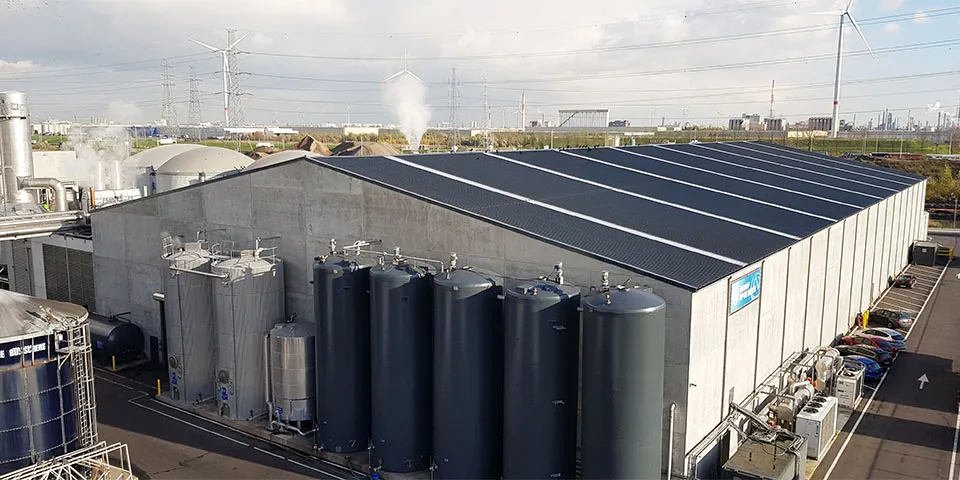
There is a huge amount of food waste worldwide. For Israeli company TripleW, that was reason enough to look for innovative ways to turn this waste stream into a raw material. It uses it as a building block for PLA (polylactic acid). This solution will also convert organic waste into bioplastics in Belgium. To this end, it recently signed a partnership agreement with Group Op De Beeck.
Almost one million tonnes of food end up in Flemish rubbish bins each year. Many companies, including retail chains, are therefore taking action to combat food waste. Group Op De Beeck is also determined to ensure that no food goes to waste. The company collects organic waste and gives it a second life. It processes around 350,000 tonnes of organic waste each year. Some of this is sent to the country’s largest operational biogas plant, which generates enough green electricity to power 23,000 households. But Group Op De Beeck is also continuing to look for other opportunities. In this context, it signed a partnership agreement with TripleW in April to convert organic waste into bioplastics.
Scaling up the process
TripleW has developed its own process for producing biochemical products from microbial waste. This involves converting the carbohydrates present in organic waste into lactic acid. Lactic acid is an important building block of polylactic acid, or PLA, a bioplastic used in applications such as food packaging, textiles and automotive parts. This has not been achieved overnight. Bio Base Europe Pilot Plant, based in Ghent, thoroughly tested the process on a smaller scale. For the scale-up, Group Op De Beeck, a European market leader in organic waste processing, proved to be the ideal partner.
Sustainable added value
Over the next year and a half, several large-scale trials will take place at Group Op De Beeck M & T’s processing site in the Port of Antwerp. The aim is to establish a proof of concept that has moved beyond pilot scale. For Group Op De Beeck, this is a valuable addition to its current process, enabling organic waste to be valorised sustainably and in a circular way.
Question about this story? Ask your question
Keep following this
Get an email when a new story is published. No account needed.
- SubjectNews







