












From 5.8 million tonnes of textile waste a year to circular textile consumption
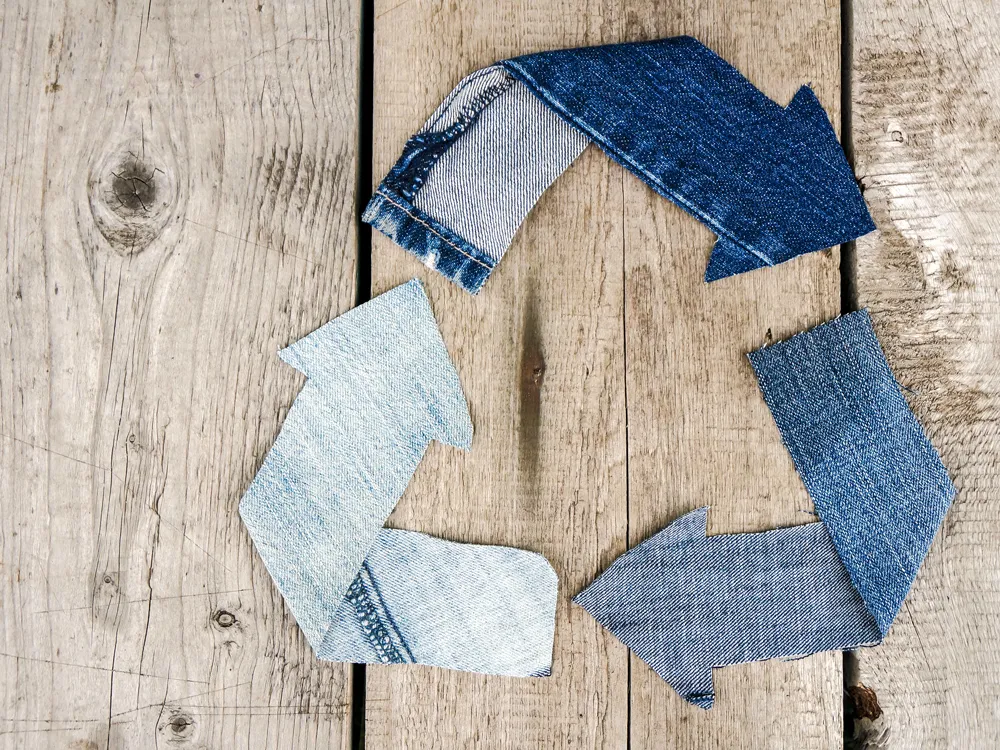
There is still a long way to go when it comes to textiles. Commissioned by the European Environment Agency, VITO investigated how the European textile industry can become more circular and sustainable.
In its ‘Plastics in textiles’ report, VITO says the textile industry must focus on sustainable fibre choices, reducing microplastics and, of course, improving separate collection, high-quality reuse and recycling.
The average European buys 26 kg of textiles a year (clothing, footwear and household textiles) and generates 11.3 kg of textile waste, amounting to 5.8 million tonnes of textile waste a year in Europe. An estimated one-third of this is collected separately, while the rest is landfilled or incinerated. Of the material collected, around 60% is reused (often outside Europe), 10-30% is downcycled (for insulation, filling and rags), and 10 to 20% still ends up as waste. Less than 1% is recycled into new textile fibres in high-quality recycling processes. There is still a long way to go before we can talk about a circular textile sector in Europe. Producing all these textiles requires 1.3 tonnes of primary raw materials, 100,000 l of water and 700 m² of land per person each year. In addition, synthetic textiles are a major source of microplastics, small plastic particles released during the production, washing, use and waste processing of textile products. Natural fibres also have a significant environmental impact. Cotton, for example, performs poorly in terms of land, water and chemical use.
What can be improved?
To reduce the environmental and climate impact of textile production and consumption, the sector needs to become more circular: products need to last longer, with more reuse and better recycling … This can be achieved without compromising the sector’s economic and social importance. Many consumers are already willing to help shape this transition: 71% say they are interested in investing in quality clothing and are considering buying clothes second-hand, reselling, repairing or renting them. Smaller players in the textile sector are already tapping into this trend. The challenge now is to scale up these good practices. For synthetic fibres in particular, there are three key areas of work to make the textile sector circular and environmentally friendly.
Sustainable fibre choices
To minimise the environmental impact of textile products, it is important to make sustainable fibre choices. The choice of fibre determines not only a product’s properties and performance, but also the environmental impact of the finished product and what happens to the textile throughout the rest of its life cycle. Although switching to natural or bio-based fibres can reduce the impact of using fossil raw materials, these fibres do not always have equivalent properties and are not necessarily more sustainable. The most important rule is that the choice of fibre must be suited to its intended application: the required properties, expected lifespan and anticipated end-of-life treatment.
Research into microplastics
More research is needed to understand and control microplastic emissions. Alongside research into the effects of microplastics on human health and the environment, work is under way to find ways of reducing microplastic emissions throughout the textile life cycle. The EU is already taking the lead, with its plastics strategy addressing improved capture of microplastics (for example, through filters), better measurement methods and the development of knowledge about microplastic emissions into the environment, as well as the assessment of their long-term impact on ecosystems, people and animals.
Improved separate collection
To avoid having to use new raw materials again and again to produce textiles, it is important to improve separate collection, high-quality reuse and recycling. Closing the loop can significantly reduce the environmental impacts of our textile consumption. The challenge is to overcome the technical, economic and social obstacles that still stand in the way of reuse and effective fibre-to-fibre recycling. The EU Waste Framework Directive marks an important first step: separate collection of textile waste will be mandatory in all member states from 1 January 2025. Sufficient sorting and recycling capacity will also need to be provided.
Question about this story? Ask your question
Keep following this
Get an email when a new story is published. No account needed.
- ThemeMaking use of textiles and other waste streams
- SubjectNews







