












Frisian waste and raw materials company nominated for King Willem I Prize
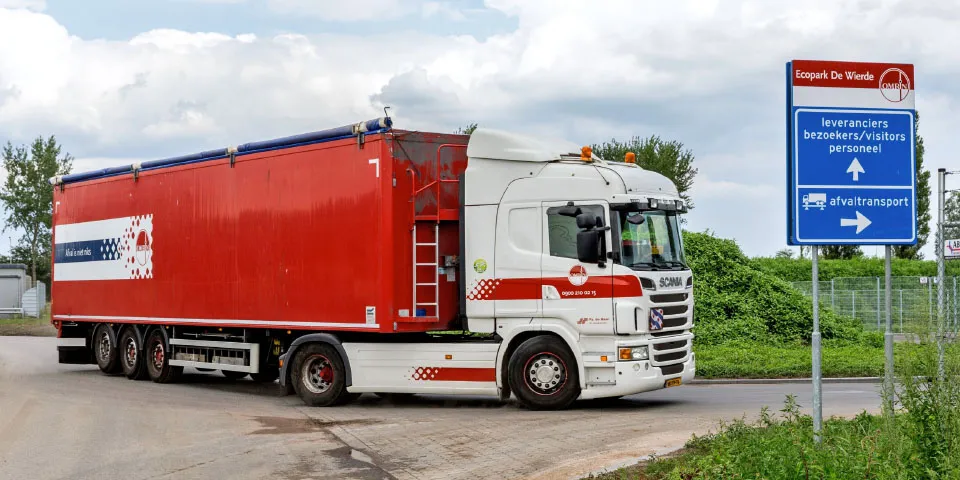
‘Separate at source where necessary and sort afterwards where possible’
Frisian waste collector and processor Omrin is one of 12 companies nominated for the prestigious King Willem I Prize in the SME category. Omrin has also previously won the title of ‘Most Sustainable Company in the Netherlands’, awarded by Stichting Nederland CO2 Neutraal. What is behind the Frisians’ apparent lead?
What’s in a name? Perhaps the foundation of Omrin’s success lies in something very simple: its name. Omrin means ‘cycle’ in Frisian. And a name like that naturally comes with expectations. On top of that, the waste company from Leeuwarden has a very clear mission: it “aims to be a leader in waste collection, the recovery of raw materials and the production of sustainable energy”. The reason is that “the world’s population is growing and raw materials are becoming scarcer. We must use what we have sparingly. Omrin therefore dreams of a circular economy, a system in which we reuse raw materials and products as much as possible.”
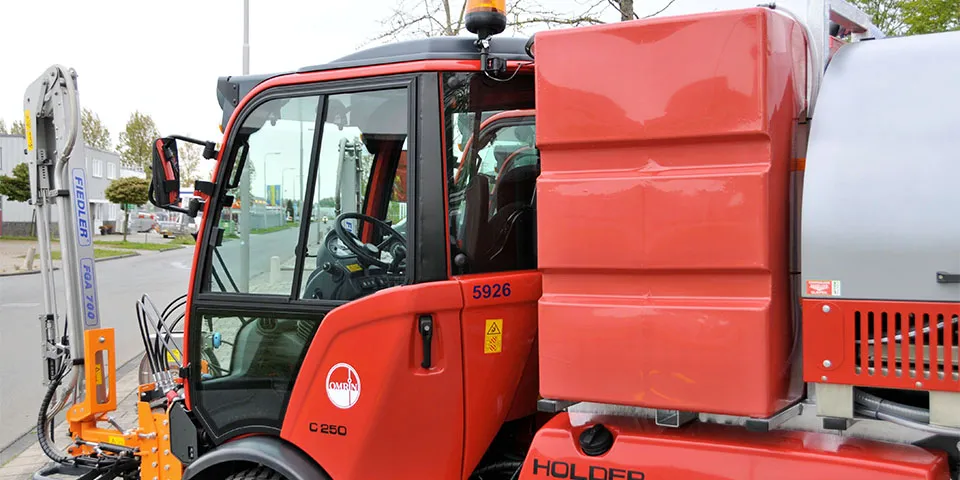
The entire fleet runs on self-produced green gas.
So much for the fine words. Omrin appears to take its mission seriously and to put its words into action. It has not only already won an award for sustainability and become the only recycling company nominated for the Netherlands’ leading business award, the figures also show that Omrin is serious about its mission. While an average of 50 per cent of collected waste is made suitable for reuse elsewhere in the Netherlands, the Frisians manage to make as much as 71 per cent of the waste they collect suitable for reuse. The target for 2020 is 75 per cent. The waste company also generates a third of Friesland’s sustainable energy: 25 per cent in electricity and steam, and 8 per cent in green gas.
Sorting technologies
Omrin can report these impressive results because it collects waste from more than 175,000 households in 12 Frisian municipalities, 4 in Groningen and more than 8,500 businesses and institutions. This makes it the largest waste collector in the northern Netherlands. It also processes household waste from almost 800,000 households across 18 Frisian municipalities, 2 municipalities in Groningen, 6 municipalities in North Veluwe and 6 municipalities in South Holland, as well as from many businesses. Omrin’s motto? “Separate at source where necessary and sort afterwards where possible.”
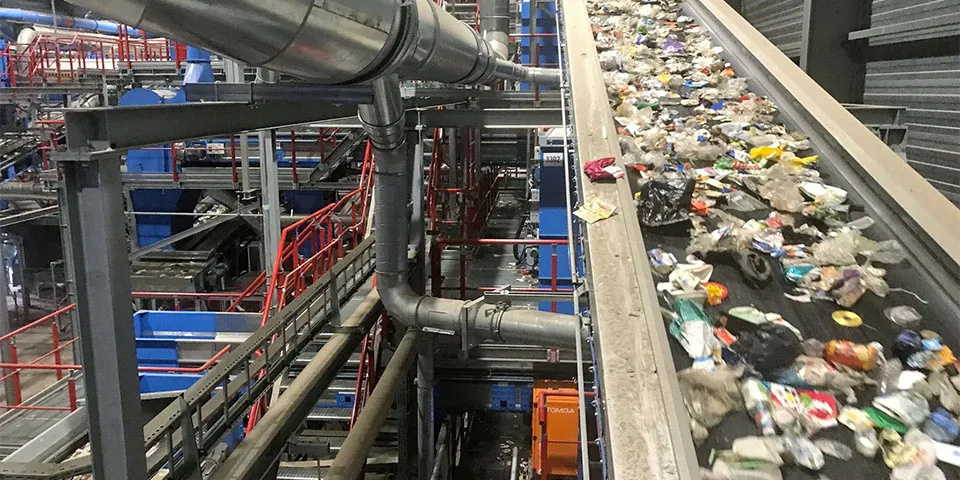
The plastics sorting plant at Ecopark de Wierde.
To achieve this, Omrin uses smart sorting technologies and high-tech energy plants. In 2011, for example, it opened its own Reststoffen Energie Centrale (REC) in Harlingen, which generates green electricity for 50,000 households. In Heerenveen, Omrin opened a gas upgrading plant at its own Ecopark De Wierde, where the biogas it produces is converted into green gas. Omrin produces around 14 million cubic metres of green gas in total. One million cubic metres is used to power its own fleet, and the remainder is fed into Liander’s network. This output is enough to supply gas to around 10,000 households each year.
The same ecopark has had its own Scheidings- en Bewerkingsinstallatie (SBI) in operation since 2002. In 2009, it was adapted to sort various types of plastic from mixed waste (Kunststof Sorteer Installatie), and in 2015 it was further modified to sort drinks cartons as well.
Omrin also operates a chain of 7 charity shops under the name Estafette, where 2.4 million kilos of ‘waste’ are given a second life each year. The shops attract half a million customers annually.
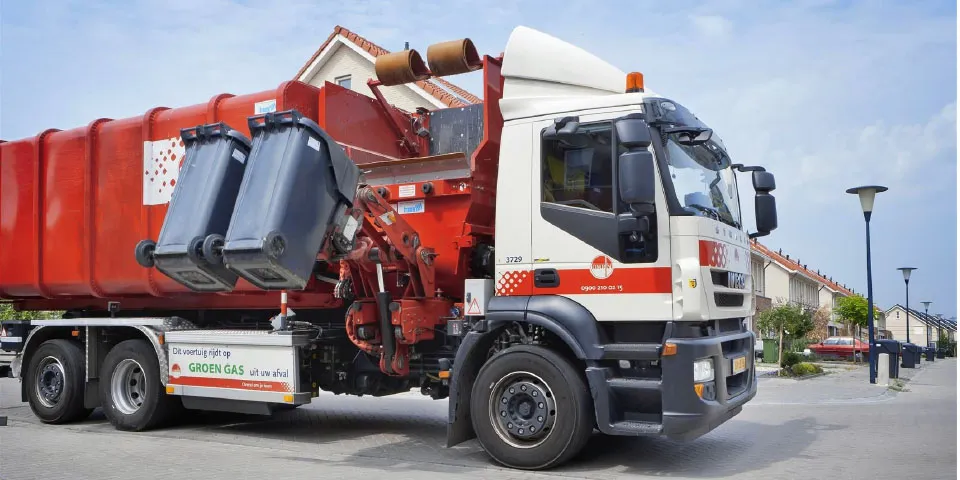
Source separation is the basis for these strong figures.
Waste containers
Omrin’s ultimate goal is to close the loop completely, and in Friesland the company is well on its way. It recognises that it cannot do so without the public’s cooperation. Omrin therefore raises awareness among the Frisians every day about the need to separate waste.
Omrin combines source separation with effective sorting after collection. The SBI and KSI in Heerenveen extract as many reusable waste particles as possible from the waste mix, almost fully automatically. According to the company, in 2019 this amounted to no less than 15 kilos of reusable plastic per resident, twice the national average. Omrin supplies recovered raw materials to the processing industry, which uses recycled plastic, for example, to make new waste containers. Organic waste is sent to its own anaerobic digestion plant to produce green gas. The remaining waste is incinerated at the REC in Harlingen to generate green electricity.
The exceptional results persuaded the King Willem I Prize jury to nominate Omrin for the business award, which is presented every 2 years. The award ceremony was due to take place on 18 May, but has been postponed until autumn because of the coronavirus crisis.
King Willem I Prize
Since 1958, the King Willem I Foundation has presented the King Willem I Prize every 2 years in several categories. The foundation is named after King Willem I (1772-1843), the ‘Merchant King’, who was known for his commercial acumen. During his reign (1814-1840), he took initiatives to restore economic prosperity, founded trading companies and acted as an investor.
The King Willem I Foundation is governed by a board whose members are involved in and have a feel for business. Her Majesty Queen Máxima is the foundation’s honorary chair.
Question about this story? Ask your question
Keep following this
Get an email when a new story is published. No account needed.
- SubjectNews







