












First in Belgium: CO2-neutral ready-mixed concrete
Text Saar BenteinImage Devagro
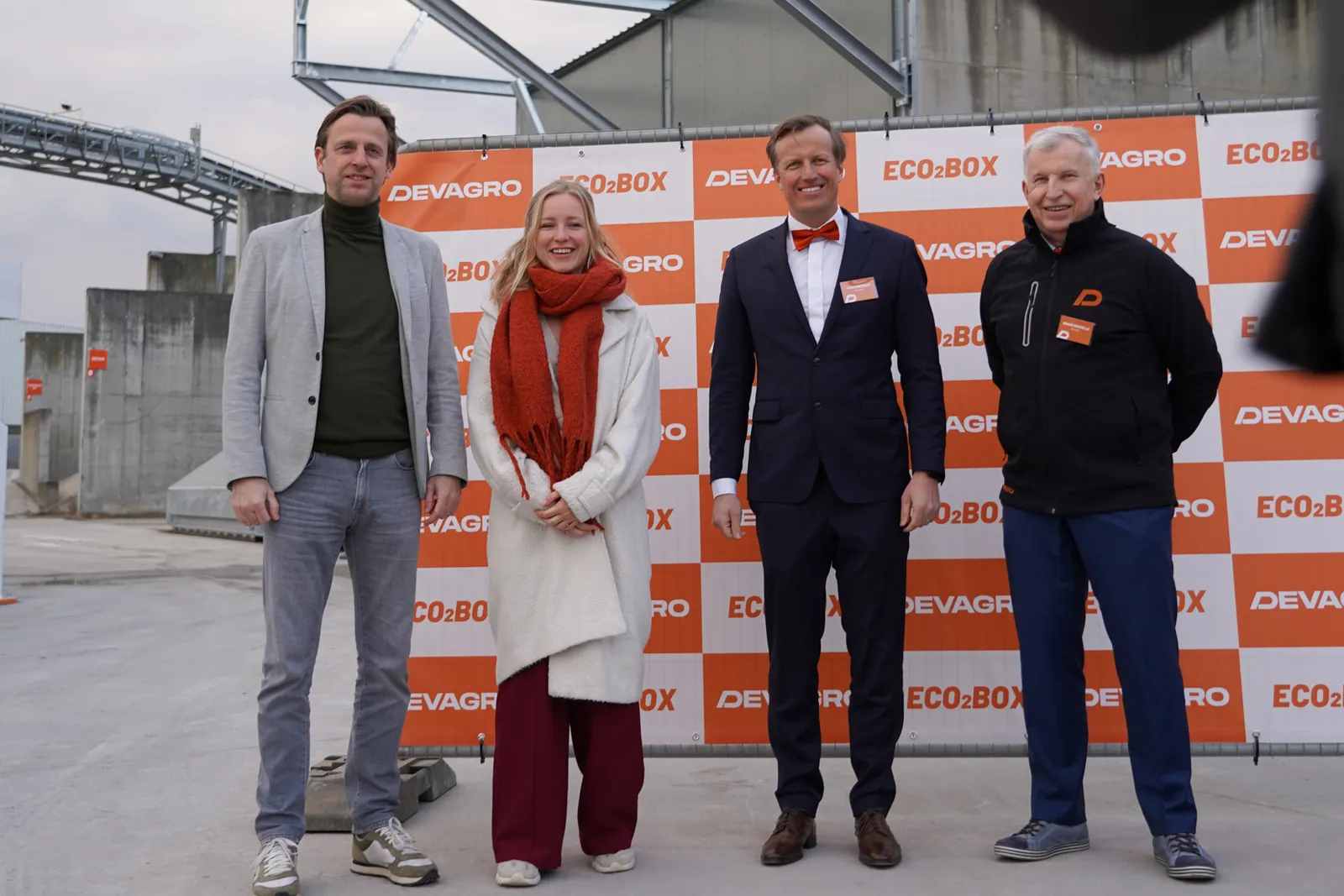
Concrete that is fully CO2-neutral, without compromising on quality, and enables companies in the construction sector to reduce their environmental impact flexibly? West Flanders-based Devagro recently unveiled this innovation, a first in Belgium, in the presence of Flemish Minister for Energy and Climate Melissa Depraetere.
Cement production, the binder in concrete, accounts for 8% of global CO2 emissions. “Many people know this figure, but we are taking practical action by becoming the first Belgian company to offer our customers top-quality CO2-neutral concrete,” says Lars Rius, innovation coordinator at Devagro. As well as its ambition to take a pioneering role, Devagro, a specialist in contracting, concrete solutions, recycling and soil remediation, is responding above all to market needs. Rius explains: “There are two major trends. Companies are looking for sustainable solutions that give them a competitive and financial advantage. At the same time, legislation such as the CSRD requires companies to make the entire life cycle of their product more sustainable.”
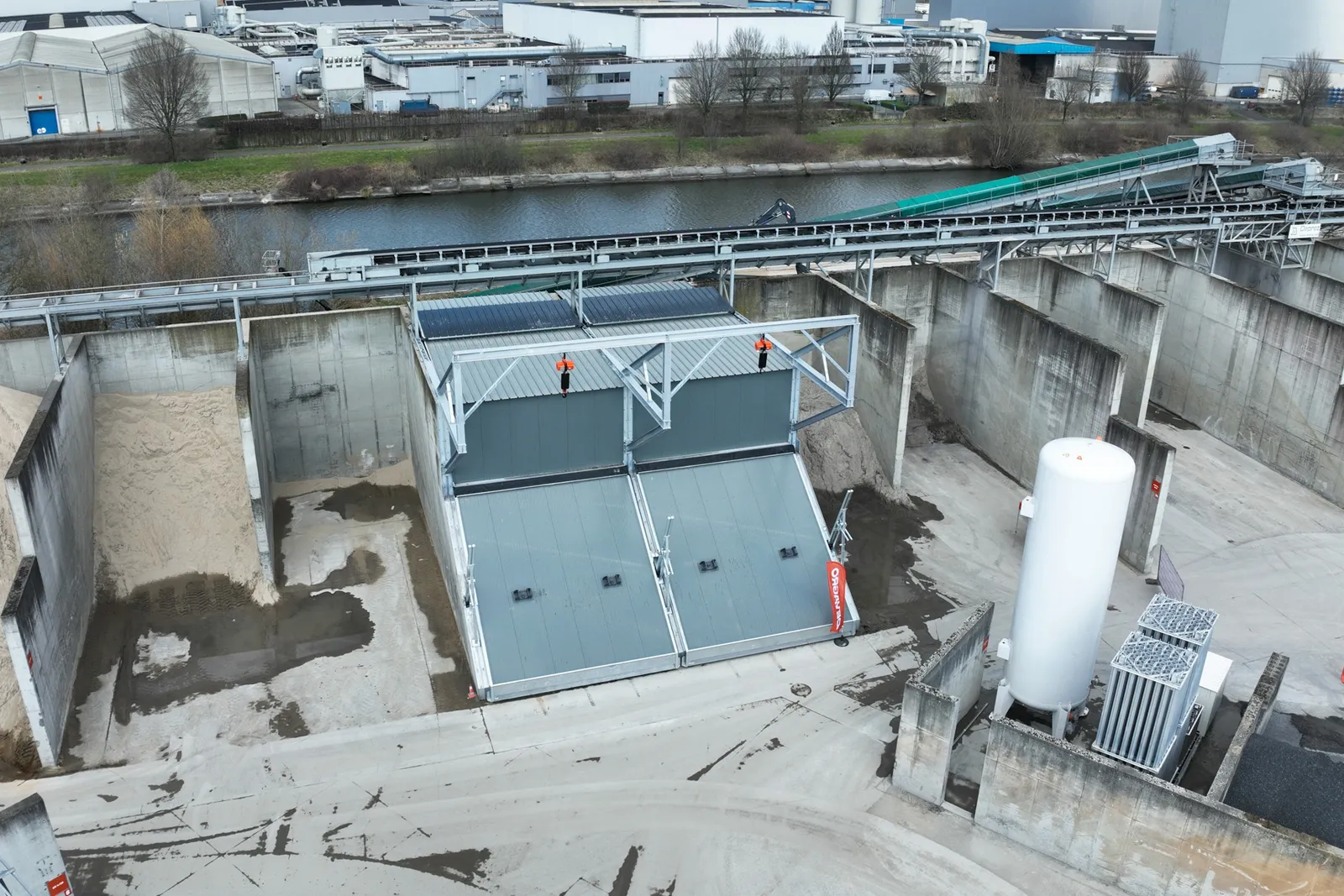
CO2 injection into aggregates
The innovative Carbon Capture & Storage technology involves three different steps. First, CO2 from industrial processes is captured from the atmosphere (‘capture’). The captured CO2 is then transported to Devagro’s site and safely stored (‘storage’) in recycled, COPRO-certified aggregates, mainly sourced from the company’s own demolition activities. The end product, ECO2Beton, meets all quality standards, including BENOR. Rius says this is a game-changer: “More environmentally friendly alternatives, such as geopolymer concrete, do not meet the same quality requirements. We do not change the mix. Customers can rely on our high-quality concrete, but with a significantly lower environmental impact. It’s a win-win: no compromise on quality or performance, but a competitive advantage, for example in public tenders, and transparency about sustainability performance, which companies are increasingly required to report,” says Rius. Following a test phase in May, ECO2Beton is due to be rolled out in June 2025.
A flexible solution
Customers ordering ECO2Beton from Devagro have the flexibility to offset all or part of its total environmental impact. They can decide how much of the CO2 emissions caused by the production of concrete and its raw materials they want to offset by storing the CO2 in aggregates. This can cover some or all of the emissions. The more CO2 emissions are offset, the higher the rating on the certificate companies receive, which they can use for mandatory reporting such as the CSRD. And does that mean a higher price? “Price will always remain an important factor, and we are well aware of that. We offer a middle ground: you can offset some of your emissions while still keeping the price down,” says Rius.

The road to green concrete
At present, those drawing up specifications mainly set requirements for the composition of concrete, not its performance or the end product. As a result, environmental impact is often not considered. Rius says: “If we really want to make a difference, we need to look at concrete differently. We hope our solution can incentivise those drawing up specifications to focus not only on composition, but also on environmental impact and performance. We hear from across the sector that there is certainly demand for this.” Although Devagro’s innovation is an important step towards a more sustainable construction sector, it is only part of the solution. “Truly green concrete requires a holistic approach. Think of specifications that reward lower environmental impact, greater availability of aggregates, wider use of recycled aggregates in different applications, … and, above all, good cooperation across the supply chain. Everyone, from the person drawing up the specifications to the demolition contractor, must take responsibility,” Rius concludes.
Question about this story? Ask your question
Companies in this story

Keep following this
Get an email when a new story is published. No account needed.
- SubjectNews
- CompanyCopro







