












Fire under control within seconds
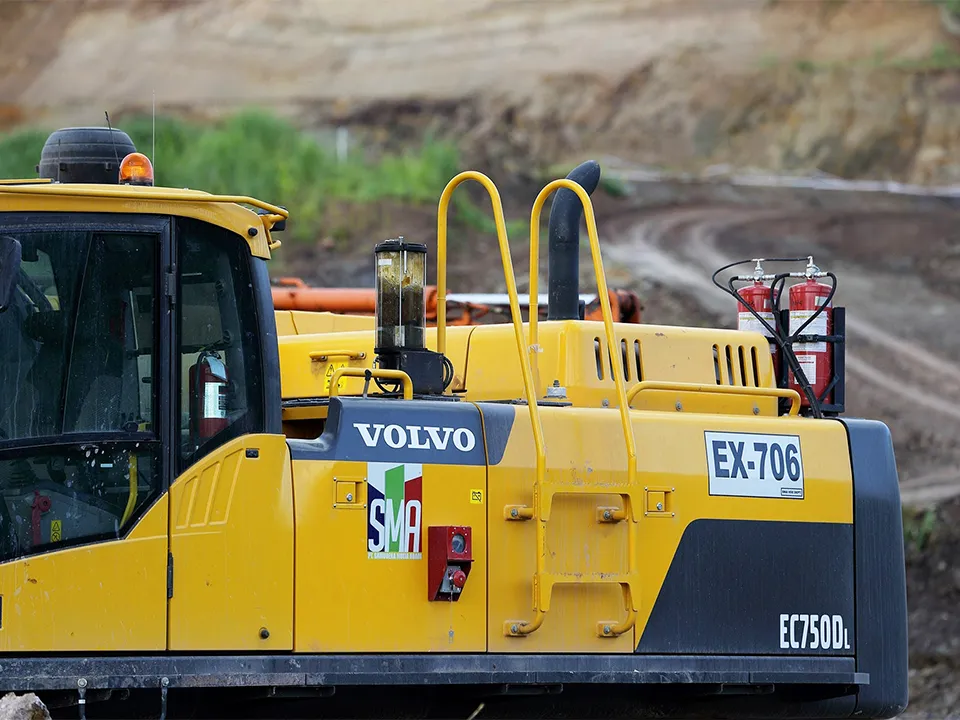
Partly as a result of strict emissions and noise standards, the risk of fires in machinery has risen sharply in recent years. It is no coincidence that Dutch company Wiejelo has been growing rapidly for the past ten years.
Managing director Berry Boertien explains how he expects the company to become the market leader in automatic lubrication and fire suppression systems before the end of this decade.
Wiejelo was founded ten years ago by Berry Boertien and a business partner. Boertien had already been working in the world of automatic lubrication systems for some time, and through a customer he came into contact with a company in Indonesia that asked for automatic fire suppression systems for mining machinery. Over the following ten years, Wiejelo grew into a major supplier of lubrication and fire suppression systems for the agricultural sector, earthmoving, recycling, bulk handling companies, ports and industry. Boertien now employs more than twenty people. He himself worked as a mechanic for years and knows that good service often leads to sales. It is no coincidence that service is one of the cornerstones of his business. Automatic lubrication systems still account for 70% of Wiejelo’s turnover. The rest comes from automatic fire suppression systems, although their share is growing. Boertien is now the sole shareholder of Wiejelo Equipment, and the Dutch and Belgian domestic markets have been prioritised over international work.
A clear goal
Boertien: “We only really started thinking seriously about what we wanted to do with Wiejelo in 2016. We set ourselves the goal of becoming the market leader in automatic lubrication systems in the Netherlands by 2023. We are now the market leader in the agricultural sector for factory-fitted lubrication systems on machines. I think 80% of all machines are running with our systems. And our share of the earthmoving market has also grown enormously over the past few years.” According to Boertien, the reason for this rapid growth is not “advertising as much as possible, but taking a direct approach. I have a large network and know exactly what my customers want, thanks to my experience. What has certainly helped, too, is our small-scale, personal approach, which works very well in the sectors where we operate. We are not part of a large international company where a lubrication system accounts for only a tiny fraction of a conglomerate’s turnover. We can also act flexibly and quickly. That is how we have won the business of many major players in the market.”
Atomisation
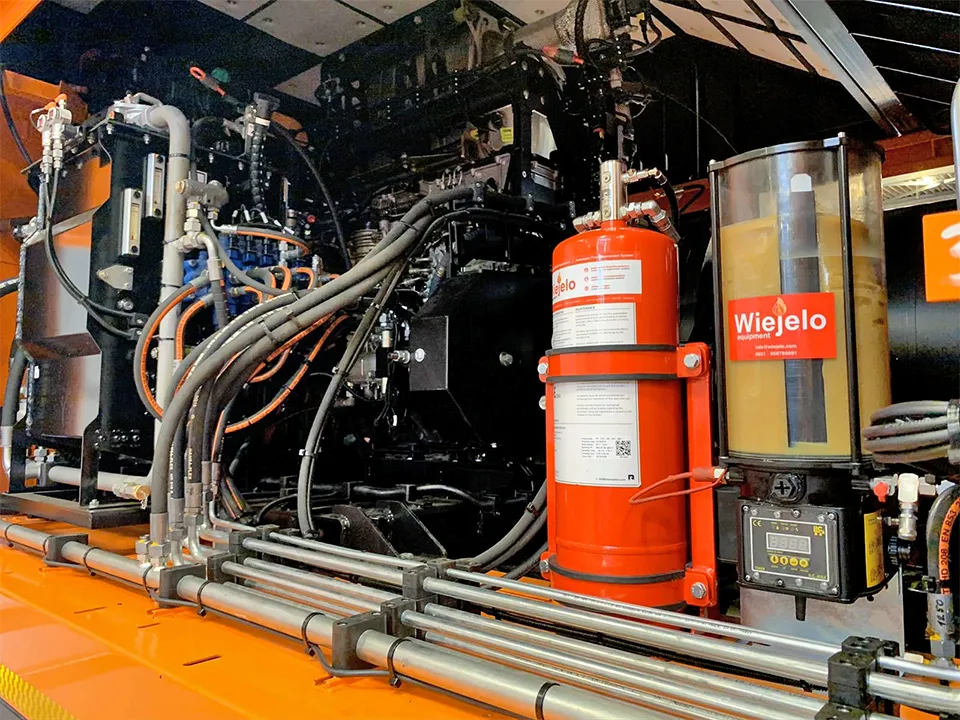
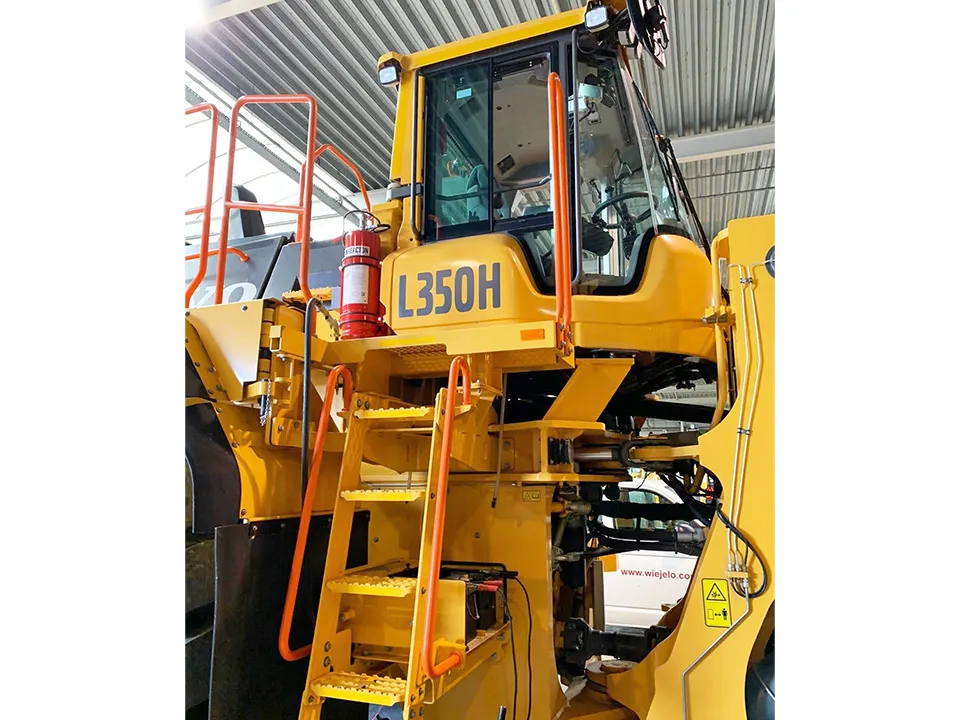
Boertien expects there to be considerable scope for growth in automatic fire suppression systems, too. “Mining, ports and recycling are often 24/7 sectors. Machinery is then frequently put under much heavier loads, with less time available for preventive maintenance. One major cause of fires is an ageing or damaged diesel or hydraulic line. It only takes a small crack for hydraulic oil to atomise. This creates an extremely flammable mixture, and things can then escalate quickly.” Another reason for the growing number of machinery fires is the emissions standards imposed on engines. Boertien says: “To run more cleanly, the combustion temperature in an engine is getting higher and higher. A Euro 6 engine can reach 600 °C. Strict noise requirements also mean engines are becoming better insulated, reducing natural cooling. And that insulation material can burn.” Wiejelo’s automatic fire suppression systems, which are increasingly being factory-fitted in mining machinery, wheel loaders, handling cranes, screening plants, shredders and mobile cranes, can detect and extinguish a fire in its early stages within seconds. More and more insurers now require automatic fire suppression systems for machinery to qualify for fire insurance. “Cranes at bulk handling facilities are often positioned on raised platforms,” Boertien explains. “If a fire breaks out there, the operator is virtually powerless. So you need to be able to act quickly.” Wiejelo’s systems are activated automatically between twenty and thirty times a year. However, customers need not fear that this will spell the end of their machine. Boertien says: “We do not use any harmful substances in our fire suppression systems. Our system has never caused an engine to fail.”
Question about this story? Ask your question
Keep following this
Get an email when a new story is published. No account needed.
- ThemeSafe and clean processing
- SubjectNews







