












‘Every product and material stream has its own best size-reduction method’
I’ll start with a quote from my previous column: “FORWARD means, as I described earlier: FURTHER. However, right now the most important question is: how do we move forward?” Unfortunately, after a reasonably quiet summer, this question has once again become a reality..
Fortunately, I hear from many of our customers that they are beginning to get used to this new reality. Production at many recycling customers is running at full capacity, although getting used to using the canteen in shifts is certainly taking some adjustment. Of course, we must keep reminding each other of the need to continue following the protective measures. We all notice that sometimes we stand too close to someone else, or that a hand is still extended when meeting someone. That is only human, but it remains something to watch out for.
The market for the recycled material streams being produced also continues to require close attention. Many national borders are, and remain, closed to streams that have not been properly sorted. As described in an earlier column, sorting can be done using a range of techniques: screening, air separation, magnets, in short, the most advanced separation technologies.
To ensure these machines perform at their best, proper preparation and size reduction are essential. Size reduction may sound straightforward: simply saying that a product needs to be made smaller is not enough, because it is crucial to reduce each product and material stream to the right size. Fine size reduction of wood causes dust problems, whereas fine size reduction of cables separates the different materials so they can be definitively separated. It is important to understand that such size-reduction processes cannot be carried out using the same shredder. Every product and material stream has its own best size-reduction method. These days, there is also often a requirement to reduce material to a specific size range. For example, construction and demolition waste needs to be reduced in size so that it does not disrupt the sorting plant, while remaining easy for people and technology to identify during sorting.
As well as choosing the right shredder, it is just as important to take the right steps. Going from very large to very small in one step is rarely possible. Primary and secondary size reduction often go hand in hand when substantial size reduction is required. We should not forget that a primary shredder often operates at low speed, making it better able to withstand contaminants such as iron and other metals. Only once these contaminants have been removed can a high-speed shredder operate safely without risking damage.
Sustainability is, of course, a priority for many of us when it comes to new investments. It is well known that size reduction requires a lot of power and consumes a great deal of energy. Naturally, we use fuel-efficient, modern, low-emission diesel engines wherever possible. The new generation of shredders can often also be electrically driven, which will significantly reduce operating costs as well as emissions and CO2.
I’d like to close with “stay healthy”. Let’s work together to maintain this new reality so that we can return to the “old days” as soon as possible.
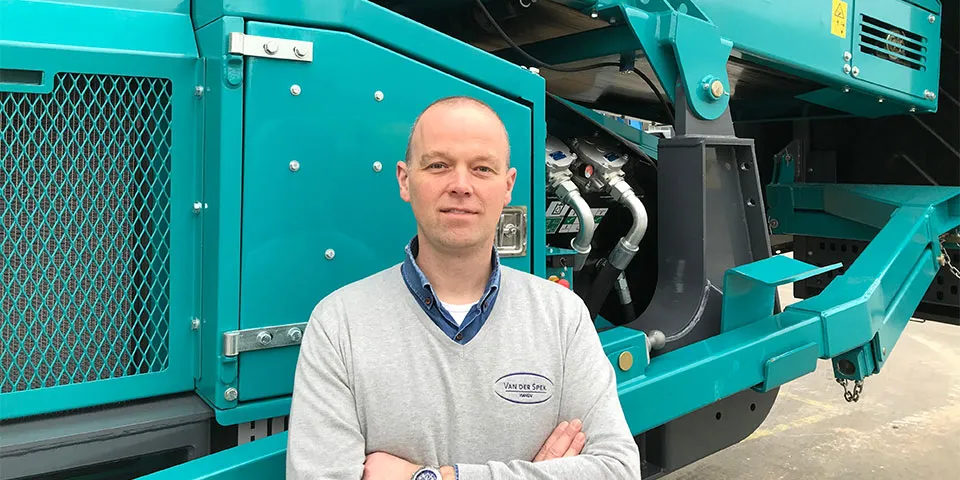
Peter Voolstra, Van der Spek Vianen
Question about this story? Ask your question
Companies in this story
Keep following this
Get an email when a new story is published. No account needed.
- SubjectNews
- CompanyVan der Spek Vianen B.V.







