












“Europe would be better off creating demand before closing its borders.”
Text Valérie CouplezImage Broeckx Plastic Recycling
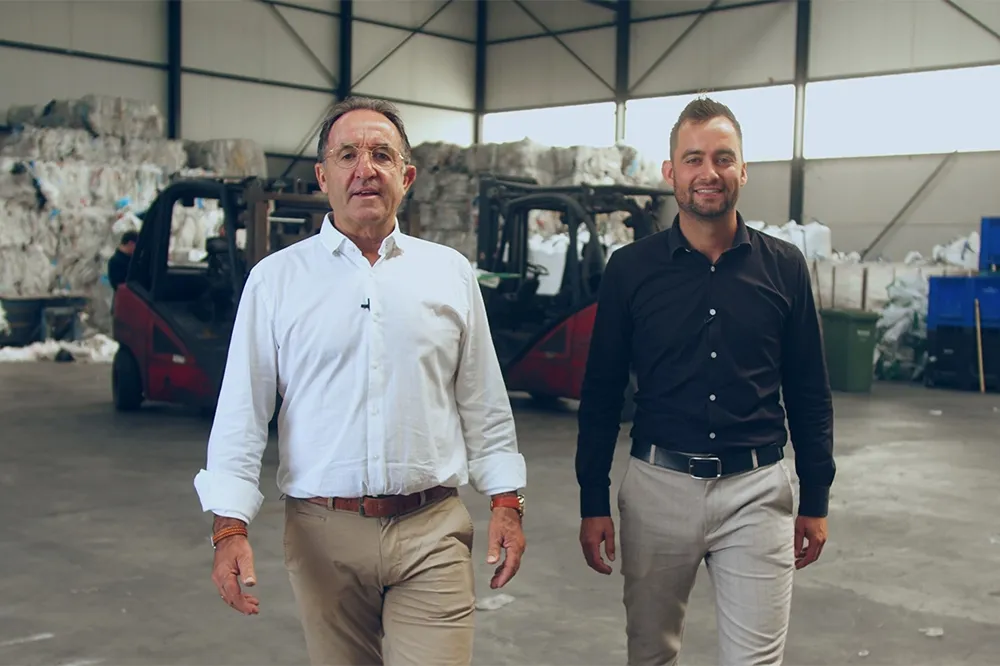
The new EVOA rules are putting many plastics recycling companies under severe pressure. From the end of 2026, exports outside Europe will be banned, cutting off the very markets where most of them sell their material. Are we heading for another mountain of plastic waste? Broeckx Plastic Recycling has already anticipated the change by investing in a fully automated plastics sorting line. But it, too, takes issue with the timing. “Europe would be better off creating demand before closing its borders.”
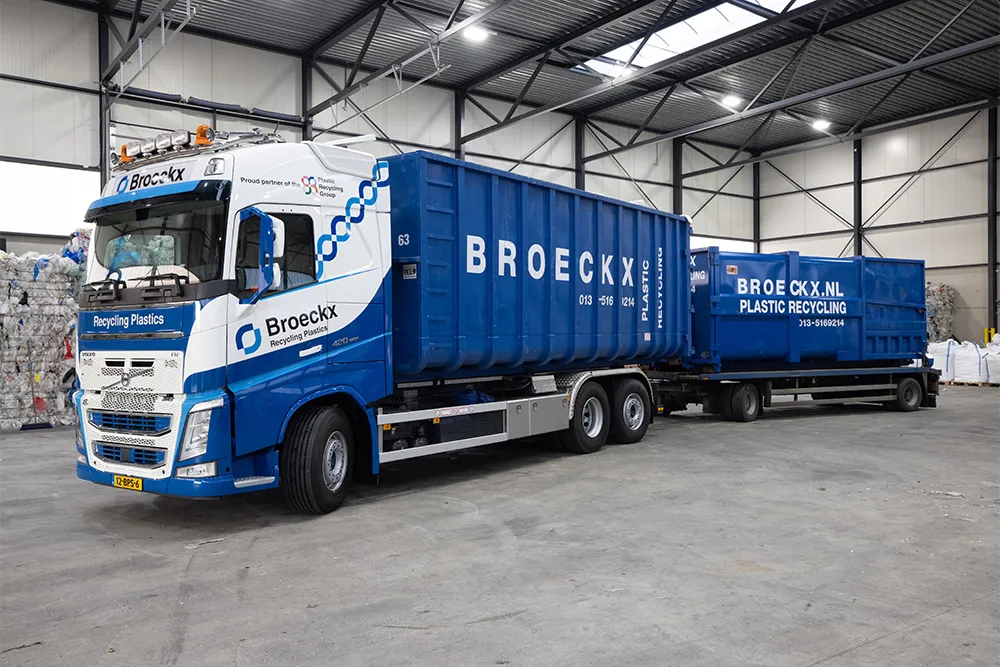
Their father ran a haulage company. But in 1980, Ad Broeckx and his brother Jack took a different direction. Or not entirely: trucks are an important factor in the recycling industry, too. “We had seen what was happening with waste paper and cardboard,” Broeckx recalls. “We were convinced that a market would develop for plastics, too.” And they were right. Their focus was on collecting and sorting commercial plastic waste. “On average, packaging film accounts for the bulk of it, 70 to 80%.” All this material, some 35,000 tonnes a year, is prepared for a second life in Esbeek in the Netherlands. “At present, we carry out basic sorting to produce different grades. Most of it is then exported.”
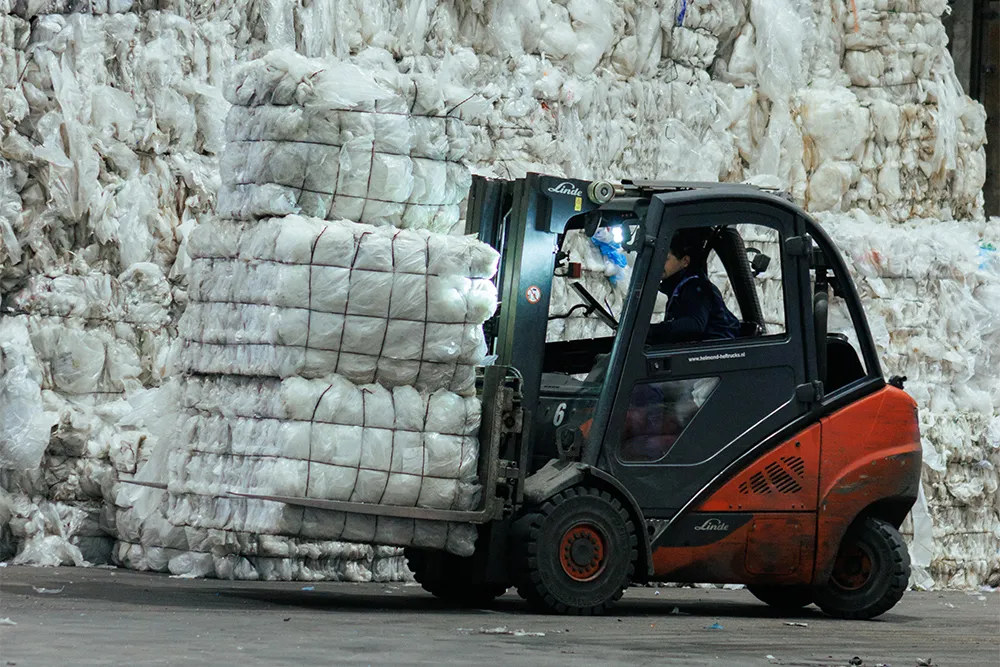
Reused up to seven times
His brother has since left the company, but in 2016 Broeckx was joined by his nephew, Twan Hesselmans, now a co-owner and director. Another nephew, Koen, recently joined the company. “We set ourselves apart from the big players by keeping communication direct and providing good service. Many companies have worked with Broeckx Plastic Recycling since its early days. Thinking long term means you can achieve more together,” says Hesselmans. “The great thing about what we do is that we offer a solution to a global problem. In theory, mechanical recycling allows plastic materials to be reused up to seven times. If I did not believe in the future of our sector, I would never have brought my nephews on board,”
says Broeckx.
Exports are not a long-term option
Yet the plastics recycling industry is under considerable pressure today. The low price of a barrel of crude oil is prompting more manufacturers to turn to virgin materials. “Two years ago, we could still sell 35% of our material in Europe. Last year, that figure fell to 20%,” Hesselmans adds. And under the newly approved EVOA rules, the market outside the EU will disappear by 2027. In Esbeek, they have already anticipated this development. “During a visit to Vietnam in 2018, we spoke to our customers and government representatives to find out how they thought the market would develop. With a great deal of ingenuity, they filled the void left by China’s ban on plastics. Our materials are genuinely used there as raw materials in new products, such as shoe soles or the mail-order bags that are now delivered to all our homes.” However, the Vietnamese government could not offer any certainty about the future. What would happen after 2024 was an open question. “It was already clear to us then that exports were not a long-term option.”
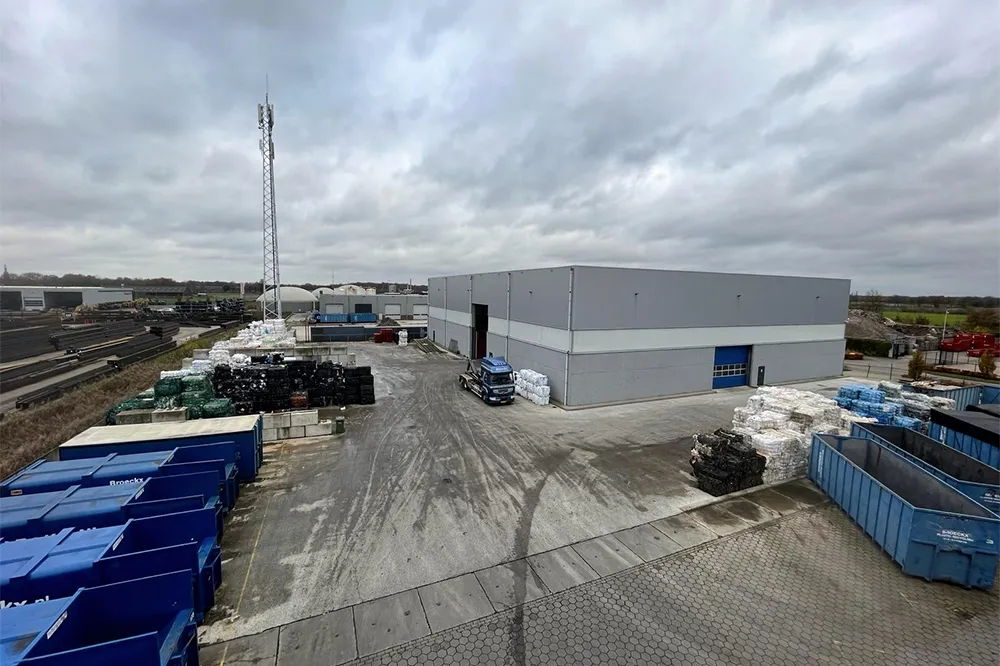
Automation the only alternative
Improving the quality of material streams through better manual sorting was not an option either. “The shortage of staff and high labour costs mean we cannot make that profitable here.” With a healthy dose of Dutch boldness, they decided to secure the future of Broeckx Plastic Recycling by taking a different approach: investing in a fully automated sorting line.
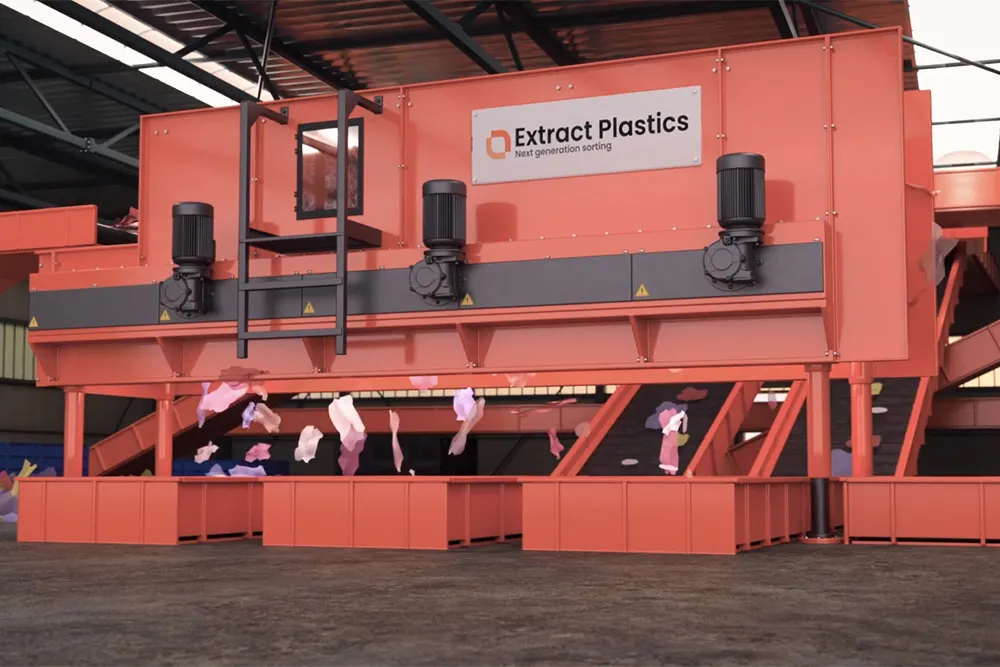
“It is the only way to ensure consistent quality and continuity while also becoming independent of exports,” says Hesselmans. It took another seven years to get the process fully developed. “We wanted to push things as far as we could. You cannot just order a sorting line off the shelf. During this period, we worked with the machine builder to implement and test alternative machines and technologies, creating a state-of-the-art sorting line. This allows us to deliver the quality we had in mind. This line is the first of its kind and, in our view, sets a new standard in film sorting.” It is due to be operational in 2025, with a capacity of 100 tonnes/day, eventually reaching 300 tonnes/day.
Better to boost demand first
Hesselmans: “EVOA now shows that we took the right steps in the past. However, this export ban is a serious blow to our sector. The timing is particularly unfortunate. Governments would be better off first stimulating domestic demand by imposing recycled-content requirements and a CO2 tax on virgin granulate. Instead, they are doing the opposite, which risks destroying our recycling industry during the transition years. They are also giving companies little time to adapt. We have spent seven years testing and developing. It is unrealistic to expect our industry to transform itself in three years. We do not know where we will be able to sell our products, and there is no long-term vision, because these export markets could simply reopen after five years. So who would dare invest now or then? We risk ending up with surplus material, which is bad for everyone, because prices will fall and a lot of plastic will remain in residual waste. Chemical recycling cannot solve everything either.”
There is always a market for quality
Even so, the two men remain hopeful. “The packaging industry is where it will happen. It must lead the way by incorporating 30 to 40% recycled content into its products. Then everything will get moving. With our new line, we will be able to tailor our services to our customers and, in turn, the packaging industry. We are convinced that if you produce quality, you will find a market. We certainly did not rush into our decisions. I will be proud if we manage to achieve this as a small family business. It is good that the Dutch government is supporting us in this (through the Netherlands Enterprise Agency). But we are not there yet, and we will continue to look at how we can develop. More initiatives are needed to improve the recycling of big bags, for example,” Broeckx concludes.
Question about this story? Ask your question
Keep following this
Get an email when a new story is published. No account needed.
- ThemeMaking plastics and packaging circular
- SubjectNews







