












Digital deposit return, or not?
Text Valérie CouplezImage iStock
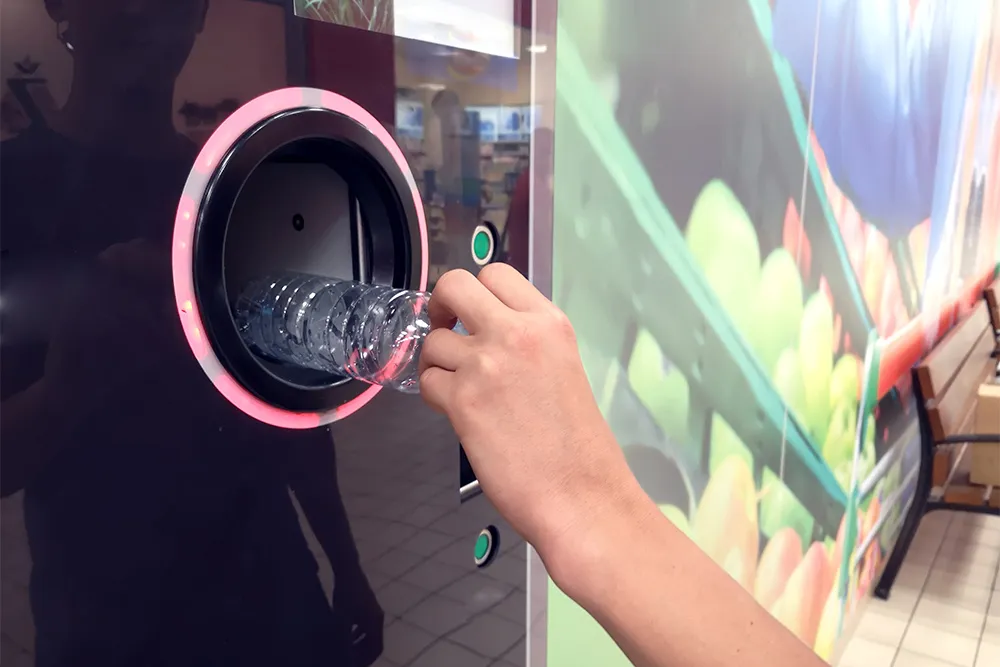
At the end of last year, the Flemish Government made its decision: deposits will be charged on plastic bottles and cans. This is an additional policy measure in the fight against litter. But what does that mean for the blue bag, which has been a success story since its introduction and expansion? The answer is a digital deposit-return system, in which you can reclaim your deposit by scanning a unique QR code. This would be a world first, but the proposal immediately drew strong criticism when it was presented. Several pilot projects were therefore set up to assess how the system works, its efficiency and user-friendliness, and how vulnerable it is to fraud. The OVAM’s conclusion? We still don’t know.
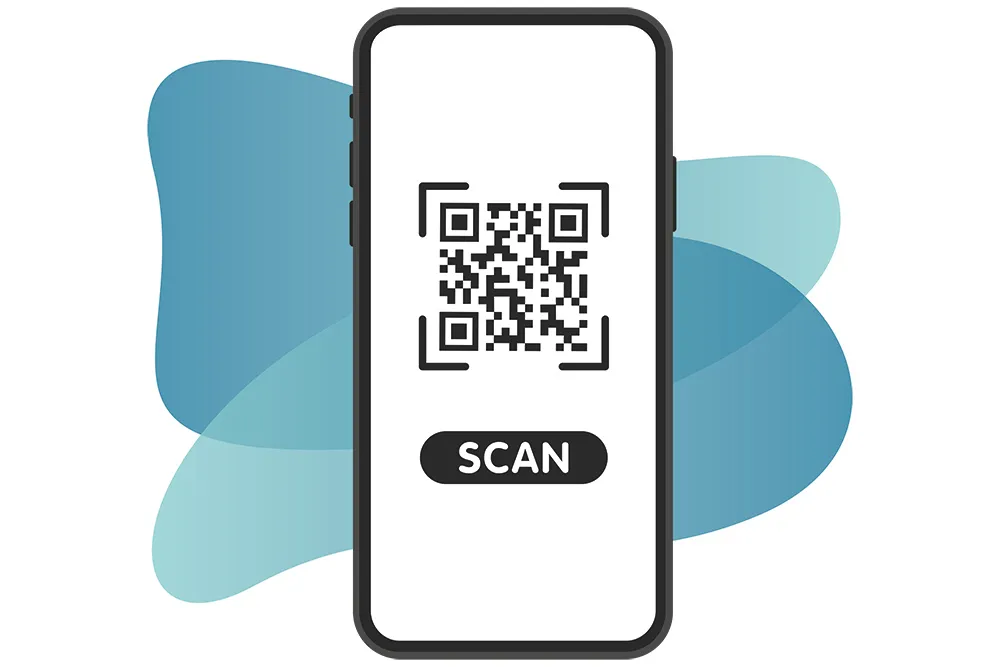
Flanders plans to roll out a deposit-return system for plastic bottles and cans from 2025. Fost Plus, Comeos and Fevia proposed a digital system. People sorting their waste at home would use their smartphones to scan the unique codes on each plastic bottle or can before putting them in the blue bag, which would also be scanned. At work, in sports clubs and elsewhere, the process would be analogue. Users could scan the code on a bin to reclaim their deposit, or use the scanner provided by a company or organisation to receive payment in cash, digitally or in vouchers. For people on the move, 135,000 ‘digital’ bins would be available.
“The conventional system works well”
But is this really the future? Several interest groups think otherwise. They argue that too many people would be excluded. There are still people who cannot or do not want to use a smartphone, and many will not want to share their personal data. The proposed alternative of home scanners would not be enough to include tourists and people in poverty. Nor would it solve the ‘on-the-go’ problem, which is also where the greatest risk of littering lies.
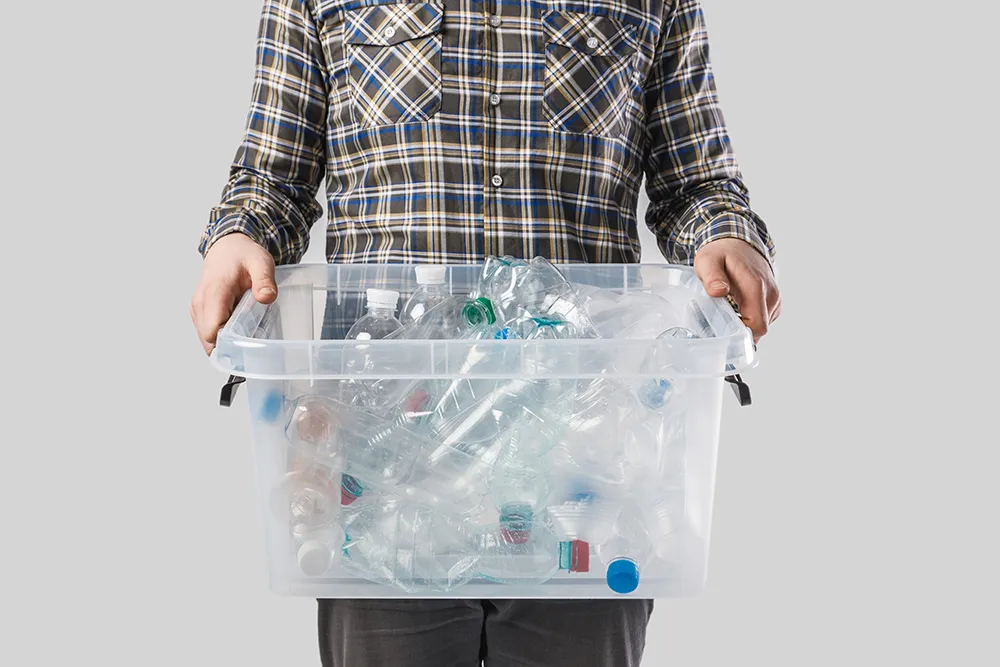
“These risks threaten the effectiveness of the system and public support for it, while the conventional deposit-return system works well and is widely accepted in many countries,” says Recycling Netwerk.
Testing in a controlled environment
Several pilot projects were set up to test the proposal. Two technology partners were invited to trial their hardware and software in a controlled environment. The tests took place at Corda Campus in Hasselt (250 employees and 1,000 visitors) and KBC’s headquarters in Leuven (1,800 employees). The primary aim of these pilot projects was to test the technical feasibility of the key components of a digital deposit-return process. Around 10,000 drinks containers, each with a unique code, were offered for sale at each location. Users shared their experiences in a short survey. Spot checks were also carried out on the contents of the uniquely coded bins. In total, 782 users were registered. The scan rate (redeemed items as a proportion of items sold) was 43%. Ease of use was cited as a strength, but user satisfaction appeared to depend heavily on how simple the process was. In other words, the fewer the steps, the quicker users were to adopt it, and the more users did so.
Larger-scale pilot projects
Lessons learned formed the basis for three new, larger-scale pilot projects in semi-open settings. Fost Plus selected the locations for practical and logistical reasons. The system was tested at Bobbejaanland over three weekends in September. At Center Parcs De Haan, the trial ran from 15 September to 16 October. In Wenduine, it covered Kerkstraat and the seafront for two months. The scale increased considerably, with between 50,000 and 70,000 containers involved. The unique codes on the containers were a combination of codes printed directly on the packaging and stickers applied to containers. Drink prices were actually increased by 20 euro cents. Street bins were also segregated, with PMD waste given a unique code. These pilot projects further tested the digital deposit-return system in practice. Surveys and measurements were also used to assess accessibility for different groups, resistance to fraud and the effect on litter.
Technically viable
The good news is that the digital deposit-return system proved technically viable. There were some minor issues with readability, for example on older, less capable mobile phones, and with inadequate local internet connections. Most users were satisfied with the system and willing to use it in future. This suggests there could be public support for digital deposits, although a significant minority of respondents were unwilling to participate or had a less positive experience. The scan rate varied considerably, from 21% to 43%, depending on the audience, communications, guidance and duration of the trial. This suggests that any rollout would need to include sufficient support, communication and guidance. However, repeated use overall showed an upward trend over the longer trial period.
No clear effect on litter figures
But does the system work? Does it deliver the desired reduction in litter? The proportion of coded items relative to the total number of litter items remained broadly stable. No clear effect on litter figures could therefore be established. The limited scale and short duration of the pilot projects mean they do not support a clear conclusion. As the redemption rate did not exceed half at any location, there is still some way to go before a sufficiently high redemption rate can be achieved. Experiences from the pilot projects and survey results indicate that, when introducing digital deposits, attention must be paid to making the system accessible to specific groups. These include people without a smartphone, or with an outdated device, those with limited digital skills and those without their own bank account, including young people, older people and homeless people. The same applies to specific groups for whom digital deposits pose significant operational and logistical challenges, such as the hospitality sector, and to locations without a sufficiently powerful 4G network.
What is happening across the language border?
A deposit-return study is also under way in Wallonia, in parallel with the one in Flanders. Four scenarios are being compared to determine whether the conventional or digital system performs best from an economic, environmental and social perspective. The Walloon Government presented its report in July. Although the physical system was the most expensive, it was still preferred because of its accessibility and operational availability. However, no final decisions have been made. A pilot project in Breacon (around 8,000 residents) offered a digital system another chance to prove itself. The results are expected this year. The aim is to reach a national solution together with the other regions. The Brussels Government, meanwhile, has agreed in principle to introduce deposits on plastic bottles and cans in collaboration with Flanders and Wallonia, but has not yet stated which type of system it favours.
Een zakelijke vraag aan OVAM? Get in touch
Companies in this story

Keep following this
Get an email when a new story is published. No account needed.
- ThemeMaking plastics and packaging circular
- SubjectNews
- CompanyOVAM







