












‘Design with recyclate for recycling’
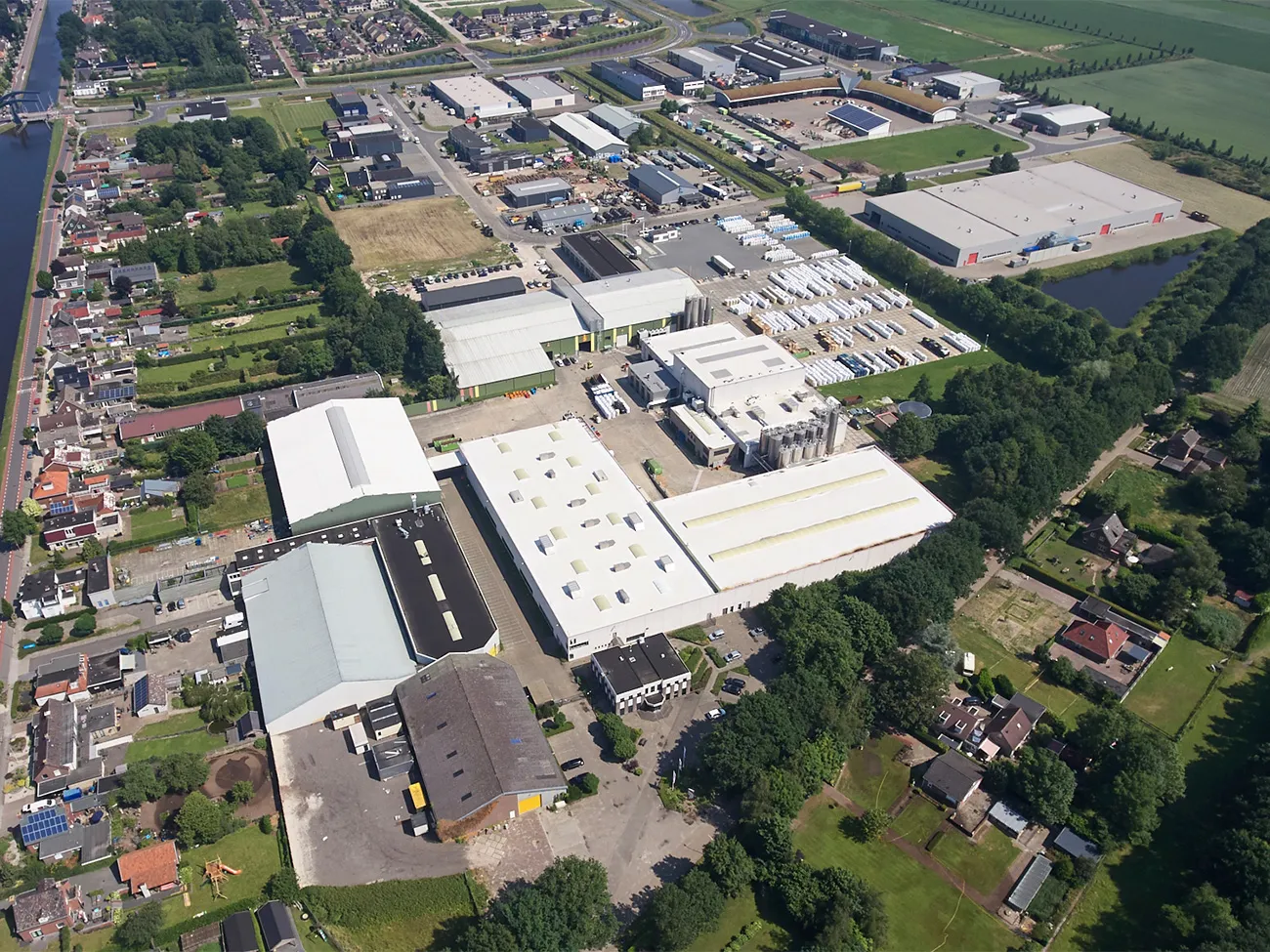
Veolia Polymers produces more than 47,000 tonnes of PP recyclate a year in the Netherlands from post-consumer waste streams, for a wide range of applications. Its site in Vroomshoop is regarded as the leading expert in PP recycling and is also home to the Veolia Group’s global Centre of Excellence. Recyclepro went to take a look in Overijssel.
“We have been recycling plastics in Vroomshoop since 1969, and have been part of Veolia since 2015,” says Frank Richters, Commercial Manager at Veolia Polymers. “In the past, we accepted almost all types of plastic. Over the past 20 years, however, our focus has been exclusively on PP, or post-consumer material from food packaging and various consumer products. Combining these two types of feedstock enables us to produce PP recyclates for a wide range of applications.”
Blends
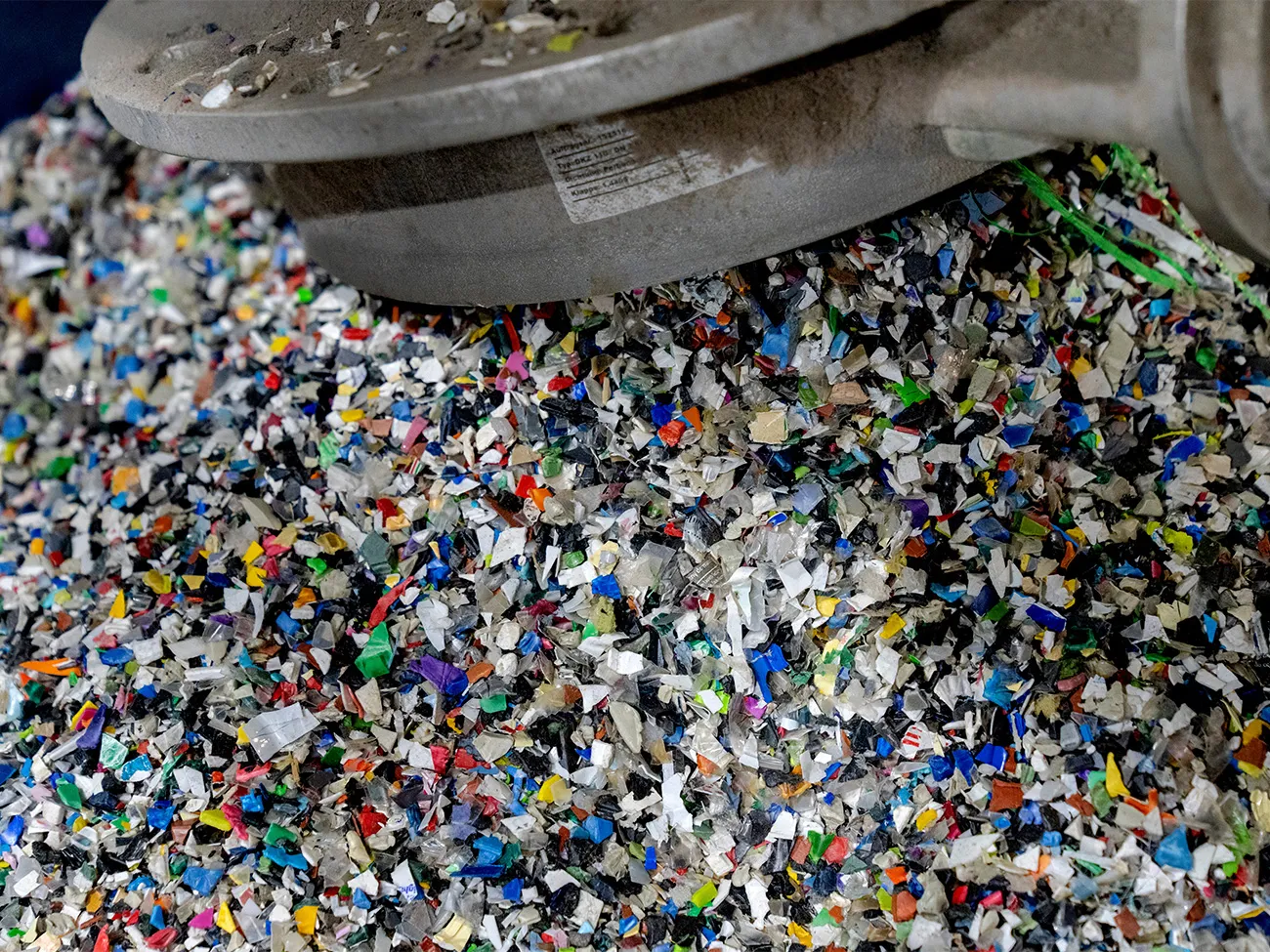
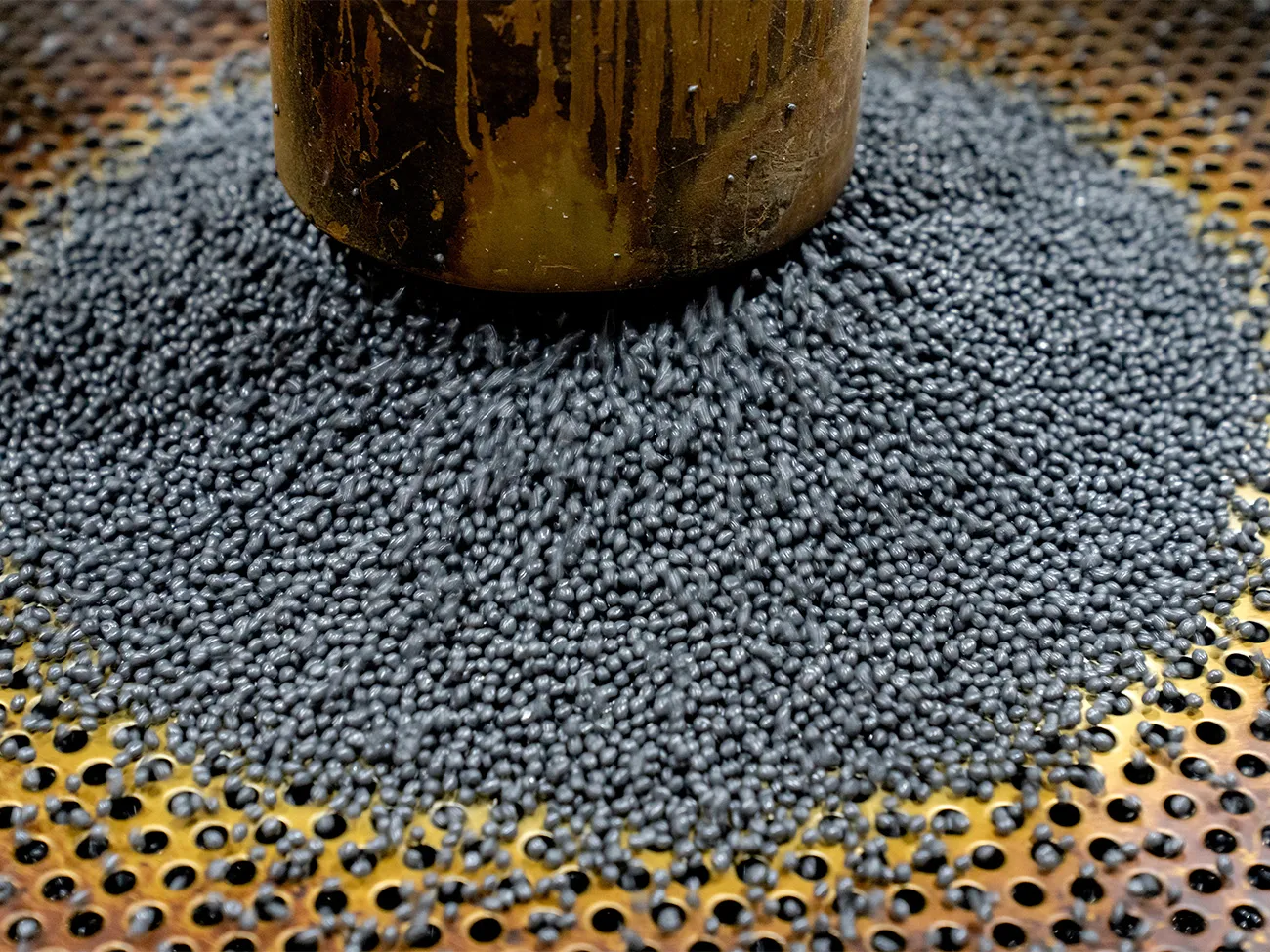
Veolia first grinds and washes the post-consumer material. “That takes place at another site in Vroomshoop,” Richters explains. “The material is chopped into small pieces, ground and further cleaned. Any ketchup and mayonnaise residue is removed. It then arrives at our site as ground material, known as flakes. We process it into granules with the properties our customers require. We can add colourants or other additives to make the material stiffer, stronger or more impact-resistant, for example.” This is also where the company’s strength lies, says Gerrit Klein Nagelvoort, Manager Business Development at Veolia Polymers. “We understand the different input streams and know how to create the right blends from them. Here in Vroomshoop, we have eight large mixing silos, each with a capacity of 100 tonnes, containing granules of different grades and colours. We blend the granules to the right recipe, based on the properties required.”
Consistent quality
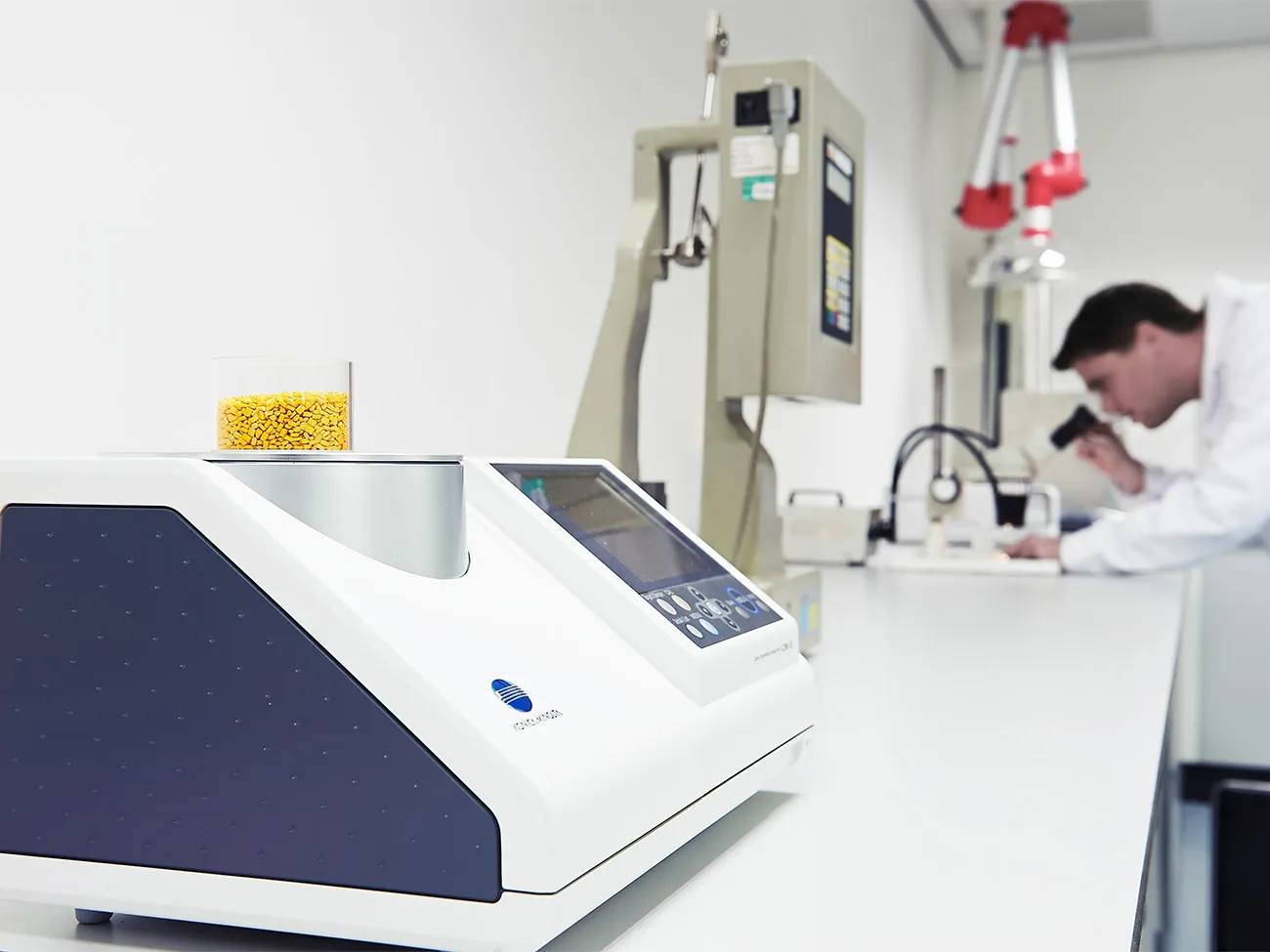
Ground and cleaned post-consumer plastic packaging waste is the basis of Veolia’s PP process. “Think of it as the stock for a soup,” says Richters. “We add the necessary additives. This allows us to blend the final product in a given volume while maintaining consistent quality.” Klein Nagelvoort adds: “You can say a lot about virgin materials, but their quality is consistent. That is the most important property for an injection moulding process. Nothing is more frustrating than having to constantly adjust the machine settings to achieve the right properties. We can deliver that same consistent virgin quality in PP recyclate. In terms of colour options, too, we are increasingly approaching virgin material. The same applies to odour. PP recyclate simply smells different from virgin material. We are currently working on ways to deodorise the recyclate even more effectively, depending, of course, on the application. That would be pointless for a fence board, but much more relevant for a car interior.”
Twice as sustainable
Veolia currently processes more than 47 million kilograms of PP a year in Vroomshoop. “That makes us one of the leading players in Europe,” says Richters. “We are also unique in focusing exclusively on PP. Other companies do it as a sideline.” Klein Nagelvoort adds: “We can turn single-use plastics with a very short lifespan into products that may last 30 or 50 years, such as crate systems for water storage in civil engineering, under artificial turf pitches or on green roofs. These are great examples of a doubly sustainable use: they save virgin materials, and such applications also have a positive impact on climate targets. We also advocate designing with recyclate. Make sure the design is suitable for recyclate from the outset. Only then can we truly make the transition to a circular economy. Paint buckets are a good example. They used to be made from new, white plastic for single use. Now they are made from recyclate and are grey. Consumers have widely accepted this.”
Question about this story? Ask your question
Keep following this
Get an email when a new story is published. No account needed.
- ThemeMaking plastics and packaging circular
- SubjectNews







