












Code of Good Practice launched for source separation of commercial waste
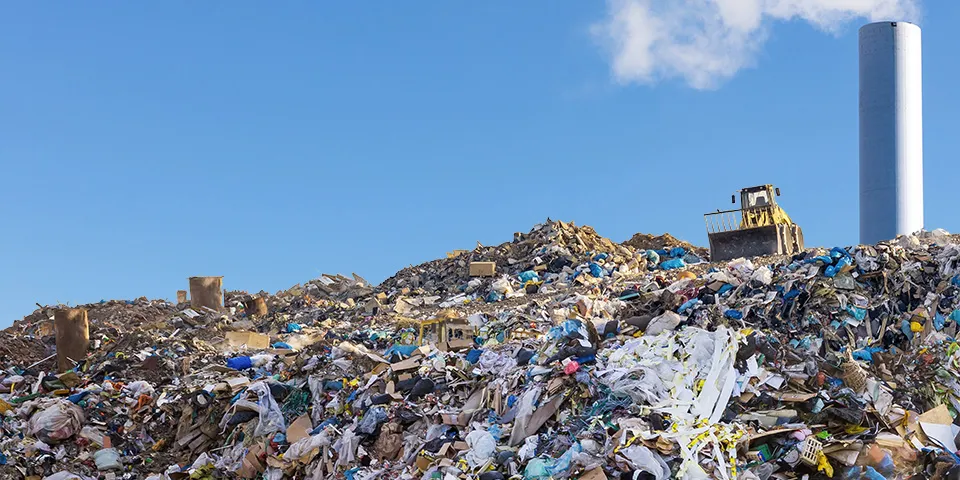
For years, businesses have been required to sort their waste at source. However, sorting trials carried out by OVAM on commercial residual waste in 2018 and 2019 found that it still contained many materials that did not belong there. This needs to improve, particularly given the limited capacity at waste-to-energy plants. That was reason enough for all stakeholders in the chain to come together and develop a Code of Good Practice to improve awareness and make source separation more efficient.
Businesses are still paying too little attention to source separation. That was the clear conclusion following the sorting trials commissioned by OVAM in 2018 and 2019. They found that commercial residual waste still contains 30 to 40% recoverable materials. This is a waste, as these materials could still be put to useful use. It is also a waste because capacity at residual waste incineration plants is limited. To address this problem, all stakeholders in the chain therefore began sector-wide discussions. The goal? To work out how to raise awareness more effectively and help businesses improve source separation. Five working groups set to work on this. The first identified sector-specific areas of focus. A second developed practical guidance for collectors, waste traders and brokers (IHM’s). Other groups looked at the conditions for further sorting, acceptance criteria at incineration plants, and the enforcement required at regional and local level.
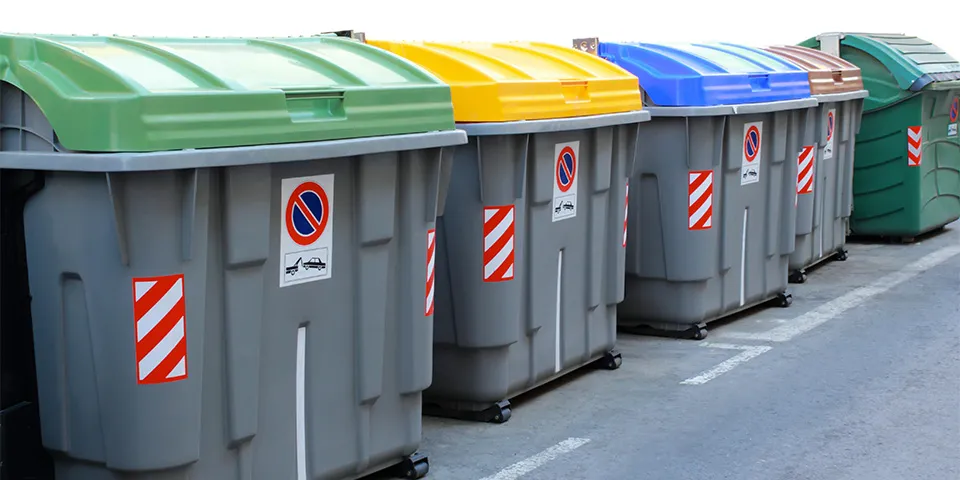
When collecting commercial residual waste, IHM’s will have to carry out a visual inspection.
Encouraging source separation
One important outcome is the Code of Good Practice for the collection and sorting of commercial residual waste. At the time this article went to press, it was still awaiting approval from the Council of State before being adopted in a ministerial decree. This practical guidance grew out of the work of working groups 2 and 3. The Code is intended to clarify exactly what VLAREMA requires when non-conformities are identified in commercial residual waste. The importance of sorting properly at source stems from the fact that further sorting, however advanced the techniques may be, will never achieve the same level of purity. For example, PMD found in residual waste will often be too dirty or contaminated to be accepted by a PMD sorter. We look at the main points covered by the Code of Good Practice.
Visual inspections and recording non-conformities
When collecting commercial residual waste, IHM’s will have to carry out a visual inspection. The inspection of wheelie bins need only cover the surface, but this still places an added responsibility on the driver to make a sound assessment. If a breach is identified, it must be recorded in a non-conformity register. The register must state when it occurred, identify the waste producer (name, company number and establishment number or collection address), and clearly describe the non-conformity, including at least a description of the observed waste materials that are subject to the sorting obligation. The IHM may maintain the register itself. OVAM will provide a template to make it easier to exchange data.
But what should happen to the container if non-conformities are found?
If it contains hazardous waste, the answer is clear: the driver must refuse the waste.
What happens when a non-conformity is identified?
But what should happen to the container if non-conformities are found? If it contains hazardous waste, the answer is clear: the driver must refuse the waste. If the waste is non-hazardous, the driver has three options. They can, of course, refuse the waste. They may also take it in their vehicle, provided the non-conformity is entered in the central non-conformity register managed by OVAM no later than the following day. If they consistently report every sorting error for every identified non-conformity, all performance requirements are waived before the load is sent for incineration. Alternatively, they may take the waste and tip the entire load at a suitably authorised site, where it can undergo further sorting to meet the performance requirements before being sent for incineration.
How thoroughly must waste be sorted?
The Code of Good Practice also specifies how much waste may remain in a random 10 m³ batch. The IHM is free to decide whether further sorting is needed to achieve these results. During the transition period up to January 2023, the performance requirements have been set so that sorting with a grab should be sufficient. This is intended to give the sector time to invest in further-sorting plants. During this transition period, the minister’s office has committed to carrying out a feasibility study on what the performance requirements should be after three years. What requirements will further-sorting plants have to meet, given the current state of the art? The study will also examine the impact of the new obligations. Is there greater focus on source separation? What is the impact on the quality and quantity of commercial residual waste?
What about enforcement?
The non-conformity register is intended to become a tool for identifying and tackling businesses that persistently flout the sorting rules. There will also be more local inspections. Regional enforcement is largely focused on IHM’s in class 1, whereas local enforcement can also inspect classes 2 and 3. They will receive clear guidance on what to look out for, in the form of brochures and templates. Every effort has been made to make it as easy as possible for local enforcement officers to carry out their work.

Mireille Verboven, senior advisor go4circle
What does go4circle think?
Mireille Verboven, senior advisor go4circle: “We were closely involved in developing this Code of Good Practice because it was important to remove uncertainty for IHM’s. In principle, a formal report can be drawn up at any time when an offence is identified. It is not easy for our members to have to point the finger at their customers. This really requires a change in mindset among businesses, which need to start sorting their waste more diligently. That is why we also want to involve other sector federations, so they can help get the message across. But this Code gives IHM’s a clear point of reference. If they comply with it, in principle they have nothing to fear. We would have liked more clarity on when enforcement officers will consider an offence ‘flagrant’ and draw up a formal report. The problem is that VLAREMA does not set a lower threshold. In theory, source separation must therefore be 100%. But what about the occasional apple core in the residual waste? Or a tiny scrap of paper? We have been assured that a pragmatic approach will be taken to minor offences. But it would be good if every inspector could apply the same criteria, as set out in an internal enforcement note.”

Victor Dries, staff member at the office of Zuhal Demir.
What does the Flemish government say?
Victor Dries, staff member at the office of Zuhal Demir: “The legislation is very clear and very strict. Businesses are required to sort waste at source. There is also a ban on incineration in force. Loads containing recyclable materials therefore cannot be accepted at incineration plants. The reality on the ground, however, is not so black and white. That is why we wanted to create a workable framework with a Code of Good Practice. Think of it as a transition phase in which we want to bring the ideal set out in the legislation closer to day-to-day practice. This applies to both IHM’s and enforcement officers. We want to strike a balance between our ambitious targets and a workable interim approach that makes clear where the bar is set for everyone. That is also why we are carrying out the feasibility study. During this transition phase, we want to establish what tools are available to improve source separation and how best to use them to move closer to the ideal set out in the legislation. These could include awareness-raising, financial incentives or even a requirement for further sorting. It is important to prepare an appropriate set of tools during this transition phase, sometimes even tailored to specific sectors or waste streams, so that in 2023, which is really not that far off, we can raise the bar again.”
Jan Verheyen, spokesperson for Ovam.
What does OVAM think?
Spokesperson Jan Verheyen: “The initiative for the Code of Good Practice came from OVAM. For us, it sets out very precisely what we expect from commercial residual waste collectors under the policy. It is important that they take responsibility in the chain for improving source separation and, where appropriate, recovering recyclable materials through further sorting rather than letting them be incinerated. In this respect, the Code represents a step forward, while also safeguarding legal certainty for collectors and waste incineration plants. Those who make every effort required under the Code can send waste for incineration. The process of developing legislation like this always involves a degree of give and take. Naturally, OVAM wants to protect the environment as much as possible. Businesses are right to point out that everything must remain practically achievable on the ground and that costs must be kept under control. The result now on the table is an important step, although we are still awaiting the Council of State’s opinion and the ministerial decree. For OVAM, the main priority is to meet our target of reducing residual waste from businesses by 15% in 2022 compared with the 2013 reference year. The sector wants more clarity on a number of aspects. That is why we are carrying out the feasibility study. It can sometimes be difficult to assess whether certain waste materials are recyclable, and some operators would like more information on this. There is also a request for at least an overview of the technological sorting techniques that may need to be used to meet the stricter performance commitments from 2023. We will now work with the sector to define the scope of the study.”
Question about this story? Ask your question
Companies in this story

Keep following this
Get an email when a new story is published. No account needed.
- ThemeImproving waste collection and transport
- SubjectNews
- CompanyOVAM







