












Closing the EPS loop
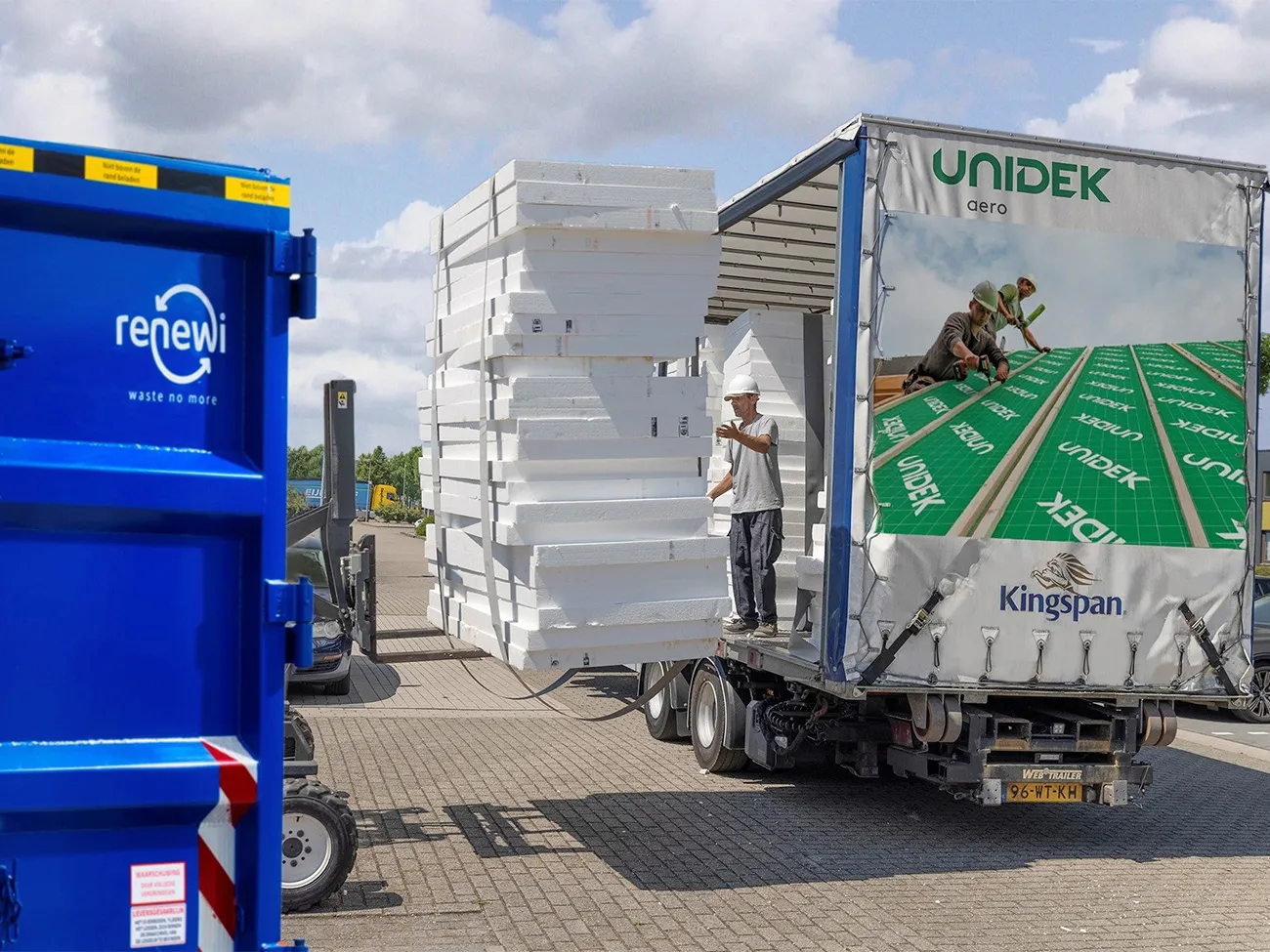
Around 150,000 tonnes of EPS from demolition are expected in Europe in 2025. EPS, better known as polystyrene foam, is used in construction mainly to insulate buildings. Much of this material currently ends up in incinerators because it is often bonded with bitumen. To give these two valuable materials a second life, Kingspan Unidek, Renewi and PolyStyreneLoop have launched a pilot project. The results so far are promising.
Of that 150,000 tonnes of EPS, around 40% could be suitable for recycling. The material must not be too contaminated with bitumen to be processed. Recycling company PolyStyreneLoop (PSLoop) has set the limit, for now, at 10% contamination. But that is not the only challenge. It starts with making everyone on construction and demolition sites aware that there are still opportunities to recover this material, and to collect it as cleanly as possible. It must also be borne in mind that EPS is flame-retardant because it contains the flame retardant HBCD. EPS that still contains HBCD may not be reused. The flame retardant must therefore first be separated out. EPS is also bulky but very lightweight, so transport costs can quickly mount up.
A clean fraction
The three partners, Kingspan Unidek, Renewi and PSLoop, are using pilot tests to demonstrate that EPS can be recycled. “Collaboration is central to what we do,” says Jan Noordegraaf, Director of PSLoop Coöperatief. “We are therefore proud to be working with Kingspan Unidek and Renewi to find innovative solutions that create ever more value.” The first tests have already been completed, and the results bode well for the future. As noted, it all starts on site. Demolition contractors were given the right instructions to improve source separation, preventing loose pieces of bitumen from contaminating the EPS. After the material has passed through a shredder, it undergoes a mechanical separation step using wind sifters and a magnetic belt to separate the bitumen and metal fixings still attached to the EPS insulation. Loose pieces of bitumen are then sorted out by hand. The challenge is to fine-tune the plant to produce the largest possible clean fraction suitable for PSLoop’s processes. The Fraunhofer Institute’s laboratory assesses samples to monitor quality. Renewi is also exploring new techniques to increase EPS recovery.
Up to 12,000 tonnes a year?
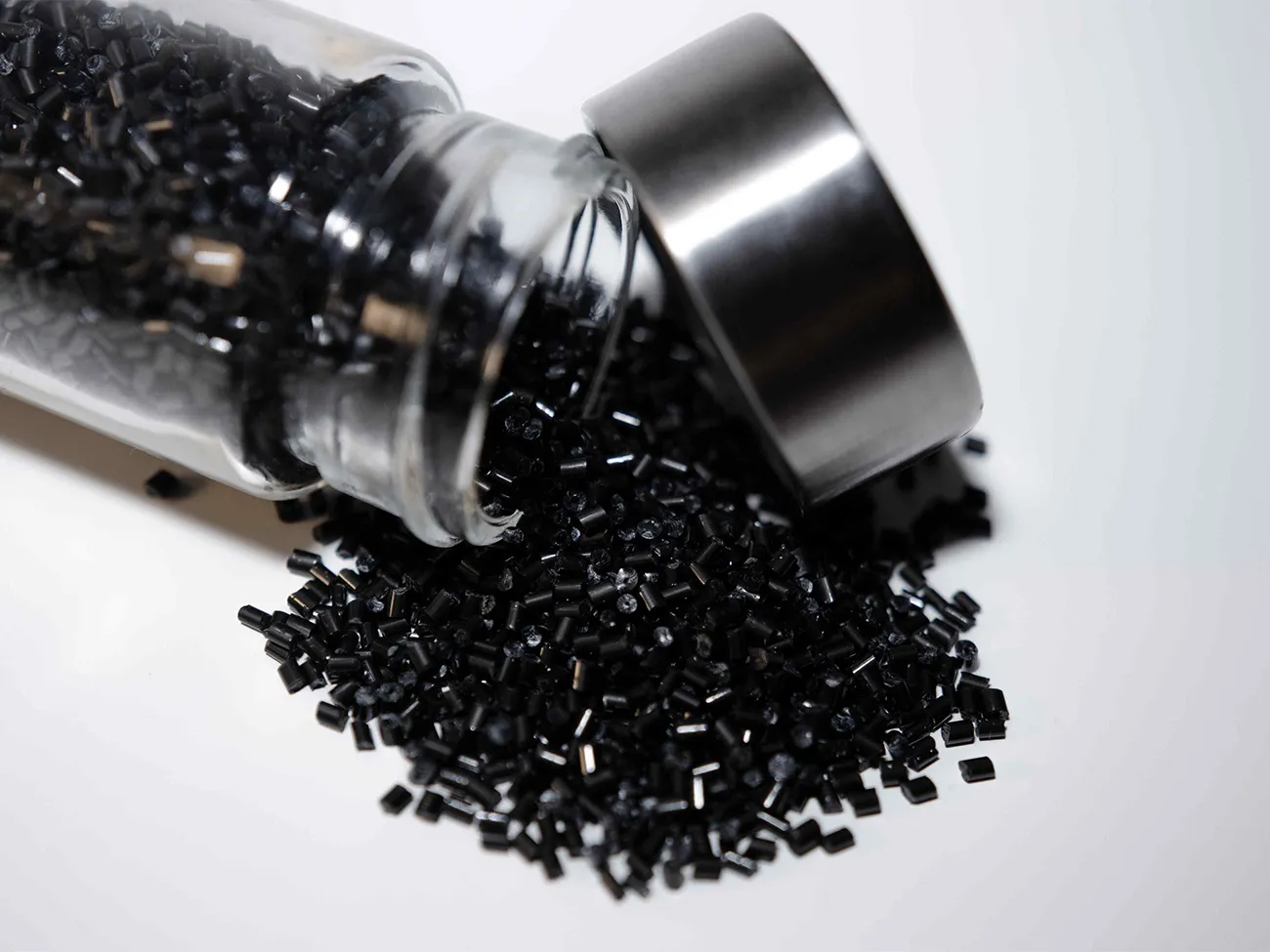
The technical feasibility is currently being assessed. Only then will the partners look at economic viability. Automation and economies of scale will be key factors. Initially, PSLoop’s plant in Terneuzen can process an input of 3,300 tonnes. There are plans to increase capacity to 12,000 tonnes a year. The separation process produces EPS that can once again be used as full-value insulation, while the separated flame retardant can be given a second life in white goods, such as refrigerators. Finally, the bitumen can be used as citumen or in asphalt production. It is an excellent example of how loops can be closed. “We focus on recovering value from waste by offering innovative solutions, collecting waste streams efficiently, and reusing and recycling them into new raw materials,” says Bert-Jan Westerik, Commercial Director Netherlands at Renewi. “This is essential, as primary raw materials are becoming scarcer. Our collaboration with Kingspan Unidek and PSLoop is a natural fit.”
Construction sector explores alternatives
The first reactions from the market have been positive. Various contractors and demolition companies are working to make material flows more sustainable. They are well informed about developments and are keen to take part in pilots to explore new options. In addition, disposal costs are continuing to rise, prompting the sector to look for alternatives. “We are keen to challenge our industry to develop circular, innovative solutions that make a real impact,” says Teun van Schadewijk, Business Developer at Kingspan Unidek.
Question about this story? Ask your question
Keep following this
Get an email when a new story is published. No account needed.
- ThemeCircular construction and demolition
- SubjectNews







