












Circular building blocks made with CO2 instead of cement
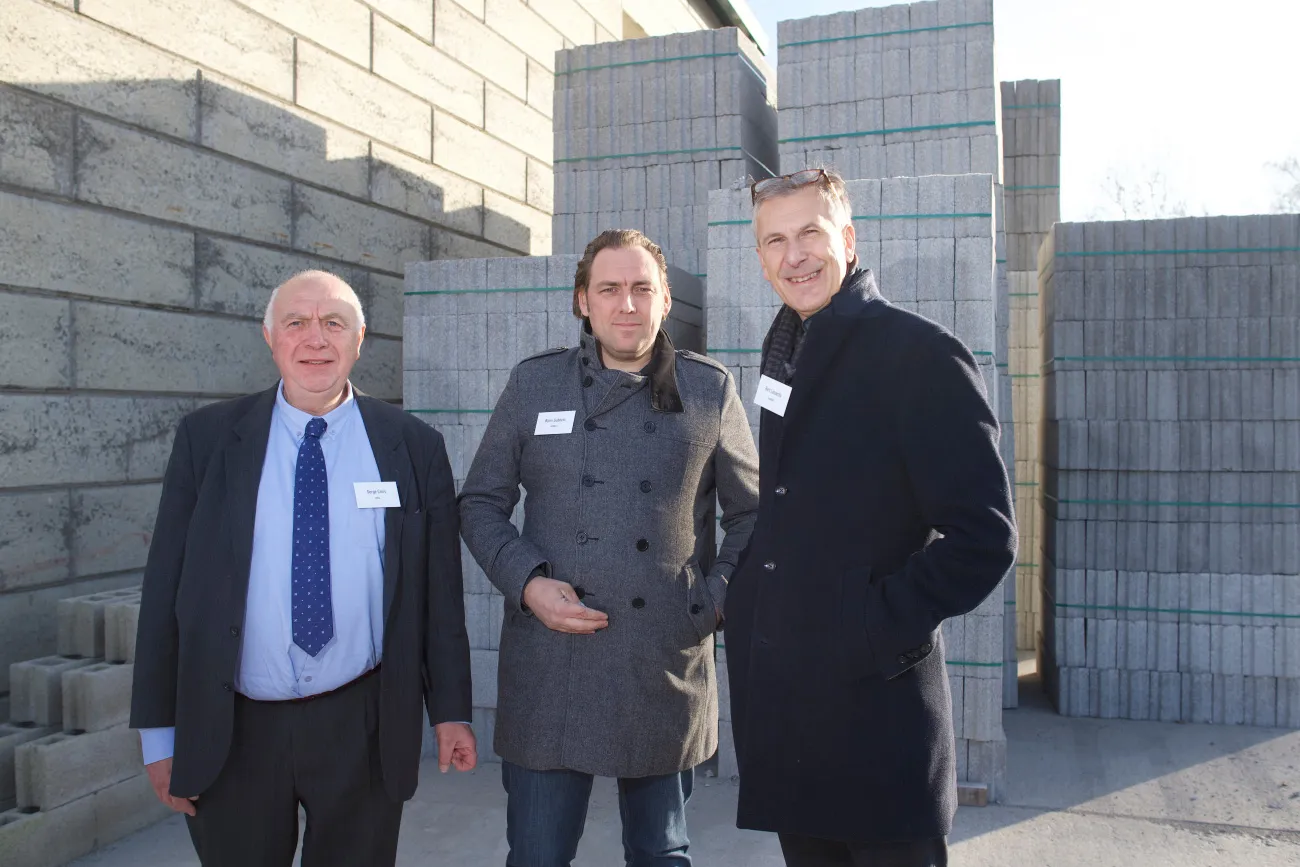
“We can be proud of Limburg again.” You probably would never have heard a West Flemish minister put it quite like that. But that does not make Zuhal Demir’s words any less true. Thanks to the efforts of companies including Orbix and Masterbloc in Limburg, Flanders is now marking a first. Building blocks without cement, but with CO2. Given that the cement industry is responsible for 10% of global CO2 emissions, it is clear that our small region is taking an important step towards greater sustainability.
Orbix has been developing and selling sustainable raw materials and technologies for the construction and steel industries since 1994. Its name was no accident: orbis is Latin for circle, a fitting nod to the circular economy that Orbix is helping to build. One of the materials it processes is metal slag. When CEO Serge Celis noticed that the fine fraction of this material felt harder than concrete, he asked current R&D manager Dirk Van Mechelen why. The answer was contact with air, and more specifically with CO2. “This process is based on the carbonation of certain components in the slag. The challenge was to speed it up so that this fine residual fraction could be turned into high-quality building materials,” says Van Mechelen. That was when the idea for Carbstone technology began to take shape, more than eighteen years ago. At the end of December, it was finally ready for industrialisation, thanks to the collaboration with Masterbloc.
Save 10 tonnes of CO2 per lorry load of building blocks
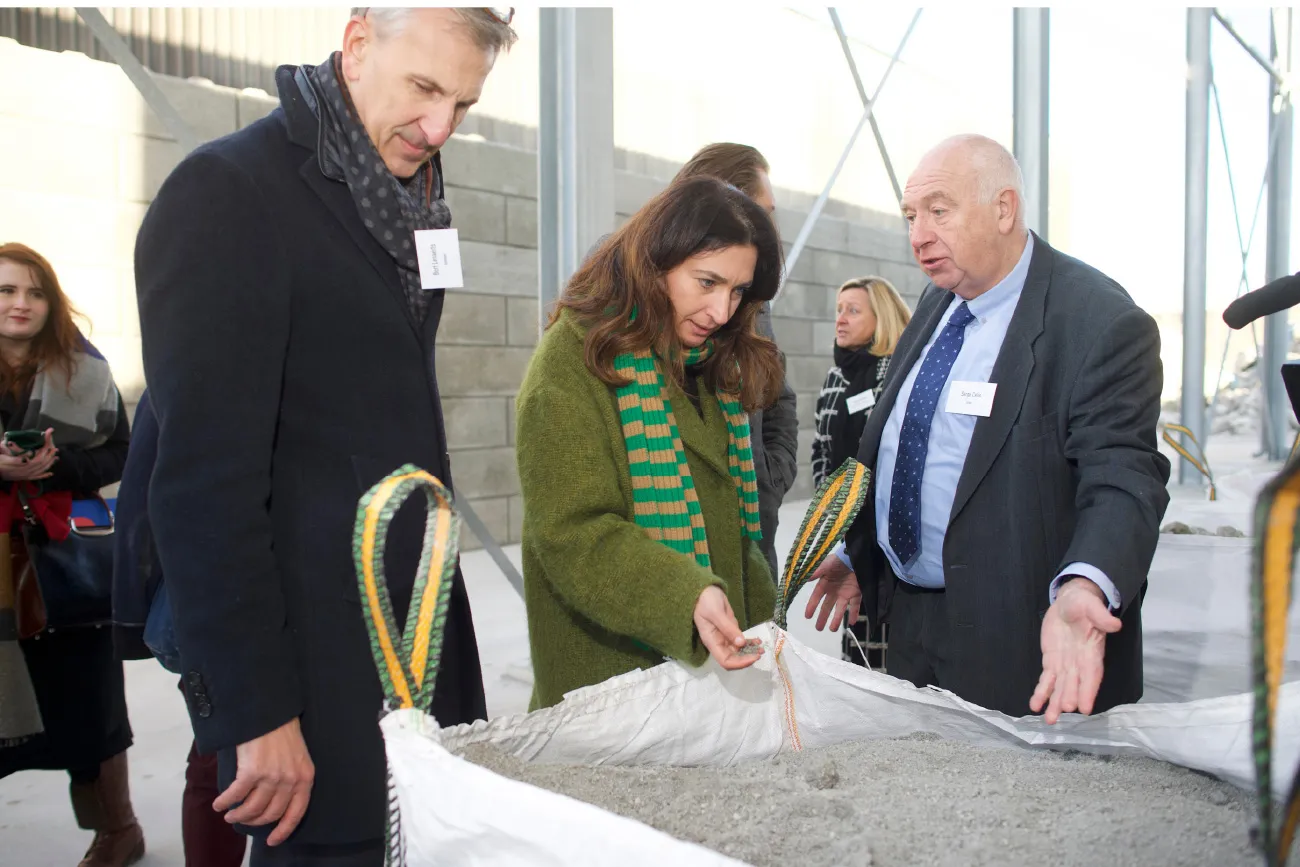
The Carbstone technology and the carbonation process at its core were further refined in collaboration with VITO and patented in 2011. Metal slag from Aperam in Genk, a by-product of steel production, is converted into higher-value circular products by adding CO2. To give an idea of the impact: a single lorry load of building materials produced using Carbstone technology can save 10 tonnes of CO2, 5 tonnes that are not emitted because no cement is produced, and a further 5 tonnes because the sustainable blocks absorb and retain CO2 from the air. For now, the process uses CO2 from gas cylinders. In future, the aim is to investigate whether it can also be sourced directly from factory flue gases. But back to the present, or rather to the end of last year, when Celis proudly unveiled his first circular building blocks. “Carbstone delivers revolutionary solutions with a negative CO2 footprint: more CO2 is absorbed during the production of materials than is emitted. After years of scientific research, we are proud to be able to take our technology from the laboratory to the industrial stage.”
Towards industrial production
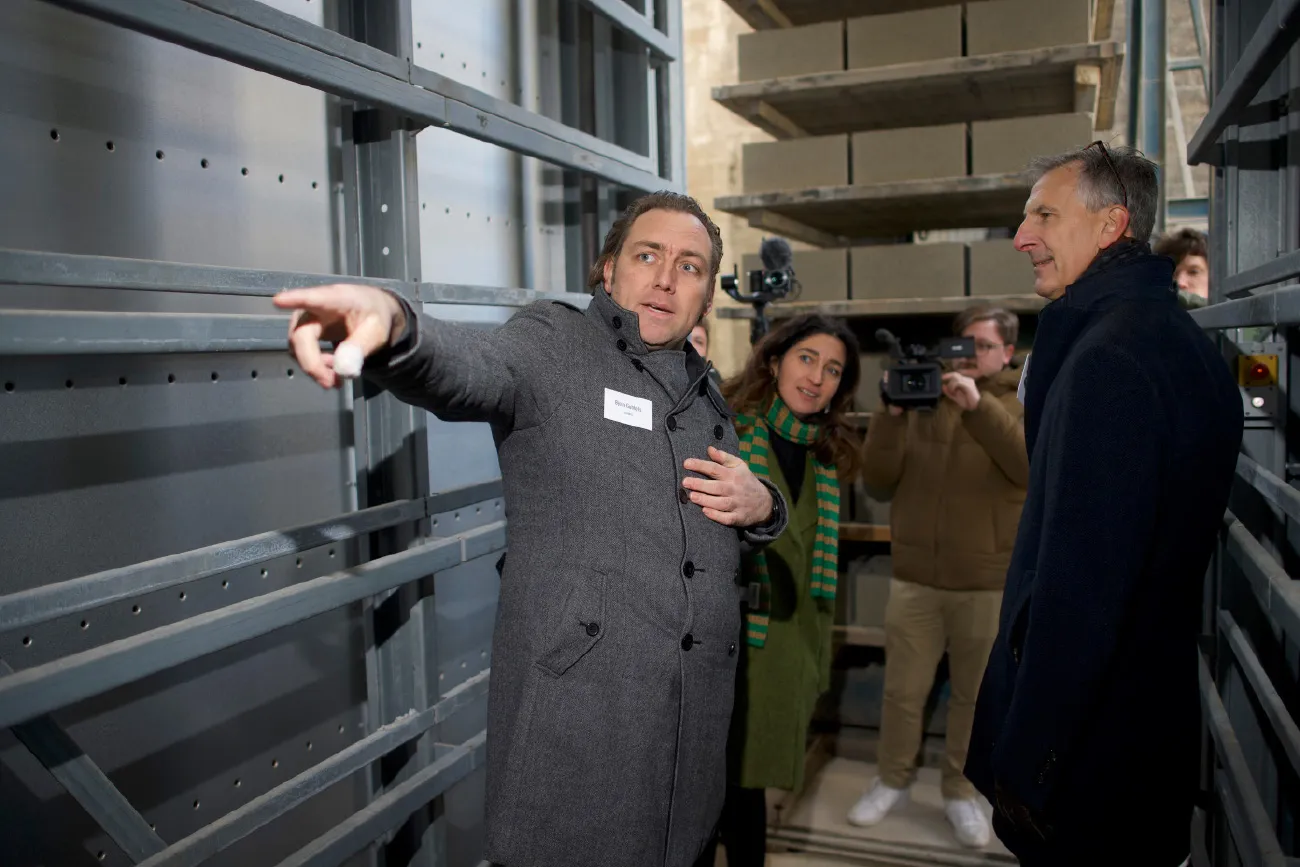
That proved to be the toughest hurdle. How do you turn this groundbreaking idea into a product? The industrialisation of the process gathered pace when Bjorn Gubbels, CEO of Masterbloc in Maasmechelen, got behind the project. He had a climate chamber built to produce around 70 tonnes of CO2-bound building blocks a day, equivalent to annual production of 15,000 tonnes. He sees only benefits in adding these blocks to his range. “First and foremost, you are helping to solve the global CO2 problem. At the same time, Flanders can make more efficient use of its raw materials, such as the sand and gravel that can be recovered from the millions of tonnes of steel slag and put to valuable use again. This is an innovative example of upcycling! Finally, building material prices can return to normal market trends, because you can work with a price-stable cement-free product and are no longer dependent on the cement industry.” Gubbels wants to add more climate chambers soon to increase capacity. “Multiply it by thirteen,” he suggests. “This is the future, and a way to help solve the CO2 problem.”
Mapping out the future
A first customer for these materials has already been found. Construction group Vanhout will use the building blocks in the renovation of the Cofinimmo office building in Mechelen, which also houses the OVAM head office. A proud minister was therefore present at the official opening. “The construction sector is responsible for 40% of CO2 emissions. We are seeing more and more that the construction sector itself wants to be part of the solution. Pioneering companies such as Orbix and Masterbloc are helping to map out the future. Through technology and development, they are showing us the way towards a more climate-friendly construction sector and a liveable Flanders. We have every reason to be proud,” concludes Zuhal Demir.
Question about this story? Ask your question
Companies in this story

Keep following this
Get an email when a new story is published. No account needed.
- SubjectNews
- CompanyOVAM







