












Charging station powered by local, 100% renewable green electricity
Text Valérie CouplezImage Guilliams Green Power
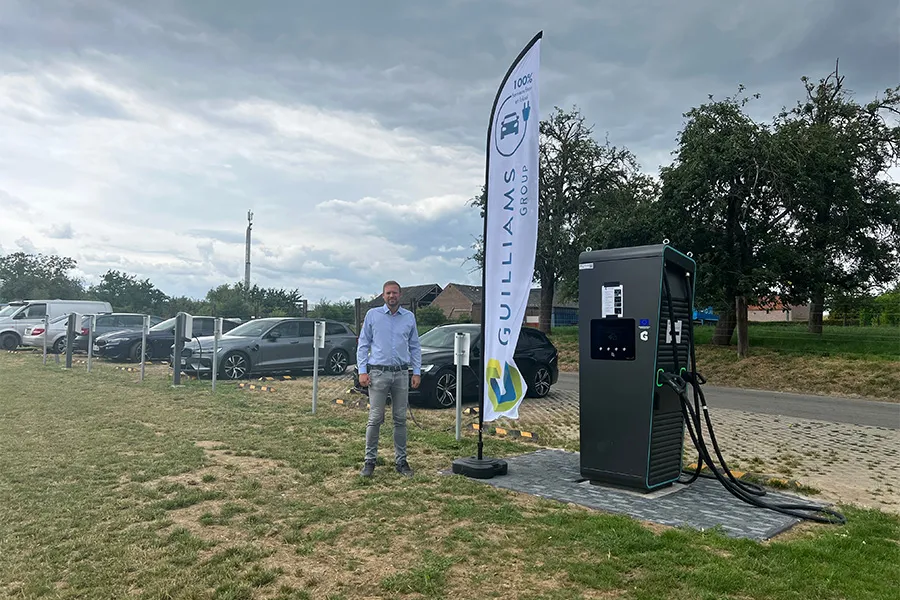
A charging station with three charging points and one supercharger, all powered by 100% renewable green electricity, has recently opened near the E40 in Boutersem, a first in Belgium. The green electricity is generated on site at Guilliams Green Power. With this innovation, the company aims to move further towards a business-to-customer (B2C) model, so it can ultimately operate without subsidies, given the considerable uncertainty surrounding energy policy in Flanders.
Guilliams Green Power grew out of the Guilliams family farm. Managing director Rohald Guilliams says: “The company was established in 1980, but the biogas plant was not built until 2008. It was the era when renewable energy was taking off. My father went to see how things were done in the Netherlands and Germany. But you needed capital to set up something like that yourself.” This led to some difficult early years, but when the three sons, Rohald, Reinout and Ruben, joined the business, the ambition to turn organic waste into green electricity really began to take shape. The original anaerobic digestion plant in Boutersem had a capacity of 1.25 MW and could process 25,000 tonnes. “From then on, things went well.”
Committed to the local area
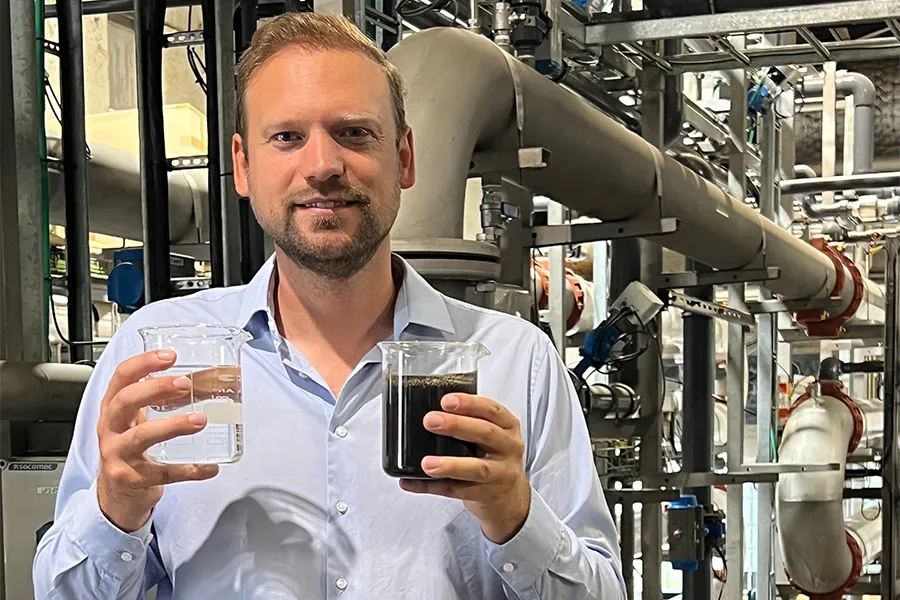
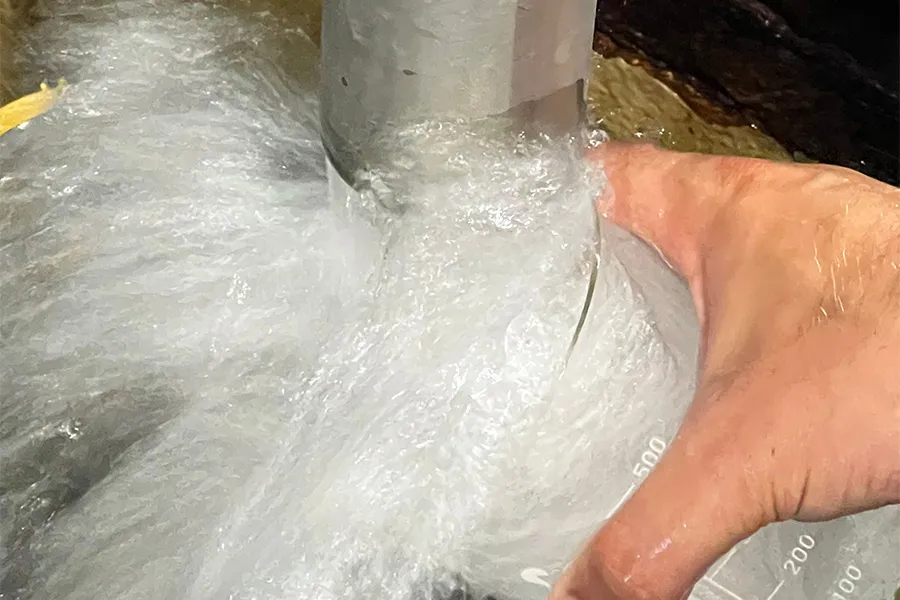
Shortly after starting up, Guilliams also began looking for a sustainable way to process its digestate. “With a water treatment plant, we managed to remove the nitrogen, then the phosphorus in the next phase, and more recently the potassium, turning them into products for which there is a market.” This shows that the company is always looking ahead and remains committed to the local area. Throughput soon rose from 25,000 tonnes to 60,000, and then to 90,000 tonnes. “That makes us one of the three largest anaerobic digestion plants in an agricultural area,” says Guilliams. “60% of the material fed into the digester comes from agriculture. We strictly follow the principles of the Lansink Ladder. Only material no longer suitable for human or animal consumption goes in.”
Making green electricity tangible
Today, the plant produces 3,825 MWh of renewable heat and 2.8 MWh of green electricity. “We need about 20% of the electricity generated to meet our own needs. Until recently, the rest went to the grid. We can supply 7,883 households with green electricity.” This makes a substantial contribution to the decarbonisation and electrification of society. “But people don’t see it. It’s just a line on their electricity bill saying they’ve received electricity from renewable sources. We wanted to show the local community in a different way why what we do here matters. To make our green impact tangible.”
Direct from the biogas plant
That is why the idea of installing a charging station on the site began to take shape two years ago. “Straight from the biogas plant to your electric car. The supply chain couldn’t be shorter.” The project also has the backing of Europe. Through the CPT (Clean Power for Transport) initiative, Guilliams Green Power was able to secure subsidies. “More than 100 companies took part in that call, but we still managed to deliver a first for Belgium,” says Guilliams proudly. “We are the first with a 300 kW DC charger that can draw directly on energy that is 100% renewable and locally produced. There are also three smaller 22 kW chargers. We have enough in the ‘tank’ to power 10,200 cars for a year. That is 10% of Belgium’s current electric car fleet.”
Continuing to move forward
After just one month, more and more people from the surrounding area are finding their way to Guilliams Green Power. “It’s catching on,” says Guilliams. “And that’s what we wanted: to give something back to the community, because when we started this, it was by no means the best financial option. The fluctuations in the energy market have since changed that. So it pays to be one step ahead.” Guilliams Green Power’s ambitions do not end there. The company is preparing to move into biomethane production. “Everything is in place for it. We hope that when our CHP engines need replacing again, the Flemish Government will no longer stand in our way. This is the way to stop relying on Flemish subsidies, and it is 100% in line with EU targets.” The company also aims to innovate its water treatment process and turn digestate into water that can be discharged. Read more about this in the article on our website.
Question about this story? Ask your question
Keep following this
Get an email when a new story is published. No account needed.
- SubjectNews







