












Challenges on the road to an asbestos-safe Flanders
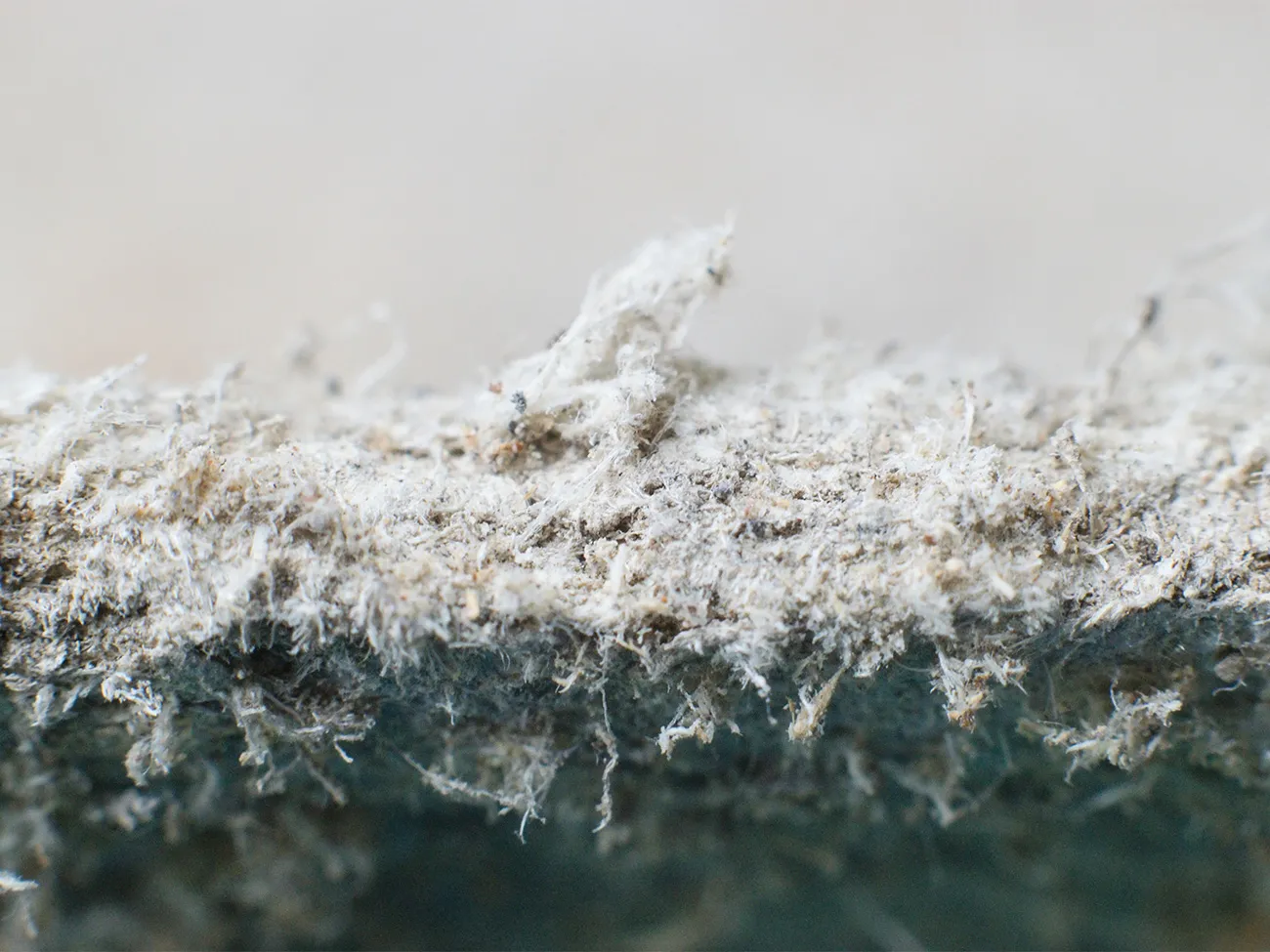
The Flemish Government aims to make Flanders completely asbestos-safe by 2040 at the latest. Any asbestos applications still in place by then must be in good condition and pose no risk to people or the environment. This means that considerable work will be needed in the coming years to remove high-risk asbestos applications. The only permitted destination for this material is a licensed landfill, but this is where the problem lies in practice.
According to OVAM figures from 2018, around 2 million tonnes of asbestos-containing waste remain in Flanders. Some of this is non-bonded asbestos, which must first be fixed in monolithic material before it can be safely removed. This volume must also be included in the tonnage of asbestos that will have to go to landfill in the coming years, bringing the total to around 3 million tonnes. Flanders is not alone in this. Asbestos is naturally a problem in the other regions too. There are no exact figures for Wallonia, although around 30,000 tonnes of asbestos are landfilled there each year. A 2017 study in Brussels found that around 400,000 tonnes remain there.
The difference between bonded and non-bonded asbestos
Safe removal procedures distinguish between bonded asbestos, corrugated sheets being a typical example, and non-bonded asbestos. The latter poses a much greater health risk because fibres can be released. It therefore requires different collection, transport and processing methods, which may only be carried out by an accredited removal contractor. In recent years, considerable efforts have been made to inform and raise awareness, so that private individuals too learn to recognise the difference and understand the risks. The asbestos inventory was introduced for professional demolition projects. This appears to have paid off on the ground. Companies involved in asbestos removal say the targets and associated action plan are bringing in more material, and that in most cases it is being handled correctly.

Is theoretical landfill capacity too limited?
Flanders is only at the start of the Flemish Government’s asbestos phase-out policy. Yet companies are already running up against limited landfill capacity. In theory, there should be enough capacity. In practice, however, there are several challenges. The first is daily landfill capacity. Under the regulations, asbestos must be covered with a layer of material each time it is disposed of. This time-consuming process severely limits the daily capacity of licensed landfills. Asbestos waste also crosses borders. Since most of Wallonia’s asbestos landfill capacity remains reserved for intermunicipal associations, an increasing share of asbestos from there is also ending up in Flemish landfills. This volume was not factored into the capacity calculations and is putting theoretical capacity under pressure.
Landfill capacity is not available everywhere in Flanders
A third major obstacle is the recent closure of the REMO landfill in Houthalen. This has deprived Flanders of a key site in the geographical distribution of landfills licensed to accept asbestos. Asbestos removed in Limburg must now be taken to East or West Flanders. That means many kilometres and, consequently, CO2 emissions, but it also runs counter to the principle that asbestos should be landfilled as quickly as possible. There appear to be no short-term alternatives. Public opinion is strongly opposed to landfills, and such procedures also take a long time. The sector hopes that a solution can still be found in the REMO case. It is also important to take a sufficiently pragmatic approach to the asbestos issue. Everything must be done safely, but procedures for transport and processing should not become excessively stringent. Applying the same transport rules to bonded and non-bonded waste, for example, would go too far.
Question about this story? Ask your question
Companies in this story

Keep following this
Get an email when a new story is published. No account needed.
- ThemeSafe and clean processing
- SubjectNews
- CompanyOVAM







