












Blending obligation for green gas
Text Valérie CouplezImage iStock
The blending obligation for green gas has finally become a reality in the Netherlands. It is part of the Climate Plan presented by the government on 25 April and will be phased in from 1 January 2027. From then on, energy suppliers will be required to add a percentage of green gas to the natural gas they supply, reaching 0.8 billion m³ (around 15 to 20%) by 2030. This is good news for the environment, as it will reduce emissions of CO2, methane and nitrogen. It also offers the sector the prospect of a stronger business case.
The Netherlands already had blending obligations for petrol and diesel to make its energy mix greener. A blending obligation for biogas will be added from 2027. This is intended to contribute to a reduction in CO2 emissions of 2.8 Mton. It applies to all energy suppliers delivering gas to the ETS-2 target group: the built environment, SMEs, agriculture, small industry and all other large-consumer connections not covered by the existing ETS-1. It is being introduced two years later than planned to address the expected increase in costs. Greenhouse horticulture is also covered by the obligation. Suppliers unable to meet it can pay a ‘buy-out fee’. This ‘penalty’ amounts to 450 euros per tonne. Green gas currently accounts for just 4% of the total gas supply in the Netherlands. It is a sustainable energy source made from biogas and, unlike energy from the sun and wind, is continuously available. It is produced by digesting organic waste such as fruit and vegetable waste, garden waste and manure. Before being fed into the grid, it is purified and upgraded to biomethane so that it has the same properties as the natural gas we know.
Green light for new projects
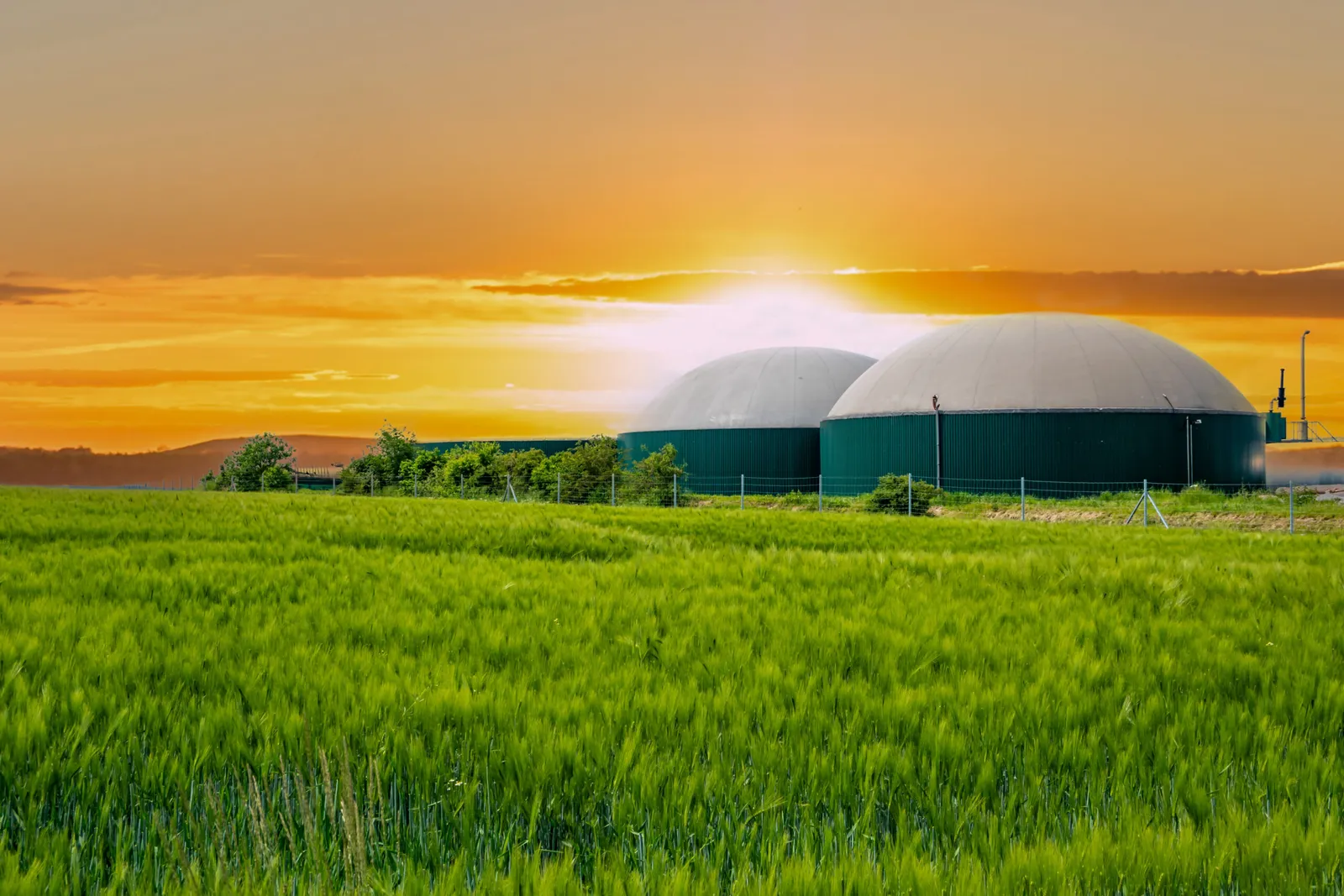
Biogas is still often upgraded to generate electricity using a CHP plant. But with the electricity grid under strain and the difficulty of making use of the residual heat produced, biomethane can offer a more stable and profitable business case. The blending obligation will provide a further incentive. Production will need to increase significantly to reach 0.8 billion m³ of biogas by 2030. In 2024, for example, 294 million m³ of green gas was produced, just 5% more than in 2023. Long and uncertain permitting processes, along with a lack of clarity about the blending obligation, have long created investment uncertainty for potential producers. The green light for the blending obligation now removes a significant barrier. In addition, the Stimuleringsregeling Duurzame Energieproductie en Klimaattransitie will be reopened in 2023, with an indicative budget of 8 billion euros, to help businesses become more sustainable.
“Very good news”
Platform Groen Gas is naturally delighted by this positive development. An earlier study commissioned by Platform Groen Gas had shown that the blending obligation is achievable. The number of green gas plants in the Netherlands could rise from 87 in 2023 to between 394 and 695 in 2030. Director Robert Goevaers says: “The introduction of the blending obligation is really very good news. We have worked towards this together for years, and I am convinced that it is an effective measure for getting the further scale-up of green gas off the ground. Of course, many things still need to be arranged in the coming period, but thanks in part to the Motie van Erkens en Vermeer, we know there is broad support for the blending obligation in the House of Representatives. We look forward to the development of green gas with confidence.”
Question about this story? Ask your question
Keep following this
Get an email when a new story is published. No account needed.
- SubjectNews







