












Belgian waste and recycling companies call for flexibility to tackle energy crisis
The energy crisis is gathering pace. Households are not the only ones struggling: businesses are too. More and more companies are finding that high energy costs are making it impossible to stay afloat, and are deciding to halt production. This is happening across several sectors.
Energy costs are reaching unprecedented levels in Belgium’s waste and recycling sector too. Over the past year, our members have seen electricity costs rise by 100 to 200%, while costs for fossil fuels have increased by 50% to 100%.
Yet our companies are part of the solution. They help by reusing materials and by recovering energy from certain recycling residues.
Biogas, biosteam and energy from waste offer a sustainable, local alternative
Many of our members have the technology, such as anaerobic digestion plants and landfill sites with combined heat and power, and the capacity to produce biogas, biosteam and electricity from waste. This provides a local, sustainable alternative, reducing the need to import expensive gas and other fossil fuels.
Production using recycled materials is more energy-efficient
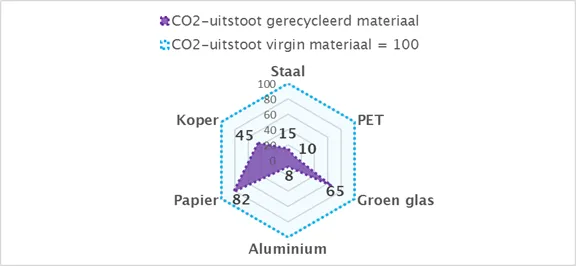
Recycled materials also require far less energy than virgin raw materials. For example, recycling PET requires 83% less energy than producing it from virgin raw materials. Aluminium recycling saves 95% of the energy required for primary production. Paper recycling saves 40% of energy. And so on.
These energy savings translate not only into lower costs, but also into lower CO2 emissions.
No funding, but flexibility
We therefore call on governments to allow waste and recycling companies to play their full part. We are not asking for additional funding, but for flexibility:
· Ensure that the European Waste Shipment Regulation (WSR), or European Regulation on Shipments of Waste (EVOA), allows recycled materials to circulate freely, giving them access to all market opportunities and enabling them to compete fairly with virgin raw materials. See our position paper on EVOA.
· Make maximum use of recycled materials in new products (recycled content), so companies need to buy less energy to run their production processes. See our position paper on Recycled Content.
· Environmental levies should support the transition to a circular, low-carbon economy, not be used to plug budget gaps. The reduced levy on PST residue is a good example. The resulting shortfall could be offset by abolishing the zero rate on imported hazardous waste. Major changes should be introduced gradually, so that our sector, industry as a whole and society can adapt (leave no one behind). See our position paper on Tax Policy.
· Simplify permitting procedures so that we can install more capacity to recycle more materials and produce more biogas and biosteam.
We also fully support calls for cross-sector initiatives, such as relaxing the rules on temporary unemployment and keeping labour costs under control, to help tackle the energy crisis.
This energy crisis must not make us forget that achieving a circular economy also means applying Lansink’s Ladder now. In practice, this means that materials should first be recycled, and only recovered for energy if recycling is no longer possible.
Question about this story? Ask your question
Keep following this
Get an email when a new story is published. No account needed.
- SubjectNews







