












‘Battery recycling biggest challenge for vehicle dismantling sector’
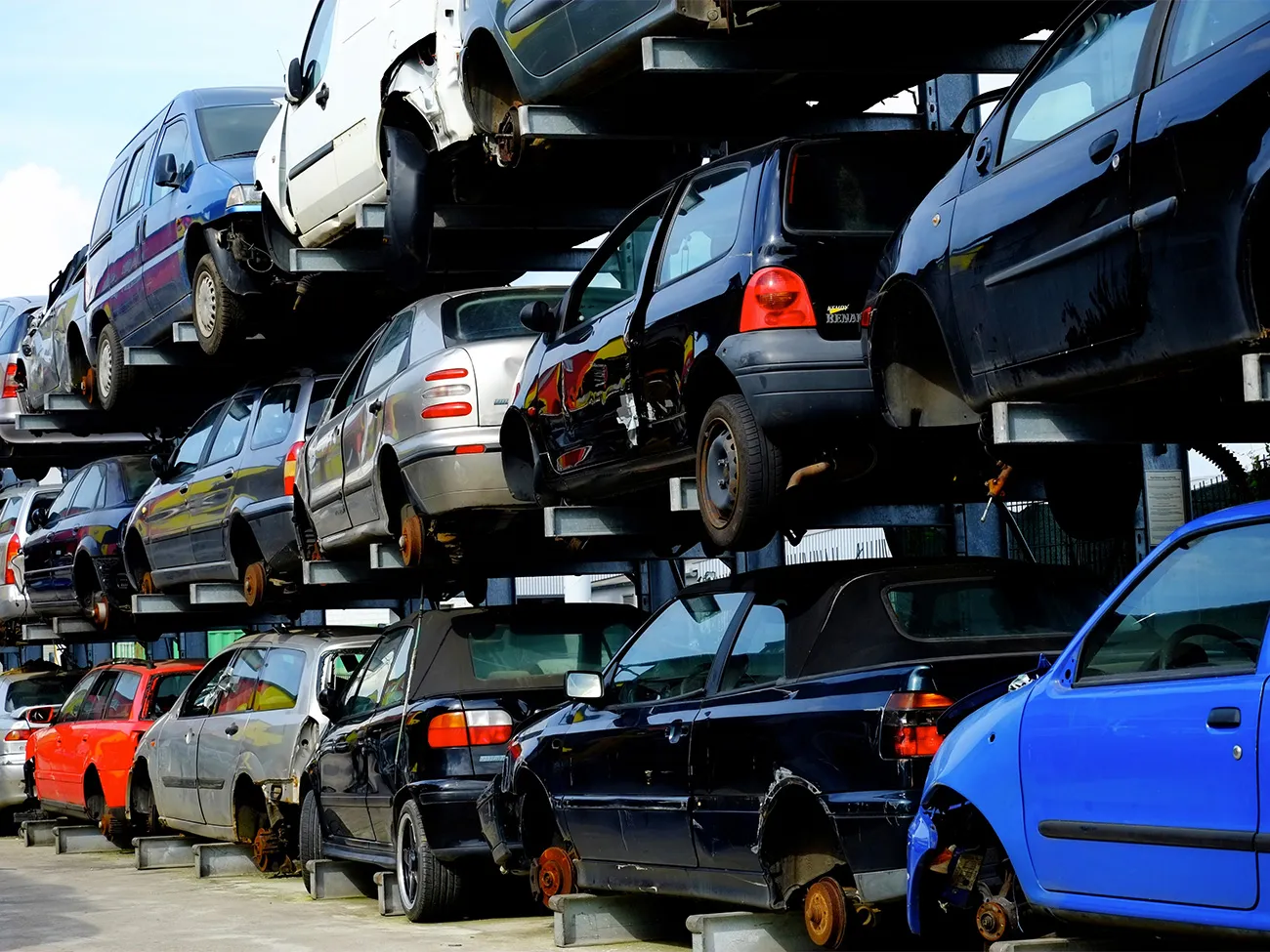
ARN (Auto Recycling Nederland) ensures that every car sold in the Netherlands is recycled at the end of its life, with a recycling rate of at least 95 per cent. It has performed more than well in recent years: in 2020, only 1.7 per cent went to landfill or an incinerator. Yet ARN is not standing still, as the future holds plenty of challenges. New materials, and electric driving in particular, will bring about a revolution in the coming decades.
ARN (Auto Recycling Nederland) is looking to the future. The organisation responsible for implementation, which carries out what is known as producer responsibility on behalf of RAI Vereniging (car importers), BOVAG (dealerships), FOCWA (vehicle repair companies) and Stiba (vehicle dismantling companies), thereby ensuring that every car sold is recycled at the end of its life, with a recycling rate of at least 95 per cent, previously outlined three scenarios looking ahead to 2050. In practice, this means that the way cars are recycled will change drastically. Digitalisation, and particularly the use of increasingly heavy batteries, will become much more widespread. “With the knowledge and expertise ARN gathers from universities, an automotive campus, the Ministry of Economic Affairs and various interest groups, we support the sector as it responds to ongoing developments,” says managing director Ingrid Niessing. A great deal is set to happen in the world of car recycling, which is why ARN is deliberately looking beyond the next year, or even the next ten.
Stricter
ARN’s work is currently governed, for example, by the EU End-of-Life Vehicles Directive and the EU Battery Directive. Both are European directives that are highly likely to be converted into EU regulations soon. This means the rules will become stricter, more binding and more demanding.
Batteries can currently be recycled at a rate of 50 per cent, for example, but this is expected to rise to 60 or 70 per cent. “ARN sees this above all as an opportunity,” says Niessing. “Battery recycling is still in its infancy. At present, dismantling a car with a battery is also more dangerous than dismantling a conventional car with an internal combustion engine. That is why we are working with knowledge centre Innovam to develop training modules that vehicle dismantling companies can use to gain expertise in dismantling electric and hybrid cars. The modules also cover dismantling and recycling batteries, and how to store and transport them safely.” Niessing notes that this is complex subject matter. “Many manufacturers use a new type of battery in each new model of car. This is a major challenge for the future of car recycling.”
Diesel or petrol tank
Despite European plans to ban new cars with internal combustion engines after 2030, there will still be plenty of work for vehicle dismantling companies in this segment too, the ARN director predicts. “We know that the average car lasts at least 25 years. That means there will still be plenty of cars with diesel or petrol tanks to recycle. This is precisely where ARN wants to play a role. It is not just about the powertrain: more and more cars contain composites instead of metal. This is mainly because composites are lighter, while electric cars are becoming heavier due to their huge battery packs. These things are connected. But they also call for a different approach to dismantling and recycling. And that is without even mentioning cars with solar panels. These will also need to be dismantled, which will require entirely new techniques.”
For this reason, ARN is also in constant contact with car manufacturers, to work out now how composites, for example, can be separated. The organisation is already building a bridge to the future.
Battery target achieved
The statutory requirement to reuse at least 50 per cent of the weight of Li-ion batteries was comfortably exceeded in 2020. In 2020, ARN collected and processed more than 121 tonnes of Li-ion batteries. More than 70 importers took part in ARN’s collective system that year. In total, more than 121 tonnes of drive batteries were collected in 2020, of which more than 80 per cent went to a recycling company. Just under 20 per cent of the discarded batteries were given a second life by a conversion company for reuse, mostly in stationary electricity storage applications. When a drive battery goes to a recycling company, more than 70 per cent of its raw materials can be recovered. Drive batteries given a second life count towards the reuse rate at almost 100 per cent; only a small percentage is lost at this stage.
New director for ARN from April
Paul Dietz will succeed Ingrid Niessing as ARN’s managing director in April. Niessing announced her departure at the end of last year. Dietz (1971) joins from the RDW, where he has held several senior positions. He is currently Divisiemanager Toezicht & Beoordeling. In this role, he leads 750 employees, who are responsible, among other things, for supervising all recognised businesses, including those carrying out MOT tests. At ARN, Paul Dietz will work with 300 recycling partners on high-quality, responsible car recycling.
ARN is pleased to welcome Dietz. “With him, ARN gains an experienced managing director with in-depth knowledge and a broad network in the field of mobility. He is used to dealing with a range of different interests. ARN and the RDW also have a great deal in common; both implementation bodies have worked closely and effectively together for many years.”
Dietz, for his part, is looking forward to joining the implementation body. “I look forward to working with all the stakeholders involved to further develop sustainable car and car battery recycling. I am keen to bring the experience I have gained in service delivery to my new role at ARN. Cars make my heart beat faster, and I find the direct link with sustainability particularly fascinating on a personal level. That makes this job all the more relevant.”
Question about this story? Ask your question
Keep following this
Get an email when a new story is published. No account needed.
- ThemeCircular processing of electronics and batteries
- SubjectNews







