












AVU director Frans van Dijk: 'One hundred per cent circular starts with source separation'
As director of the joint arrangement Afvalverwijdering Utrecht, Frans van Dijk holds a special position.
In this partnership, the municipalities are individually responsible for policy and collection, but AVU concludes contracts with recycling companies and waste processors on behalf of all the municipalities together. And it has done so to the full satisfaction of all parties for more than 35 years. Van Dijk steers AVU between collection and processing, yet he certainly leaves his mark on the entire chain.
The waste sector is very much on the move, Van Dijk observes. Having just concluded a new processing contract for residual waste and organic waste (GFT) on behalf of the 26 participants in AVU, he can pinpoint fairly precisely where the differences lie compared with ten years ago. "You see that with residual waste the emphasis has shifted much more towards sustainability. CO2 savings are now factored in and there is more room for innovation. In the past the focus was far more on tariffs, whereas now it is the combination of price plus sustainability. And what plays a much bigger role in contracts now is social return. For this, AVU uses the Social Enterprise Performance Ladder (prestatieladder sociaal ondernemen), an instrument that makes it possible to assess very thoroughly whether waste processors operate in a socially responsible way."
According to Van Dijk, this development is linked to the fact that the emphasis has shifted much more towards the reuse of raw materials. "When PMD (plastic packaging, metal packaging and drinks cartons) collection was introduced, people realised that if you take a certain stream out of your residual waste, the amount of residual waste falls enormously. As a result, people began to look much more closely at whether more could be extracted from that stream, so that you can do more with it than simply incinerate it. That is a really big difference compared with years ago. And as far as I am concerned, we should go much further down that road. Although I don't think we can get to zero incineration. Take a full vacuum cleaner bag, for example. I wouldn't know how to recycle that. But never say never. Because I also see that all the incinerator operators are looking very closely at how processes can be made even better and more sustainable. They are all taking extra steps at the moment."
Landfill ban
AVU was founded in 1984. The main reason was the announcement of a landfill ban for combustible waste. Van Dijk: "At that time, incinerating household waste was still seen as the ultimate solution. The province of Utrecht, however, had no incineration plant within its borders. So facilities around Utrecht had to be used instead. There were still 46 municipalities then, and it was soon realised that, certainly with that number of municipalities, this would result in a tangle of contracts and transport movements. Imagine: you would have to drive a regular refuse truck to an incineration plant in Rotterdam or Duiven. That is how AVU came about. As a partnership of municipalities, in order to pool the volumes of waste, enter into a single contract, set up transfer sites and drive centrally from those locations. Those transfer sites are in Utrecht, Amersfoort and Ede."
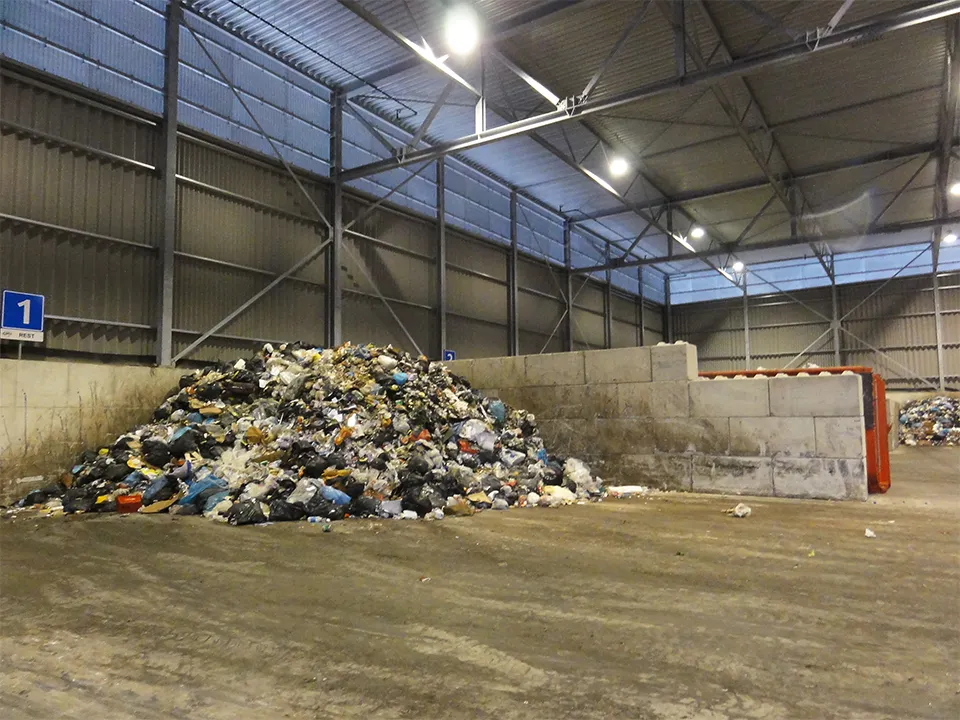
Incidentally, all participating municipalities have always remained in charge of their own waste policy and collection, Van Dijk explains. "AVU only comes into play from the transfer stations onwards. Municipalities collect the waste themselves and bring it to a transfer station, where it is accepted, and AVU then arranges the processing. So we also put the processing contracts out to tender ourselves. And it has always stayed that way. So there is no large-scale cooperation on collection in Utrecht, although some municipalities do work together on a smaller scale."
Circular is impossible without source separation
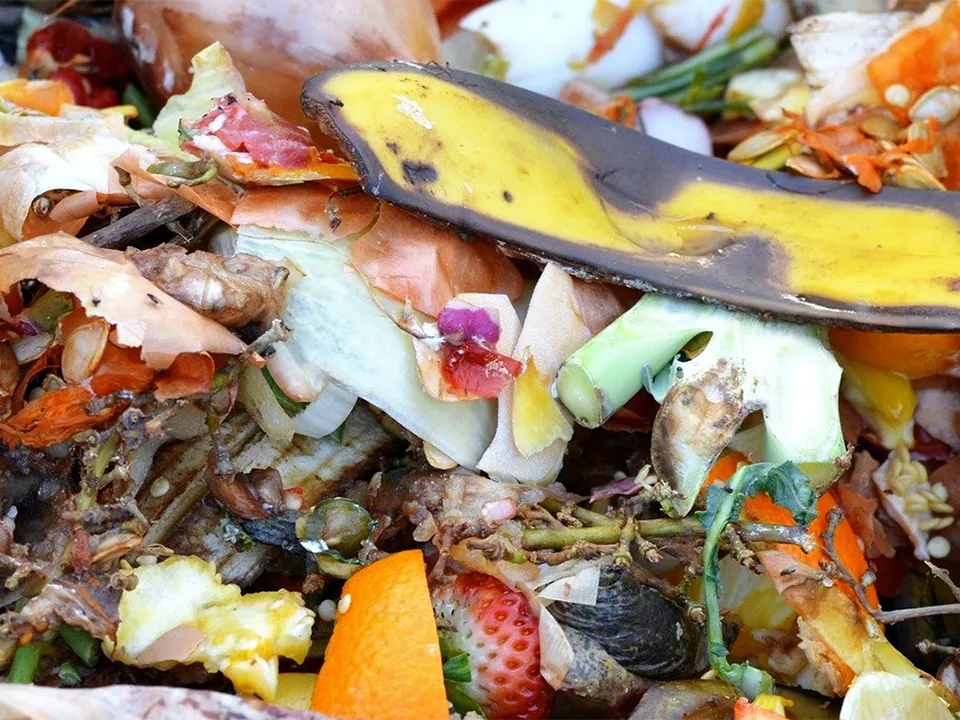
Van Dijk believes the waste and recycling sector is well on its way to being 100% circular by 2050. "With recycling percentages we are reasonably on schedule. But it can be done much better. Let me start with the easy streams. Very good things are already happening with GFT. The processing methods are digestion or composting, or a combination of the two. With high-quality compost you avoid peat still being extracted for potting soil and the like. In our tenders we therefore try to steer towards high-quality reuse, which is circular. Sometimes you have no choice but to digest and incinerate, for example when GFT has been separated afterwards or sieved out of residual waste, because then it is heavily contaminated. That is why you have to separate GFT at source."
Van Dijk is also positive about glass and paper. "We are aiming for even higher percentages and will keep doing so, but they are already at a fairly high level."
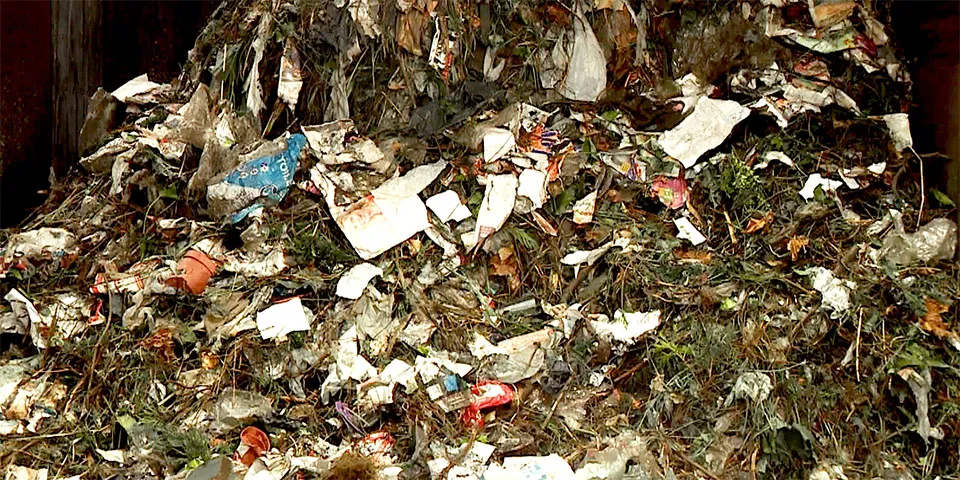
But then there is residual waste. According to the AVU director, there are still significant gains to be made there. "You will always have some residual waste left, but together we can extract much more from it than we do now. It still contains 30% GFT, and there is still a lot of glass, PMD, paper, nappies and textiles in it. But as far as we are concerned, you cannot do that without source separation. To raise recycling, you will simply have to separate the different streams even better. Otherwise we will never meet the targets. But that requires a considerable effort in providing information to consumers, because that is where the first step lies. I therefore argue for more focus on that side of collection, instead of blindly relying on technology after collection. That technology is genuinely improving a lot, but we must prevent people from starting to think that everything can go into one bin again. That is categorically not true. Post-separation only works for packaging. You can do virtually nothing with GFT or paper from post-separation; it is usually digested and incinerated."
Dividing line
After all these years, AVU still does not make waste policy for the municipalities. Each of the 26 participating municipalities still does that itself. "Although that dividing line is not absolutely rigid either," Van Dijk explains. "Because when we look at processing contracts, we also look at things like emissions, efficiency and footprint, but we coordinate that with the municipalities. We do not dictate. When a tender is due, we first run an inventory of wishes, form a working group of officials from the various municipalities and present our ideas to them first. Together we then set the framework for a tender. Ultimately, municipal executives have to approve it. And of course there are sometimes small differences in level of ambition, but by and large all municipalities in this province want to go in the same direction. I have yet to experience our way of working leading to conflicts or disgruntlement."
In fact, the fact that AVU has existed for more than 35 years proves its raison d'être, according to Van Dijk. "Working together benefits both small and large municipalities. Utrecht is by far the biggest partner and belongs to the G4. But that opens doors for the smaller municipalities. So Utrecht may sometimes be a little more ambitious than the rest. And the municipality of Utrecht, in turn, knows it has 25 municipalities in its wake. There is an interplay. Of course there are sometimes discussions, but what do you expect when, as the municipality of Renswoude with barely six thousand inhabitants, you belong to the same organisation as the municipality of Utrecht, where more than 350 thousand people live? Small municipalities simply have different waste problems and solutions than large ones."
Taking up the gauntlet
Van Dijk is concerned about the low level of plastic reuse. "Enormous steps have been taken there. A great deal is already possible. But because of all kinds of circumstances, including a low oil price, too little is happening. But when I see how much plastic still ends up in the environment, I think: 'surely it can't just be a matter of cents? We surely can't want that, all of us?' I think the recycling sector, too, could take up the gauntlet even more. By saying together: 'we want to prevent all that litter in rivers and oceans'. We don't need to become Greenpeace, but all the waste that still ends up in the environment could also have been collected and recycled or processed."
CV Frans van Dijk
Frans van Dijk originally trained as a civil engineer (roads and hydraulic engineering). After first working in automation at an engineering consultancy, among other places, he spent more than 17 years at the municipality of Wijk bij Duurstede. He started in the back office, where as the 'youngest clerk' he was given waste in his portfolio. Later he became head of the outdoor services department and took the waste portfolio with him because he had come to enjoy it and knew a lot about it. In that role he came into contact with AVU and was approached to apply to the Utrecht waste disposal organisation. Five years later, in 2015, Van Dijk succeeded the then director.
Question about this story? Ask your question
Keep following this
Get an email when a new story is published. No account needed.
- ThemeCircular business under changing regulations
- SubjectNews







